



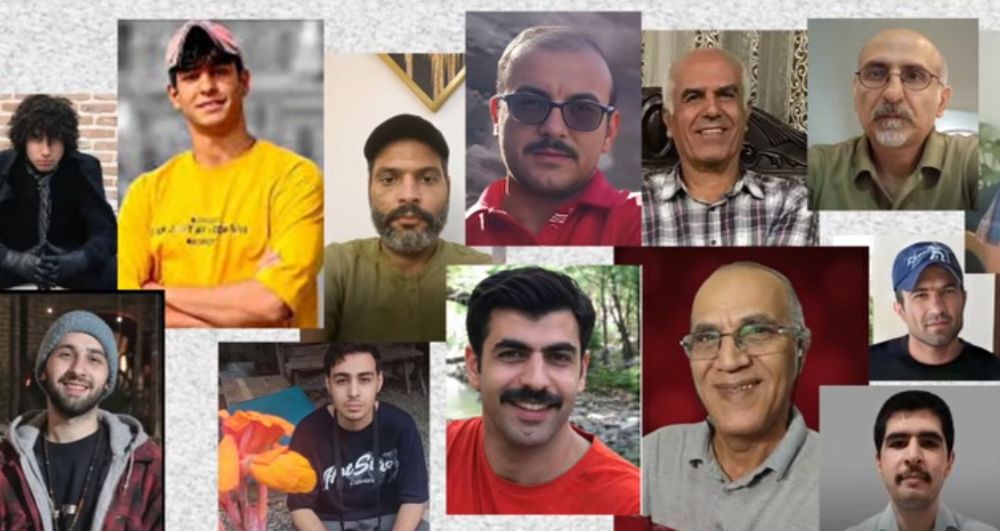
The story of executions in Iran did not begin with the death sentences being carried out in the country’s prisons today. It reaches back to one of the darkest episodes in the history of the Iranian regime: the mass execution of political prisoners in the summer of 1988.
Thousands of prisoners were killed following proceedings that, in many cases, lasted only minutes. Many of those executed had already served their prison terms or were nearing the end of their sentences. The People’s Mojahedin Organization of Iran (PMOI/MEK) constituted the overwhelming majority of those targeted, according to accounts and documentation produced over the decades by Iranian opposition groups and human-rights investigators.
The killings were carried out through special judicial bodies later known as the “death commissions.” Prisoners were subjected to brief interrogations designed to determine their political allegiance and willingness to submit to the authorities. Those who failed to satisfy the commissions were taken away and executed.
The victims were not given the protections normally associated with a judicial process. Their families were frequently kept uninformed about their fate, while the locations of many burial sites were concealed or left undisclosed.
The scale of the killings and the secrecy surrounding them meant that the massacre became a defining symbol of impunity in Iran. No international tribunal was established to prosecute those responsible, and decades passed without a judicial process capable of addressing the crime.
That absence of accountability has become inseparable from the continuing debate over executions in Iran.

A Landmark UN Report on the 1988 Massacre
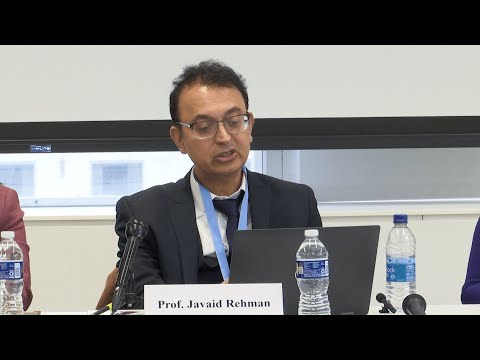
A significant development came in July 2024, when Professor Javaid Rehman, then UN Special Rapporteur on the situation of human rights in Iran, published a landmark report examining the 1988 massacre and other atrocity crimes committed in Iran. Drawing on extensive evidence and testimonies, the report concluded that the crimes warranted further investigation and accountability under international law and called for measures to preserve evidence and establish mechanisms capable of delivering justice and redress to victims and their families. The report marked an important step in bringing the 1988 massacre into the framework of international accountability and underscored the continuing relevance of these crimes decades after they were committed.
A Legacy That Reaches Into Today’s Prisons
Nearly four decades after the 1988 massacre, executions remain a central instrument of repression in Iran.
Political prisoners, protesters and other detainees continue to face death sentences, while human-rights organizations have documented a sharp increase in executions in recent years. The precise scale is difficult to establish because Iranian authorities do not publicly acknowledge every execution and independent monitoring inside the country remains severely restricted.
The issue is particularly acute for prisoners convicted in connection with political dissent and popular protests. Amnesty International has documented cases in which prisoners facing execution were accused of national-security offenses and subjected to deeply problematic judicial proceedings.
Against this backdrop, the death penalty has increasingly been viewed not simply as a criminal-justice measure, but as a mechanism capable of creating fear far beyond prison walls.
The connection with 1988 lies in the recurring use of execution against political opposition. The passage of time has not removed the question of who should be held responsible for the earlier killings, nor has it ended the use of capital punishment against those challenging the authorities.
Prisoners Turn Resistance Into a Weekly Protest
Yet Iran’s prisons have also become places of resistance.
In January 2024, prisoners began organizing weekly hunger strikes every Tuesday under the banner “No to Execution Tuesdays.” The campaign has since continued for more than two years and spread to dozens of prisons across Iran. Amnesty International documented the campaign and noted that prisoners held for political reasons were among those participating.
By the summer of 2026, the campaign had reached more than 60 prisons. In August, its 135th consecutive week was marked by prisoners across 61 facilities, while more than 1,500 death-row prisoners at Ghezel Hesar Prison were reported to have staged a week-long hunger strike and sit-in.
The protest is remarkable because many of those taking part are themselves vulnerable to the death penalty. Their weekly hunger strikes therefore represent more than a general objection to capital punishment: they are an act of resistance undertaken from inside the prison system itself.
The campaign has also become a way for prisoners to connect individual death sentences with the wider pattern of executions in Iran.
From Memory to Accountability
The passage of 38 years has not erased the 1988 massacre from Iran’s political and human-rights landscape.
Families of the victims continue to seek information about their relatives, preserve their names and demand recognition of what happened. Human-rights advocates have repeatedly called for investigations into the killings and for those responsible to face justice.
The issue has also gained renewed international attention as current executions have increased.
In August 2026, parliamentary and political discussions in Australia once again connected the 1988 massacre with contemporary executions and repression in Iran. Participants argued that accountability for past crimes and efforts to prevent new executions cannot be treated as separate questions.
The argument is straightforward: when crimes of the past remain unpunished, the institutions and individuals responsible can continue operating without facing meaningful consequences.
That is why the memory of 1988 remains relevant to prisoners confronting death sentences today.

The Unfinished Story
The distance between the prison cells of 1988 and those of 2026 is measured in decades, but the central question remains remarkably similar: what happens when the state uses imprisonment and execution to silence political opposition?
For the prisoners participating in “No to Execution Tuesdays,” the answer is resistance.
Every Tuesday, hunger strikes inside Iranian prisons challenge the idea that fear can permanently silence dissent. The protests give a public voice to prisoners who have little control over their own fate and place the death penalty itself at the center of an international human-rights debate.
The story of Iran’s 1988 massacre therefore remains unfinished.
It is preserved in the memories of families who never received justice, in the records of those who have documented the killings, and in the voices of prisoners who continue to oppose executions from behind bars.
For them, accountability is not simply a demand concerning the past. It is also a means of confronting the executions of the present—and of preventing the next death sentence from becoming another name added to a history that has already lasted far too long.