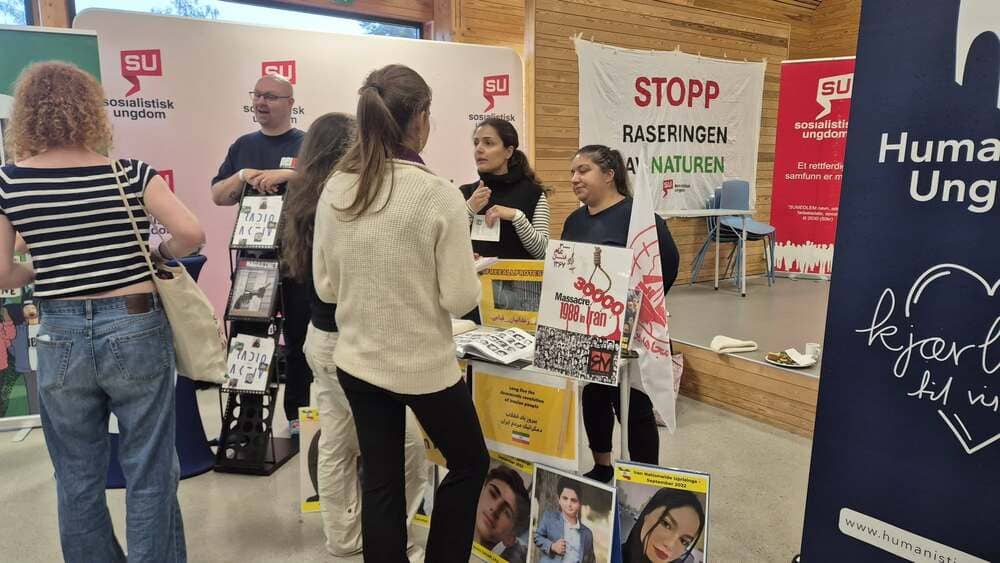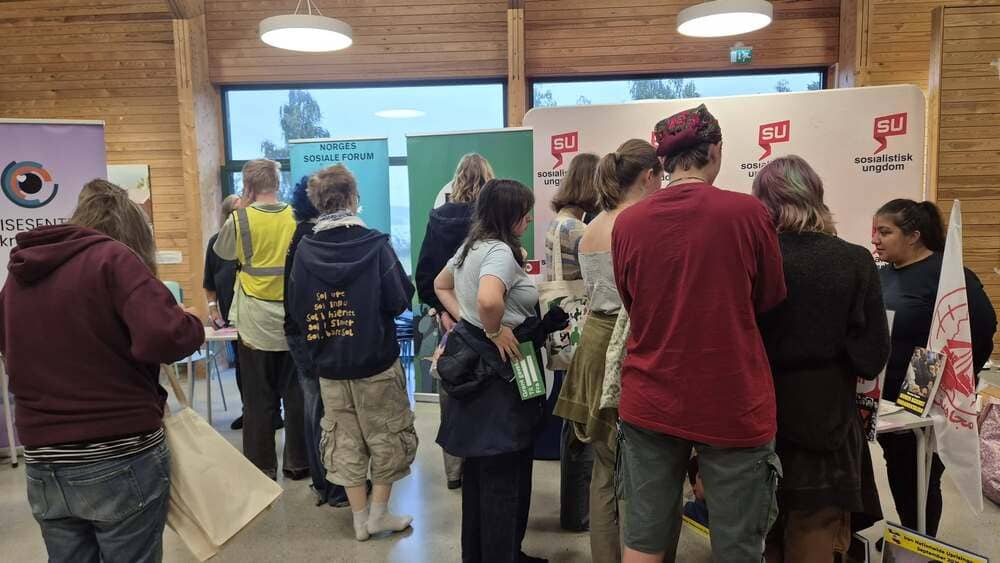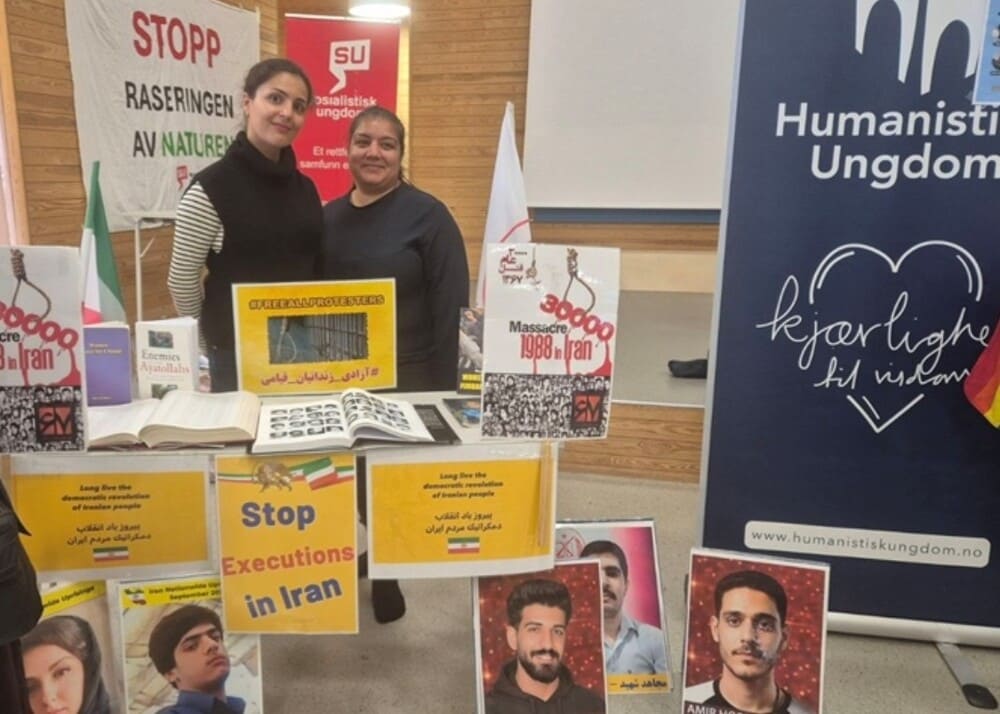



On Wednesday, August 5, 2026, members of UNID (the Iranian–Norwegian Youth Association), a youth organization committed to a free, democratic, and secular Iran, gathered on the island of Utøya.
The island witnessed the massacre of 69 young members of Norway’s Labour Party by the far-right terrorist Anders Behring Breivik on July 22, 2011. Against this backdrop, young supporters of the Iranian Resistance held an information booth, giving voice to the pursuit of justice for the victims of tyranny in Iran.

Meanwhile, they raised awareness about the 1988 massacre of political prisoners and the ongoing wave of daily executions in Iran while introducing Mrs. Maryam Rajavi‘s Ten-Point Plan as the President-elect of the National Council of Resistance of Iran (NCRI), drew significant interest from young members of various Norwegian political parties.

As a result, linking the quest for justice for Iran’s martyrs with the memory of the victims of Utøya conveyed a powerful message: the struggle against crime, terrorism, and executions knows no borders, and the truth can never be silenced.

Background: Iran Executions and the 1988 Massacre
Iran has witnessed a sharp escalation in executions in recent years, with human rights organizations reporting a growing number of death sentences and executions targeting political prisoners, protesters, and members of ethnic and religious minorities. Following the nationwide uprising that began in January 2026, numerous arrested protesters have reportedly faced harsh sentences, including death penalties, after proceedings widely criticized for lacking due process.
The campaign at Utøya also highlighted the 1988 massacre of political prisoners, during which more than 30,000 political prisoners—most of them members or supporters of the People’s Mojahedin Organization of Iran (PMOI/MEK)—were executed following summary proceedings.

The massacre has been described by many international jurists, parliamentarians, and human rights advocates as one of the gravest crimes against humanity in Iran’s modern history, with continued calls for an independent international investigation and accountability for those responsible.