Deadly Crackdown in Malekshahi and Kazerun
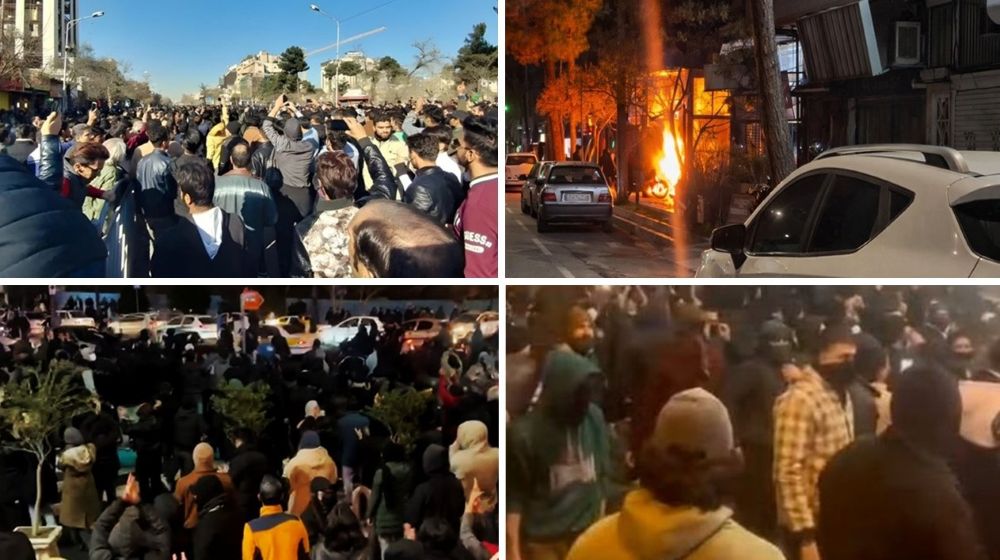
On the seventh consecutive day of Iran’s nationwide uprising, Saturday, January 3, 2026, security forces opened fire on protesters in the western city of Malekshahi in Ilam Province, where local reports describe a bloodbath with several killed and many wounded. The Khomeini Hospital in Malekshahi was reported overflowing with injured demonstrators, prompting urgent calls for blood donations, while authorities deployed large contingents of anti‑riot forces and effectively placed the city under military siege. In Kazerun, Fars Province, crowds filled Shohada Square as regime forces again used live fire against demonstrators, while in Shiraz’s Golshan district rebellious youth blocked roads by setting tires ablaze to halt suppressive units.
Khamenei’s Remarks and Expanding Protests
After a week of silence, Supreme Leader Ali Khamenei appeared on the anniversary of Qasem Soleimani’s death, drawing a line between what he called “protest” and “rioting,” and declaring that so‑called rioters “must be put in their place,” remarks directed at youths chanting “Death to Khamenei” and “This year is the year of blood, Seyyed Ali will be overthrown.” In reaction to these threats, protests intensified in Tehran, where districts such as Naziabad and Haft Howz saw large night‑time crowds chanting “Down with the dictator” as demonstrators burned security vehicles and confronted heavily deployed forces despite a virtual lockdown in the capital. Similar rallies were reported in cities including Mashhad, where protesters on Rahnamayi Street shouted that the nation “will not be a nation until the mullahs are buried,” and in other parts of the country such as Yazd, Kermanshah, Arak, Bushehr, and Lorestan, where clashes, tear gas, and live ammunition were documented.
Role of Students and Messages from Political Prisoners
University students played a key role on day seven, with Shahrud University of Technology students chanting “Students will die but not accept humiliation,” and students at Allameh University’s Hemmat dormitory in Tehran repeating the slogan “Death to the dictator” as they pledged to continue the uprising.
From inside Evin Prison and Ghezel Hesar Prison, political prisoners issued statements backing the protests, declaring that “the time to bury the dictatorships of the mullahs and the Shah has come,” with figures such as Asadollah Hadi and Shahin Zoghi‑Tabar saluting striking workers, bazaaris, and youth and calling for the dismantling of what they describe as a religious dictatorship.
🚨 EXCLUSIVE: Message from Evin Prison
Political prisoner Shahin Zoghitabar sends a powerful call to the youth of #Iran via Iran NTV (Simay Azadi)
"I feel more free than ever before, for I see fighting dictatorship as true freedom." pic.twitter.com/VdIHa3JfQG— SIMAY AZADI TV (@en_simayazadi) January 2, 2026
The National Council of Resistance of Iran reported that these messages, combined with escalating street confrontations and slogans directly targeting Khamenei and the ruling establishment, underline the depth and determination of a movement now in its seventh day nationwide.