



Introduction
Ali Khamenei was the Supreme Leader of the Islamic Republic of Iran from 1989 until the end of his rule. For more than three decades, he stood at the top of the regime’s power structure, controlling its most important institutions, including the Islamic Revolutionary Guard Corps (IRGC), security forces, judiciary, and foreign policy apparatus.
During his leadership, the institution of the Supreme Leader became the center of political, military, and economic power in Iran. His rule was marked by the suppression of dissent, expansion of regional terrorism, and the creation of a vast network of institutions under his direct or indirect control.
From the Assembly of Experts to Supreme Leadership
Khamenei was born in Mashhad in 1939 and entered politics through his religious and revolutionary activities before the 1979 revolution. After the establishment of the Islamic Republic, he held several key positions, including the presidency of Iran from 1981 to 1989.
Following the death of Ruhollah Khomeini in 1989, the Assembly of Experts selected Khamenei as the regime’s Supreme Leader. Although he initially lacked the religious status of his predecessor, he gradually consolidated power by strengthening his control over the IRGC, intelligence organizations, and state institutions.
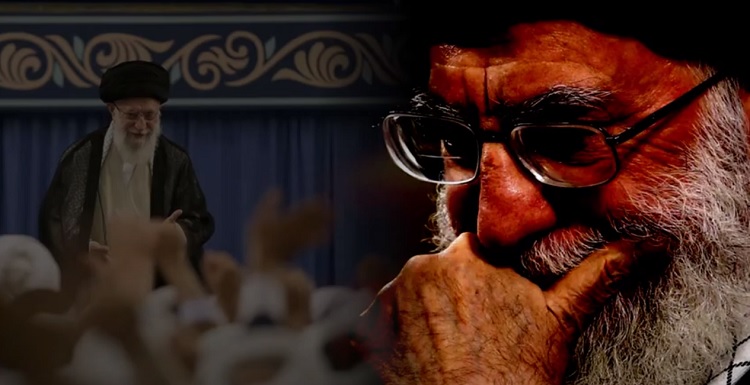
“One should weep tears of blood to even consider me for leadership.”
— Iran Freedom (@4FreedominIran) June 5, 2026
— Ali Khamenei, exactly 37 years ago, right after Khomeini’s death, just before becoming Supreme Leader.
He is gone now… but the scars of those “tears of blood” remain on Iran.pic.twitter.com/lVx4f6ZlEE
Decades of Absolute Rule and Suppression
Throughout his leadership, Khamenei maintained the regime’s authoritarian structure through extensive repression of political opponents, activists, journalists, and protesters. He was an important figure in the 1988 massacres of over 30,000 political prisoners, mostly member of the People’s Mojahedin Organization of Iran (PMOI/MEK).

Major waves of protests, including the uprisings of 2009, 2017–2018, 2019, 2022, and 2026 were met with violent crackdowns by security forces under his authority. Human rights organizations have documented widespread arrests, killings, and restrictions on fundamental freedoms during his rule.
Khamenei’s system of governance relied heavily on the IRGC and security institutions to preserve the regime’s power and suppress demands for political change.
Expansion of Terrorism and Regional Proxy Forces
Under Khamenei’s leadership, the regime expanded its regional influence through the IRGC’s Quds Force and a network of armed groups across the Middle East.
The regime provided political, financial, and military support to proxy forces in countries including Lebanon, Iraq, Syria, and Yemen. These groups became central tools of Tehran’s regional strategy and contributed to prolonged conflicts and instability in the region.
The expansion of these forces was a key element of Khamenei’s foreign policy, which prioritized ideological influence and military presence beyond Iran’s borders.
The Financial Empire Under Khamenei and the IRGC
Alongside political and military control, Khamenei oversaw a vast economic empire built around foundations, religious institutions, and organizations linked to the Supreme Leader and the IRGC.
These entities controlled major sectors of Iran’s economy, including energy, construction, telecommunications, and finance, while operating with limited public accountability.
The economic power of the Supreme Leader’s network and the IRGC became one of the pillars supporting the regime’s survival and its domestic and foreign policies.
The End of Khamenei’s Rule
After more than three decades at the center of the Islamic Republic’s power structure, Ali Khamenei’s rule came to an end following reports of his death in a joint U.S.-Israeli military operation on February 28, 2026.
His death marked a major turning point for the Iranian regime, creating a new crisis over succession and the future direction of the Islamic Republic.
For more than thirty years, Khamenei shaped Iran’s political system through absolute control over its military, security, economic, and ideological institutions. His legacy remains closely associated with the expansion of repression at home, regional intervention, and the consolidation of power in the hands of the Supreme Leader.