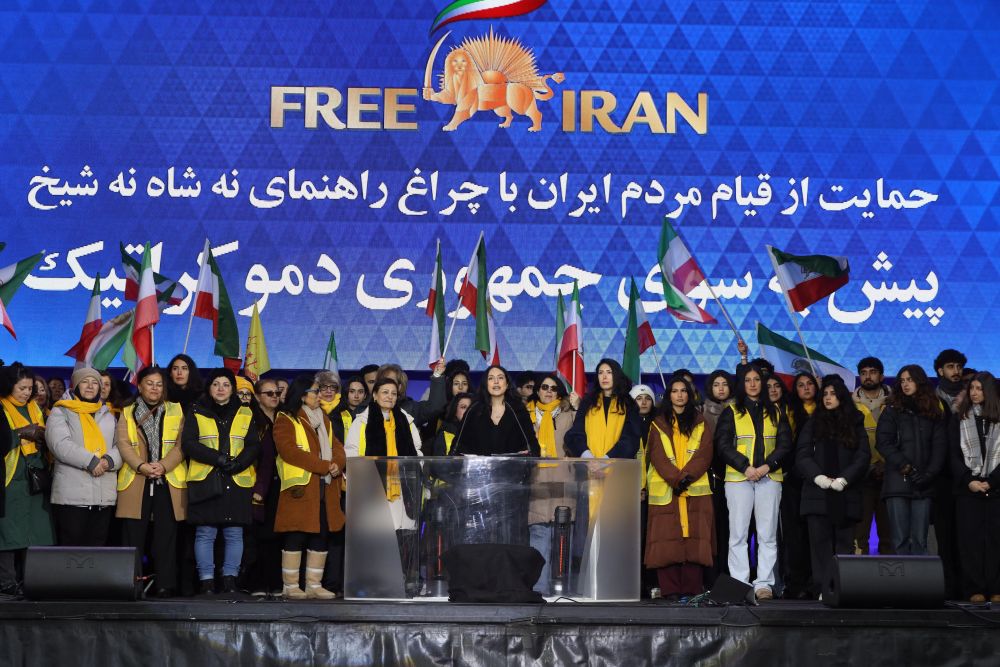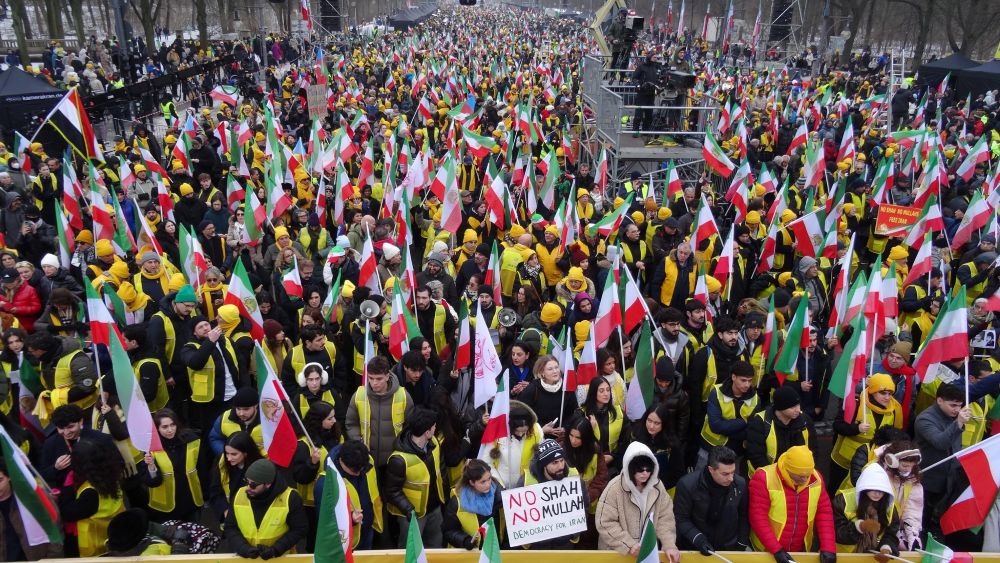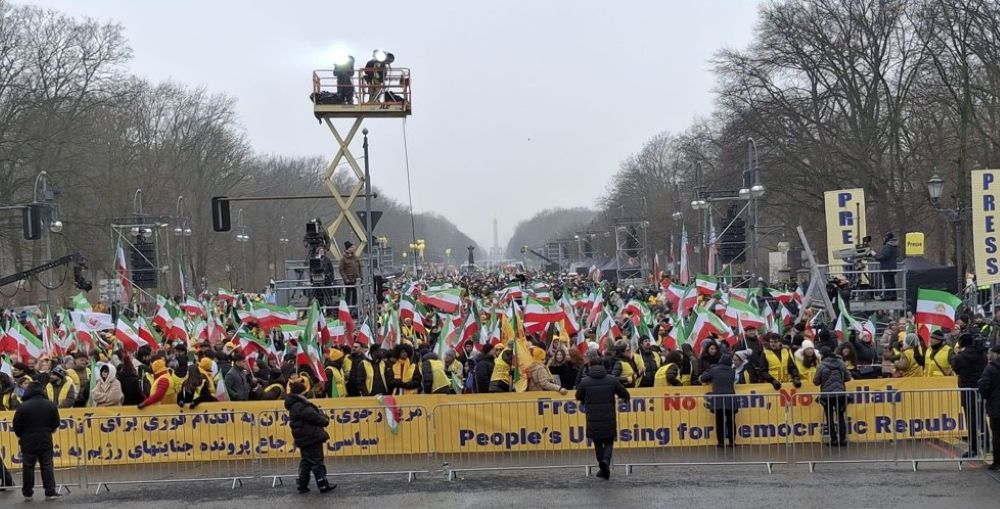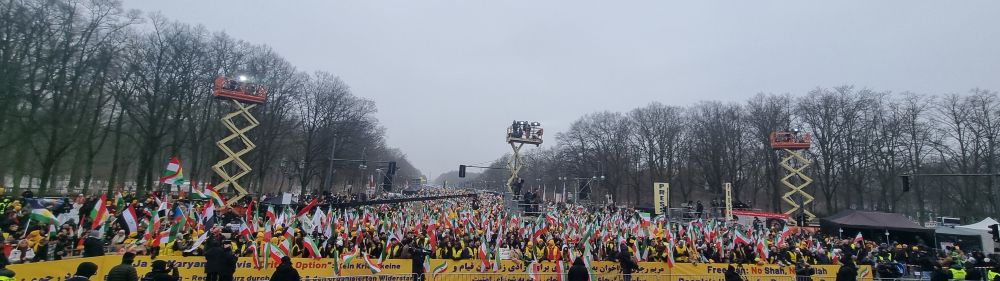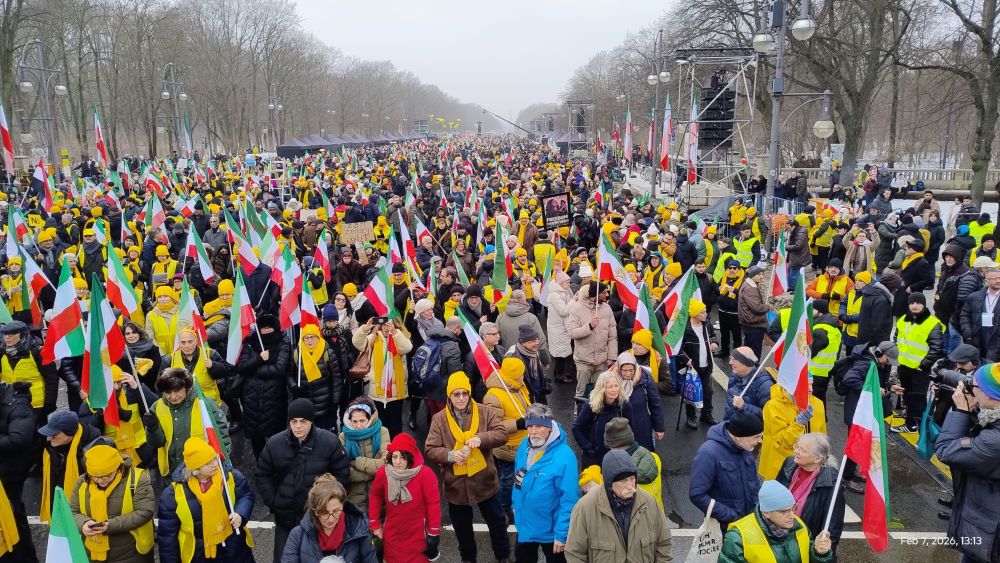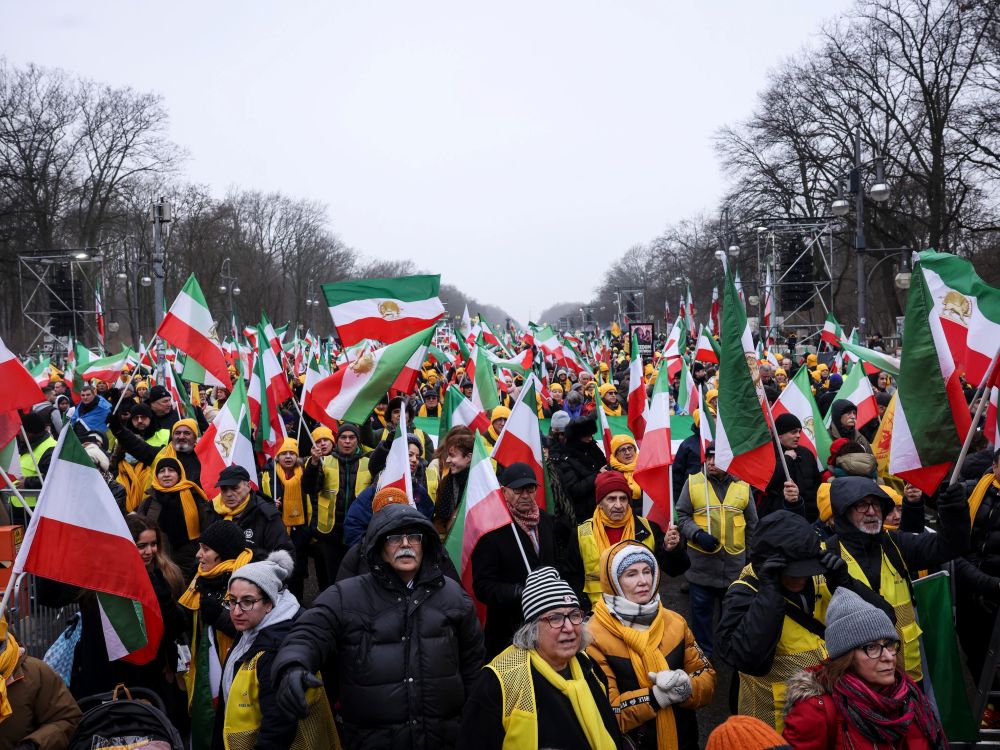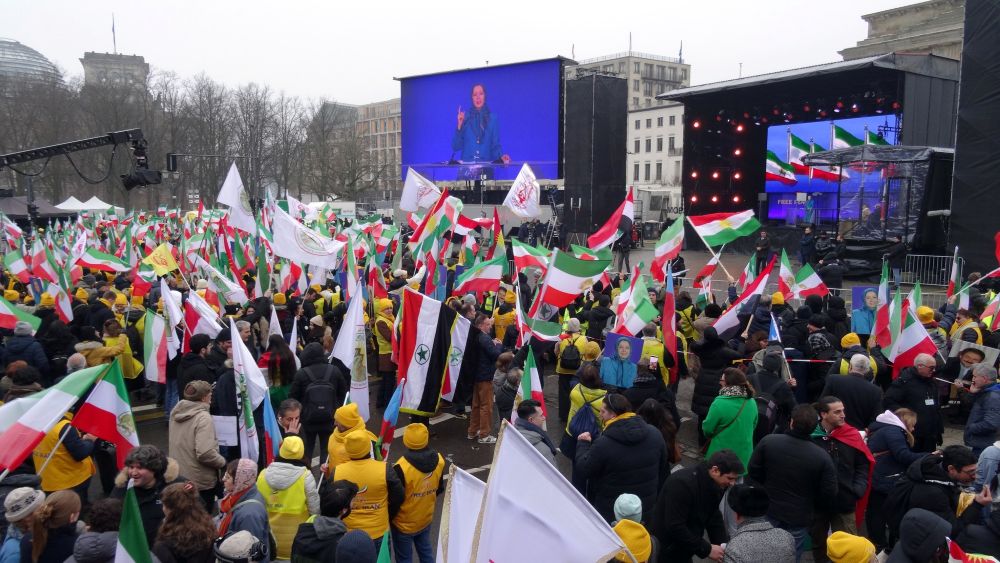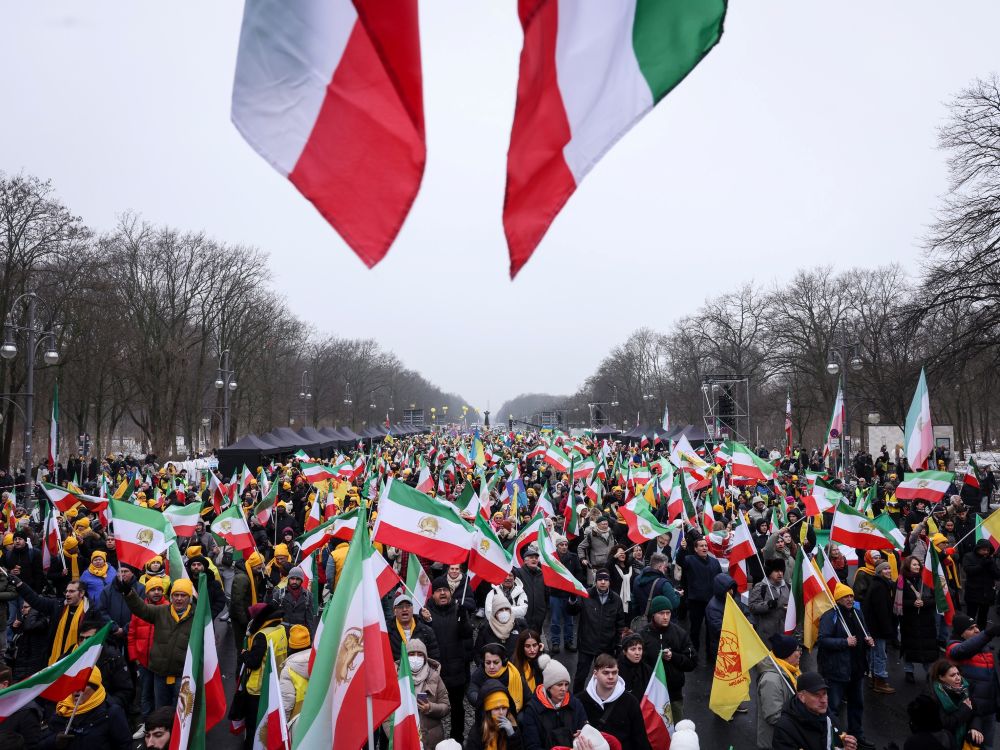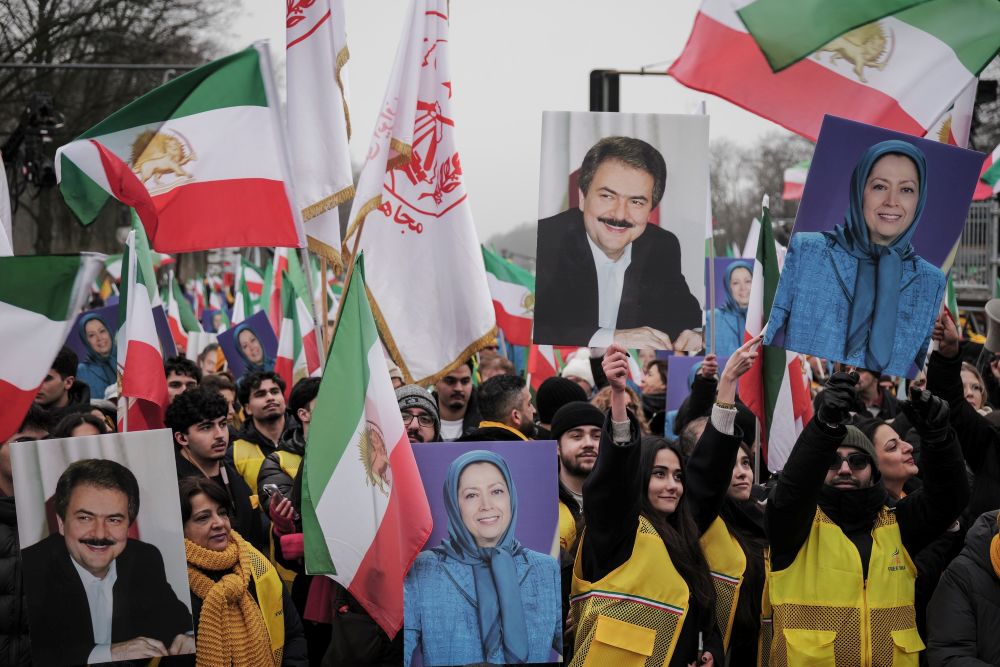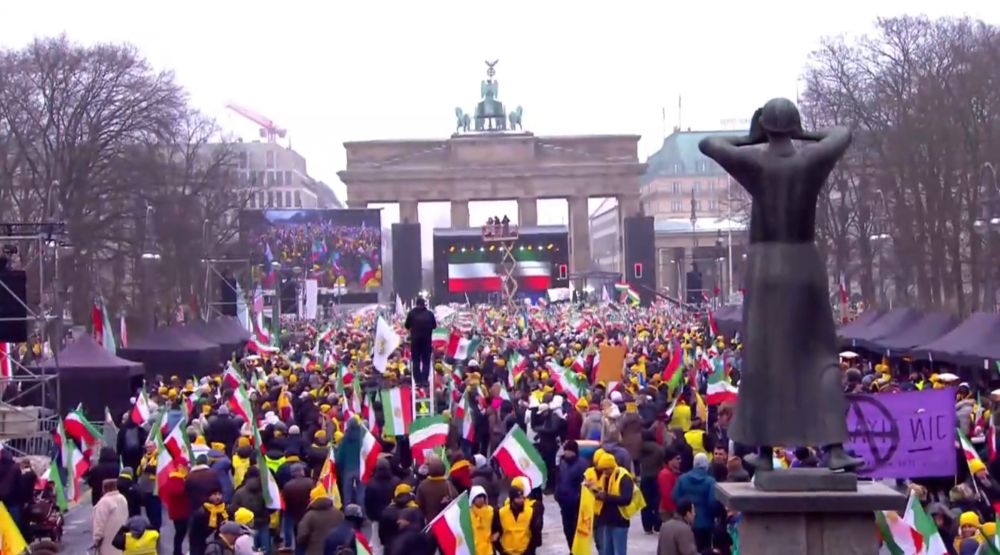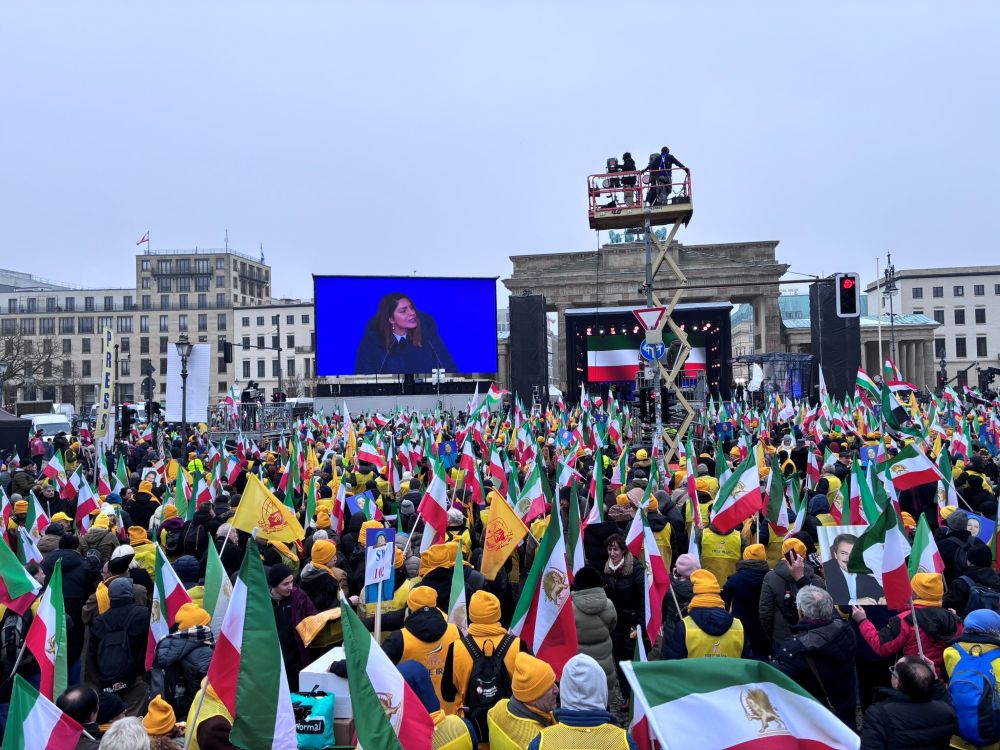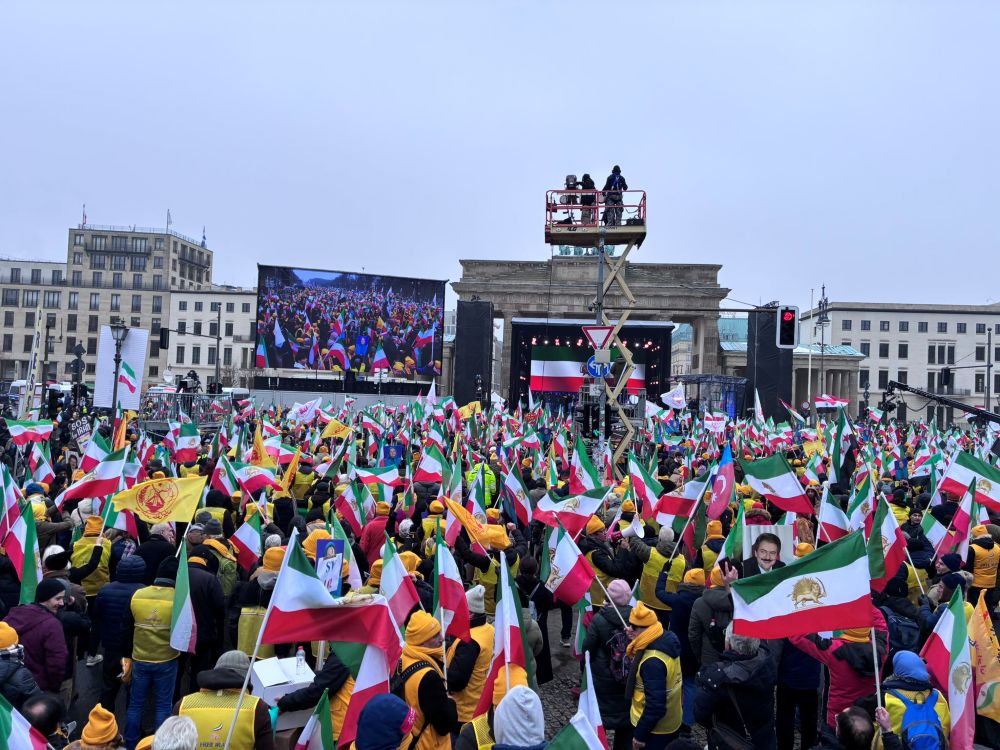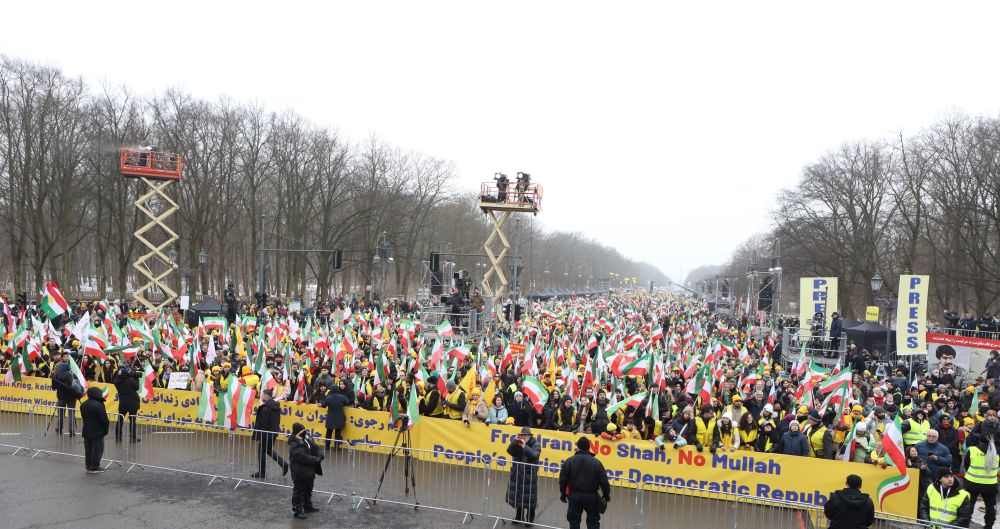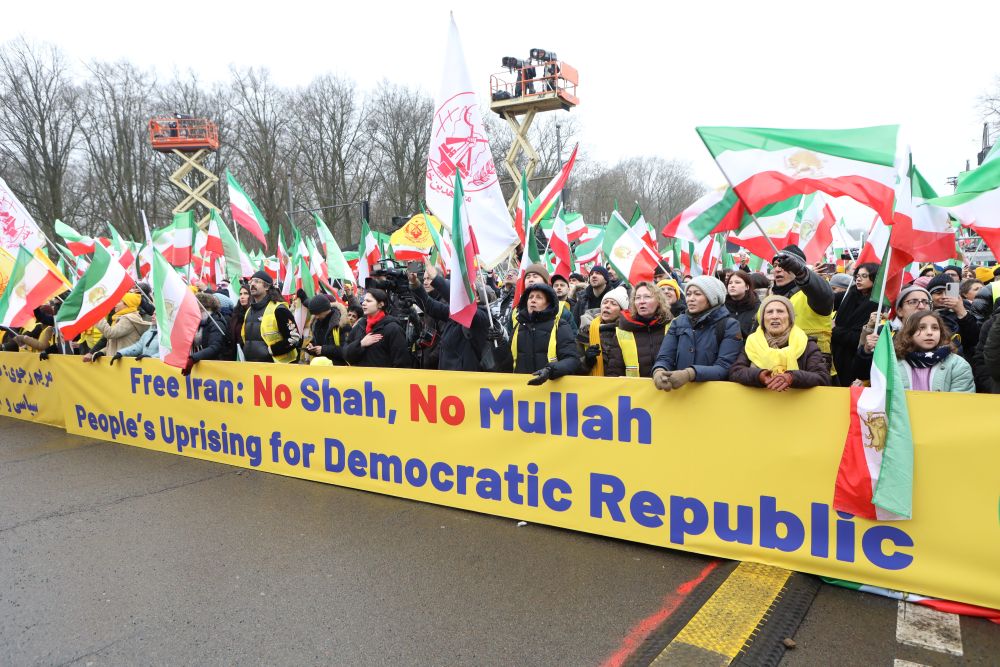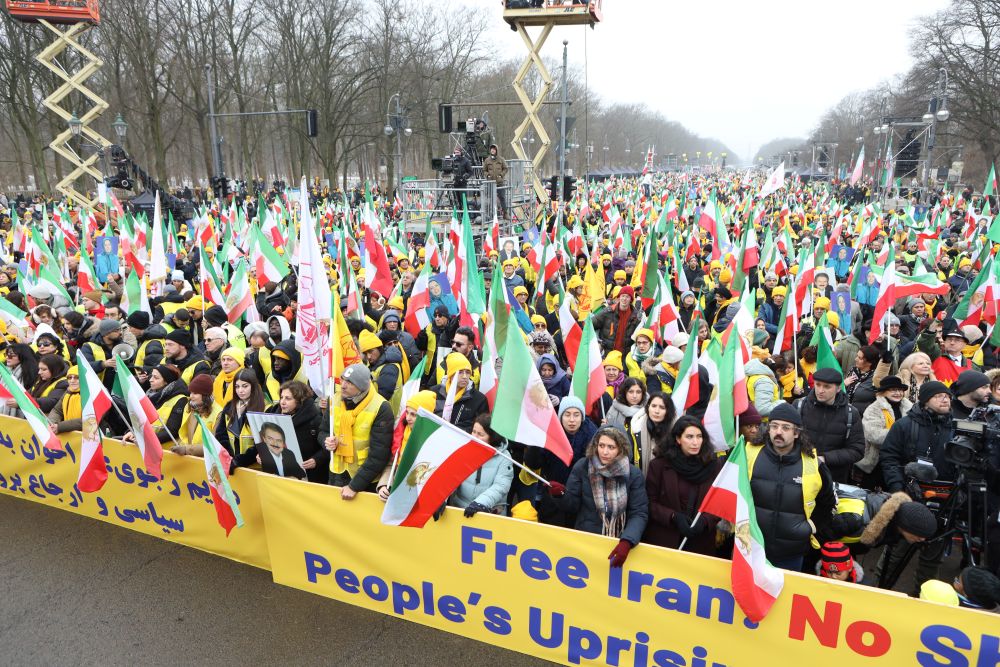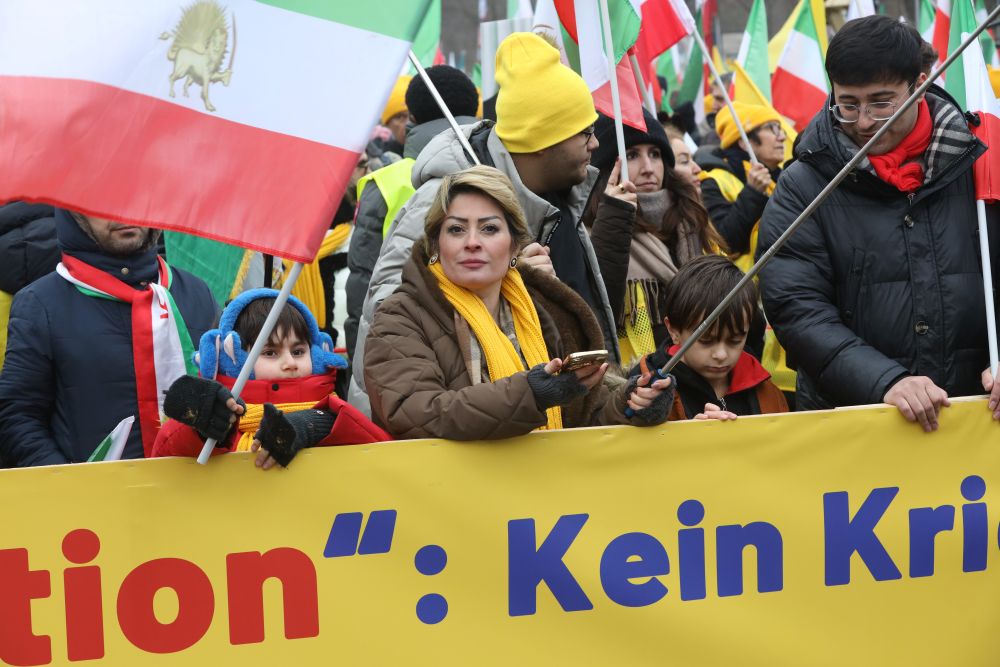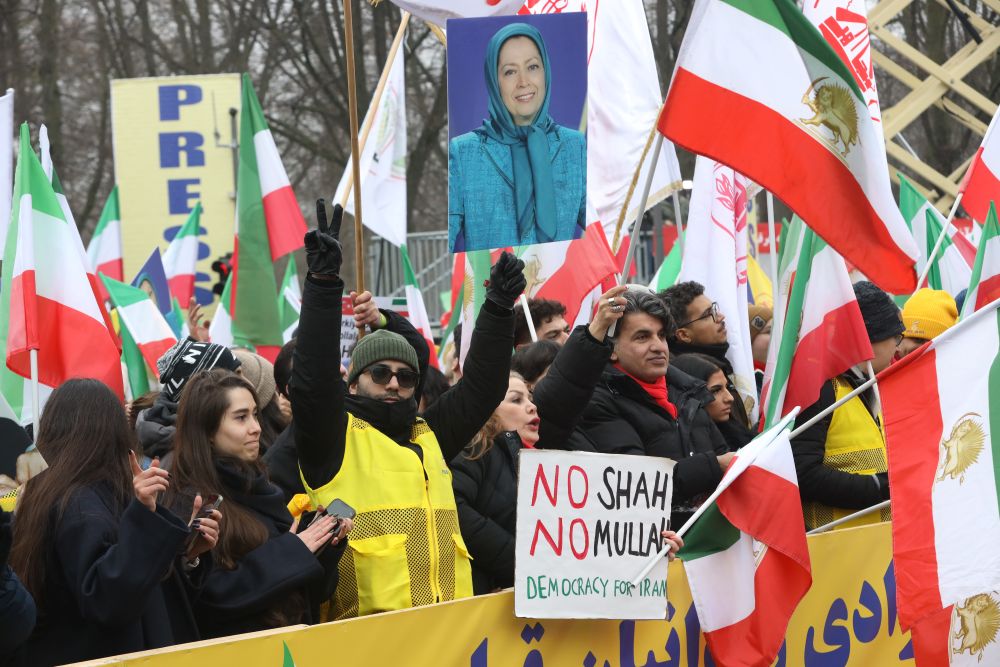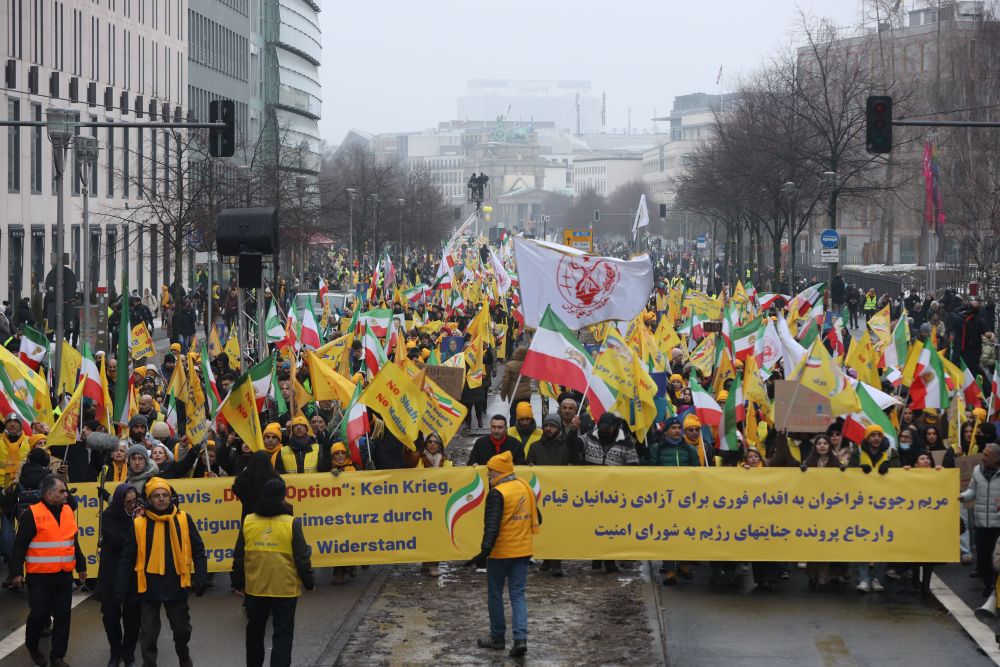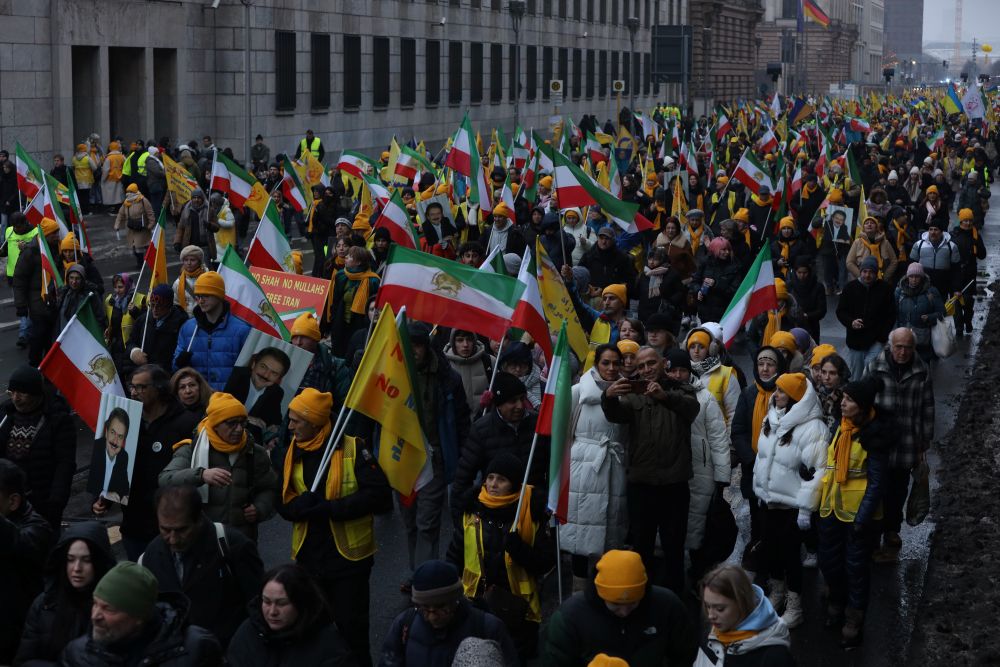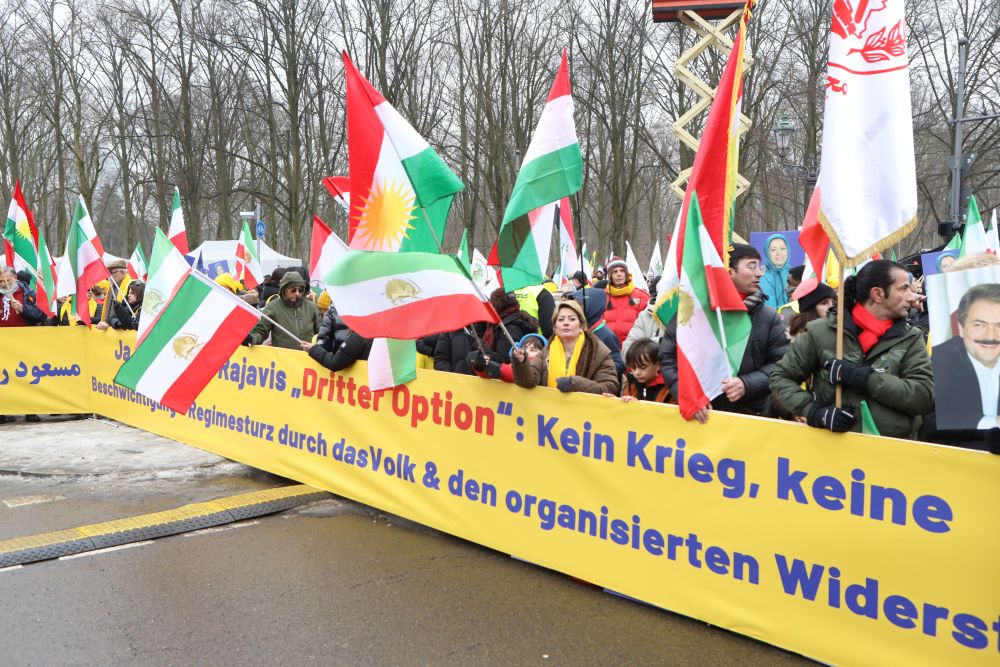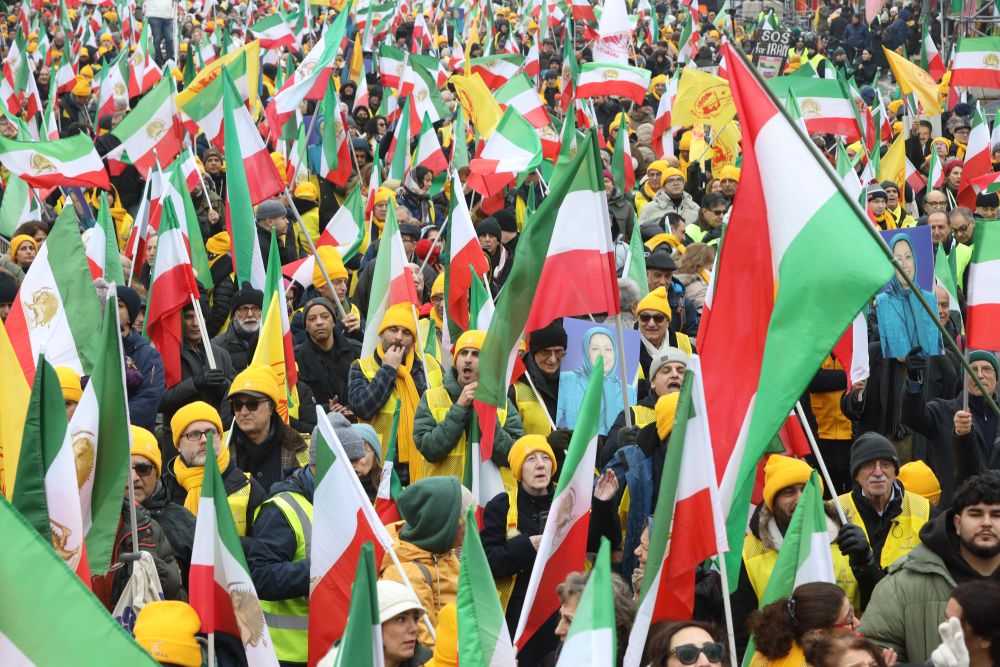
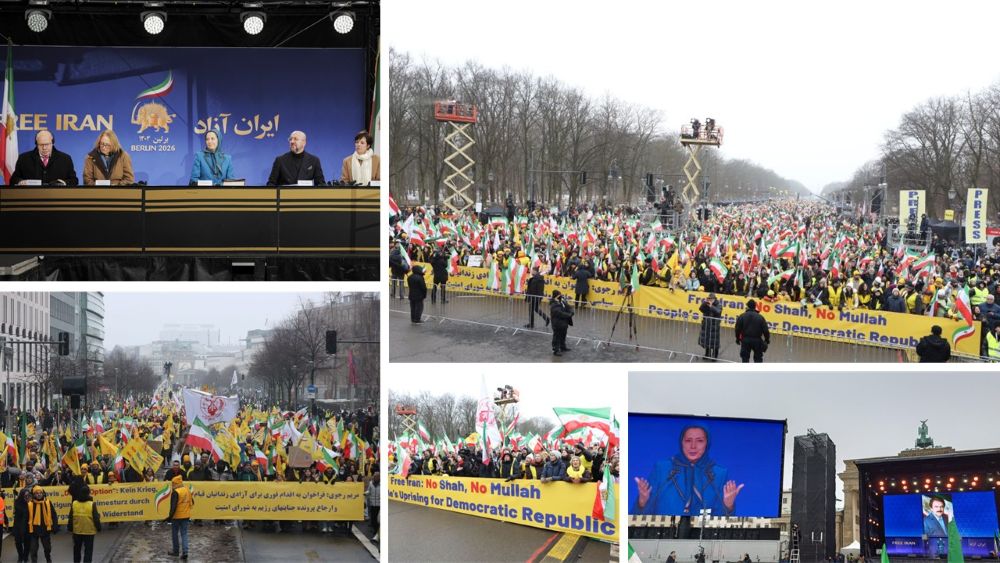
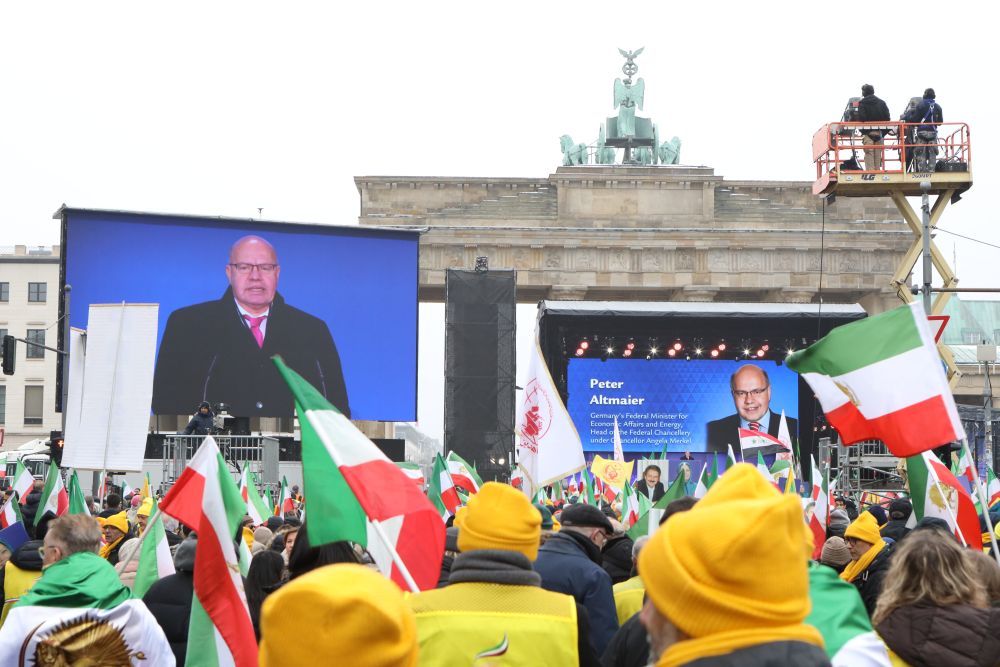
Berlin, February 7, 2026 — In sub-zero conditions on Saturday, tens of thousands of people assembled at Berlin’s Brandenburg Gate to commemorate the anniversary of Iran’s 1979 anti-monarchy revolution and to express solidarity with ongoing protests inside Iran. Event organizers noted that some attendees and speakers participated remotely after severe weather disrupted travel plans. Throughout the program, speakers delivered a unified political message: rejecting both the legacy of the Shah and the current clerical establishment, expressing confidence in the resistance’s organizational capabilities — particularly the PMOI-affiliated Resistance Units — and advocating for a transition grounded in the National Council of Resistance of Iran’s Ten-Point Plan.
Addressing the rally, Mrs. Maryam Rajavi, President-elect of the National Council of Resistance of Iran(NCRI), told participants that the “countdown” to overthrow had started and portrayed the Resistance Units as the structured backbone of the uprising.
“For years and years, we said: overthrow, overthrow,” Mrs. Rajavi stated. She cautioned that monarchist chants like “Long Live the Shah” represent an effort to “hijack” the uprising and serve as a “symbol of division” that enables repression.
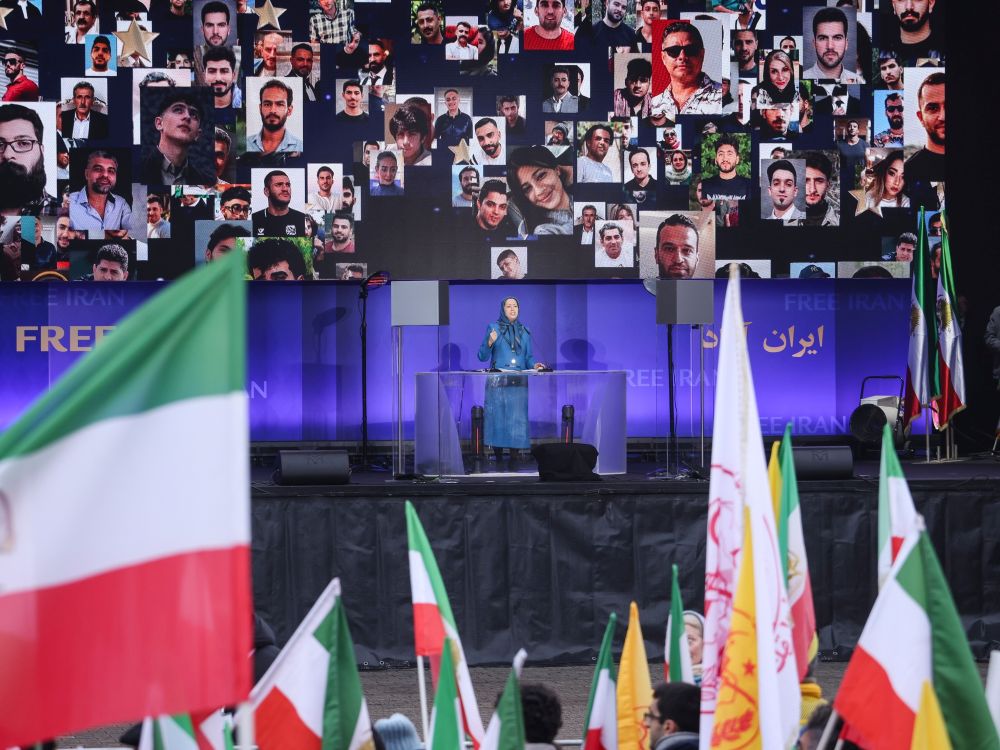
Emphasizing the slogan “No to Shah, no to the mullahs,” Mrs. Rajavi outlined a post-overthrow plan: establishing a democratic republic, separating religion from the state, ensuring gender equality, and maintaining a non-nuclear Iran, with a constituent assembly tasked with drafting a new constitution within months. She called for international measures centered on tangible support for Iranians — including unrestricted internet access and legal accountability for senior officials — while underscoring that regime change must be driven by Iranians themselves and their organized resistance.
Charles Michel, former President of the European Council
Charles Michel, former President of the European Council, linked Berlin’s own democratic rupture to Iran’s trajectory, telling the crowd that “no wall is eternal” and that “freedom cannot be defeated forever.”
Former European Council president Michel argued that Europe’s policy must stop treating Tehran as a permanent fixture: “appeasement does not work,” he said, while also insisting that “no foreign military intervention can bring a lasting and stable solution.” In his framing, the missing ingredient is not anger but architecture — an organized alternative that can carry a transition without being captured by power-seekers.
He called the NCRI’s Ten-Point Plan “the right recipe to move from tyranny to democracy,” saying it offers a “solid bridge” from protest to a pluralist republic grounded in free elections, equality, and separation of religion and state. Michel also took aim at monarchist currents, warning Iranians not to let anyone “steal your dreams” or “hijack the future,” portraying restoration politics as another attempt to trade one form of authoritarianism for another.
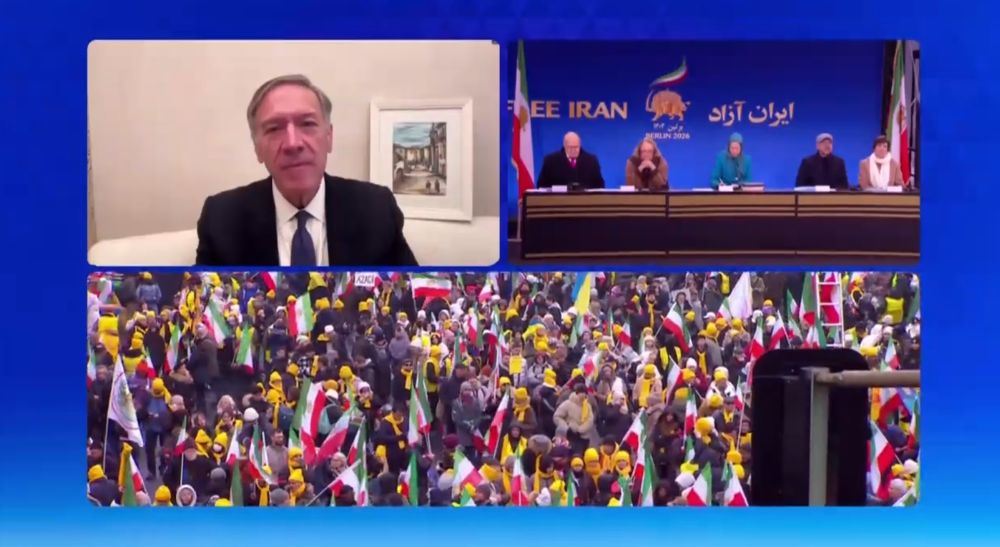
Mike Pompeo, former U.S. Secretary of State
Mike Pompeo, former U.S. Secretary of State, saluted rallygoers “braving the cold” and then declared the moment bigger than a cycle of unrest: “This isn’t just a protest movement… This is a revolution.”
Former Secretary of State Pompeo stressed that the decisive struggle is internal: “the regime cannot be overthrown from outside,” he said, arguing that outside actors can support but cannot substitute for an organized domestic force. He repeatedly framed the resistance’s strength as its structure — networks that persist under repression — and pointed to Resistance Units as evidence that opposition is not merely rhetorical.
Pompeo also presented the NCRI’s Ten-Point Plan as the practical answer to the two questions he said Western capitals always ask: “Is there an alternative?” and “What happens the day after?” He described the plan as a transition blueprint — toward a secular republic, gender equality, early elections, and a non-nuclear Iran — and warned that any “strongman solution,” including monarchist restoration, would reproduce dictatorship under a different symbol.
Peter Altmaier, former German Federal Minister for Economic Affairs and Energy
Peter Altmaier, former German Federal Minister for Economic Affairs and Energy, argued that Europe should stop waiting for Iran’s rulers to “modernize” and instead align policy with a defined democratic endpoint.
Mr. Altmaier said Iranians had once hoped that a government “without the Shah” would bring democracy — and warned that the current authorities have destroyed any remaining legitimacy by responding to dissent with violence and repression. He urged a tougher European stance, calling for “more and tougher sanctions” and fewer illusions about reform.
Altmaier also treated information as a strategic front: he appealed to newsrooms to “spend more time reporting from Iran,” describing a free press as “the lifeline” for people facing censorship and intimidation. Rather than focusing on personalities, he pointed to the NCRI’s Ten-Point Plan as a benchmark for what a democratic transition should guarantee — freedom, rule of law, and equal rights — and ended with an encouragement aimed at perseverance: “Do not despair. You shall overcome!”
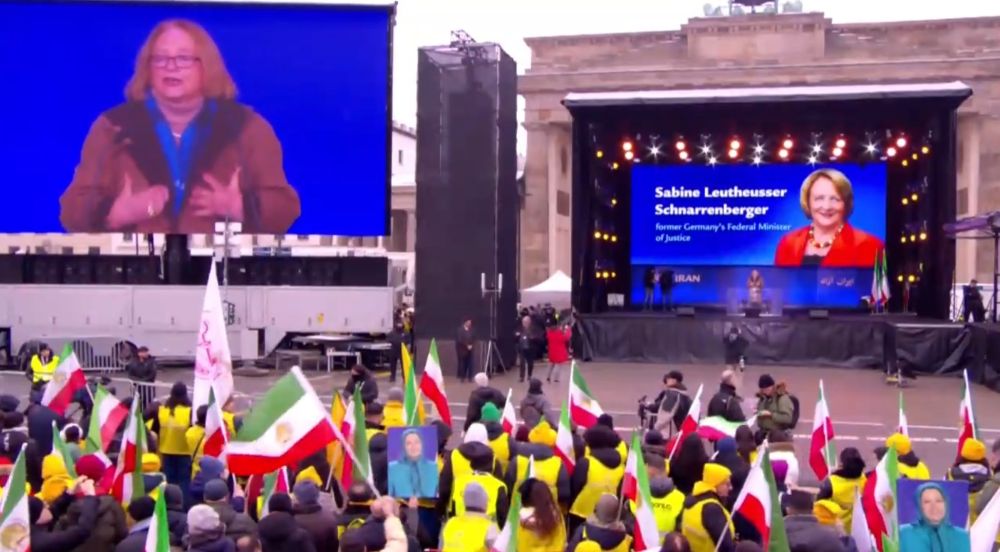
Sabine Leutheusser-Schnarrenberger, former German Federal Minister of Justice
Sabine Leutheusser-Schnarrenberger, former German Federal Minister of Justice, framed the rally as a legal and moral test of Europe’s consistency on rights. “We are in the right place, at the Brandenburg Gate,” she said, tying Germany’s own democratic breakthroughs to Iran’s demand for freedom.
Leutheusser-Schnarrenberger argued that a credible alternative must be measurable in institutions and liberties — “freedom of expression, freedom of assembly, free elections, and the separation of religion and state” — and said these principles are not abstract but life-or-death under a system of detention and coercion. She urged policymakers to put human rights first in any engagement: “The first demand must be: Release the detainees… imprisoned because they took to the streets for their freedom,” she said, also condemning executions and calling for accountability mechanisms that reach decision-makers, not only foot soldiers.
Leutheusser-Schnarrenberger highlighted women’s rights as a core democratic indicator, referencing the right to live without fear for dress, speech, or public presence.