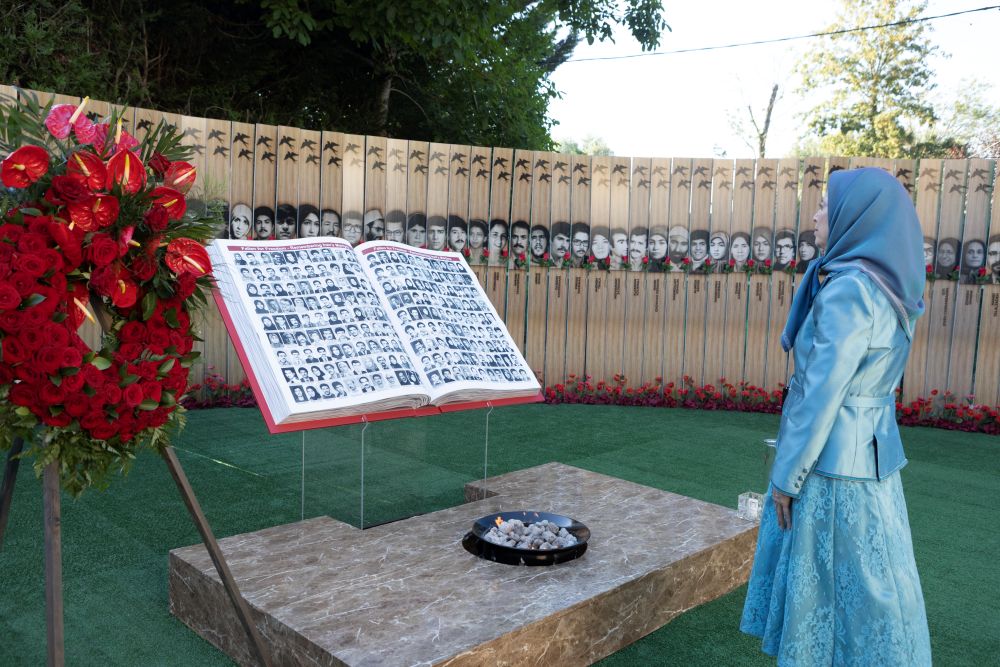


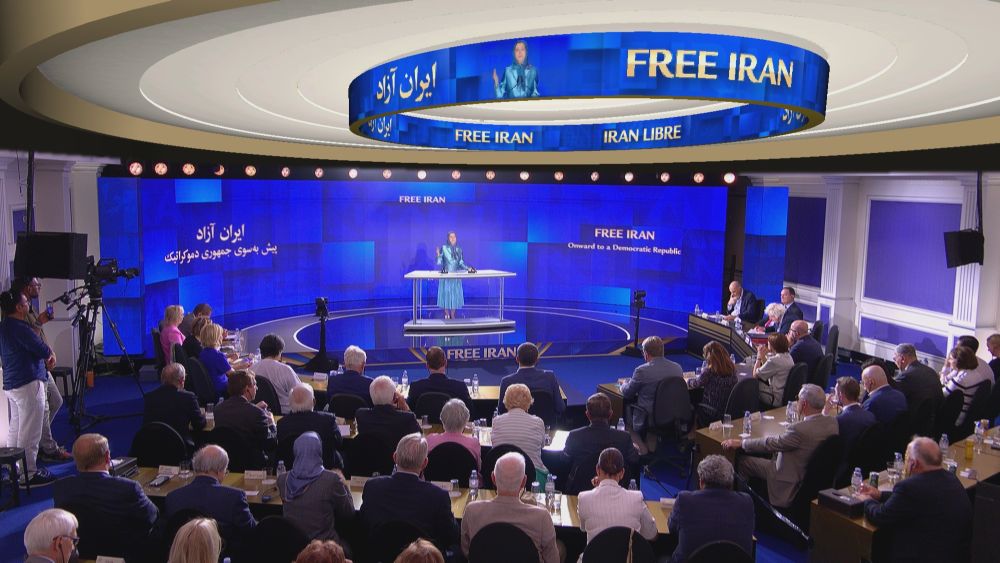
On June 20, 2026, a major international summit was held in Paris, bringing together senior political figures, lawmakers, and human rights advocates from around the world to express support for the Iranian people’s pursuit of a democratic republic. The gathering took place amid significant geopolitical developments and following a controversial last-minute administrative decision that blocked a planned mass rally.
Free Iran 2026
Onward to a Democratic Republic #OurChoiceMaryamRajavi #100KFreeIranRallyhttps://t.co/7Ncha7Zq0R— Iran Freedom (@4FreedominIran) June 20, 2026
The prohibited demonstration was expected to bring nearly 100,000 supporters to the streets of Paris, with more than 800 buses traveling from across Europe and participants arriving from the United States, Canada, and Australia. According to reports, the decision came after pressure from Tehran, including an urgent phone conversation between Iranian Foreign Minister Abbas Araghchi and his French counterpart, which reportedly sought to prevent the peaceful event.
A court ruling regarding the ban also highlighted further allegations surrounding efforts to disrupt the demonstration. The judgment referred to claims involving remnants of the former Shah’s regime and alleged activities linked to groups operating in Europe. It also cited accusations that certain monarchist elements had issued threats and attempted to obstruct the planned march.
These developments have intensified debate over attempts to undermine peaceful opposition activities supporting the Iranian people’s democratic aspirations. Critics argue that extremist elements from different political backgrounds have sought to create instability and silence opposition voices through intimidation and disruption.
Despite these obstacles, the Paris summit became a significant platform for international support for the National Council of Resistance of Iran (NCRI) as a proposed democratic alternative to Iran’s current theocratic system. Representatives from Europe, North America, and other regions expressed solidarity with Iran’s domestic Resistance Units and condemned the regime’s ongoing executions, repression of civil society, and destabilizing regional policies.
The conference delivered a clear message urging Western governments to abandon the policy of appeasement toward Tehran, adopt a firmer approach toward the Islamic Revolutionary Guard Corps (IRGC), and support the Iranian people’s demand for freedom, democracy, and fundamental rights.
The Paris gathering ultimately underscored a growing international focus on Iran’s political future and the search for a democratic solution led by the Iranian people themselves.

Maryam Rajavi: Iran’s Future Lies in a Democratic Republic
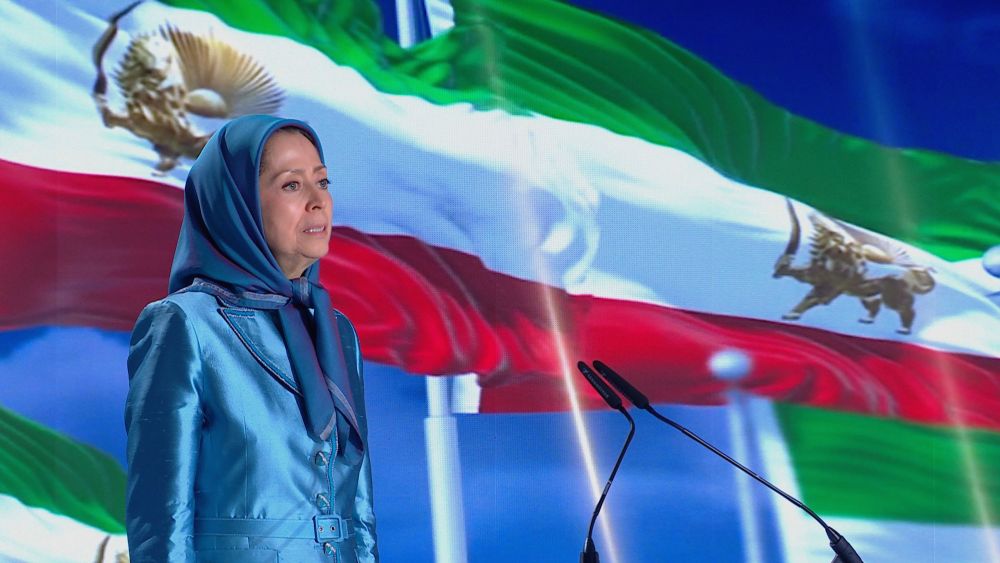
Keynote speaker Mrs. Maryam Rajavi, President-elect of the National Council of Resistance of Iran (NCRI), opened the summit by commemorating the 45th anniversary of the nationwide resistance and honoring the enduring legacy of the National Liberation Army.
She highlighted the expanding domestic impact of the NCRI’s organized resistance network, stating that “the Resistance Units carried out 630 operations against the regime’s centers and forces of repression” during the recent January uprising, while 250 freedom fighters targeted headquarters in Tehran.
Mrs. Rajavi strongly rejected the political legitimacy of monarchical alternatives, describing remnants of the Shah’s regime as “accomplices and instruments of the religious dictatorship” who use intimidation and symbols of the notorious SAVAK secret police to divert popular uprisings. She emphasized that the establishment of a peaceful, non-nuclear Iran depends entirely on a democratic revolution.
“Iran’s future, and peace and freedom in Iran, lie in the establishment of a democratic republic,” she proclaimed, presenting her Ten-Point Plan as the roadmap for returning sovereignty to the Iranian people through free elections.
She called on Western governments to abandon failed policies of diplomatic appeasement, arguing that the regime’s intense fear of the resistance reveals a deep and dangerous crisis within its leadership.
“We remain steadfast in this covenant,” she concluded. “This is my pledge, and it is our pledge. Our covenant with the martyrs who fell for freedom. Our covenant with the people of Iran. Until our last breath, Until our last drop of blood.”
Free Iran 2026 – Onward to a Democratic Republic
My commitment is to defend Iran’s freedom, honor, and independence against every form of dictatorship and subjugation, however arduous & winding the road may be.
This is my pledge, and it is our pledge.https://t.co/01QUOYOmNO— Maryam Rajavi (@Maryam_Rajavi) June 20, 2026
Charles Michel: Appeasement of Dictatorships Is a Proven Failure
Former President of the European Council and former Belgian Prime Minister Mr. Charles Michel delivered a strong endorsement of Iran’s organized resistance, describing the Ten-Point Plan as the definitive “source code for a future Iran.”
Michel criticized international policies toward Tehran, declaring that “appeasing a dictatorship is a proven failure.” He argued that diplomatic concessions only extend human suffering, pointing to the 853 state-sanctioned executions carried out by the theocracy during the past year.
He rejected any nostalgia for the monarchy, stating that the “atrocities committed by the secret police remain permanently etched into the flesh and memory” of the Iranian people and represent an inseparable and toxic political legacy.
Michel concluded that meaningful transformation cannot be imposed from outside forces but must emerge from within Iran through the courage and determination of the internal Resistance Units, whose continued activities represent a democratic path for the country’s future.
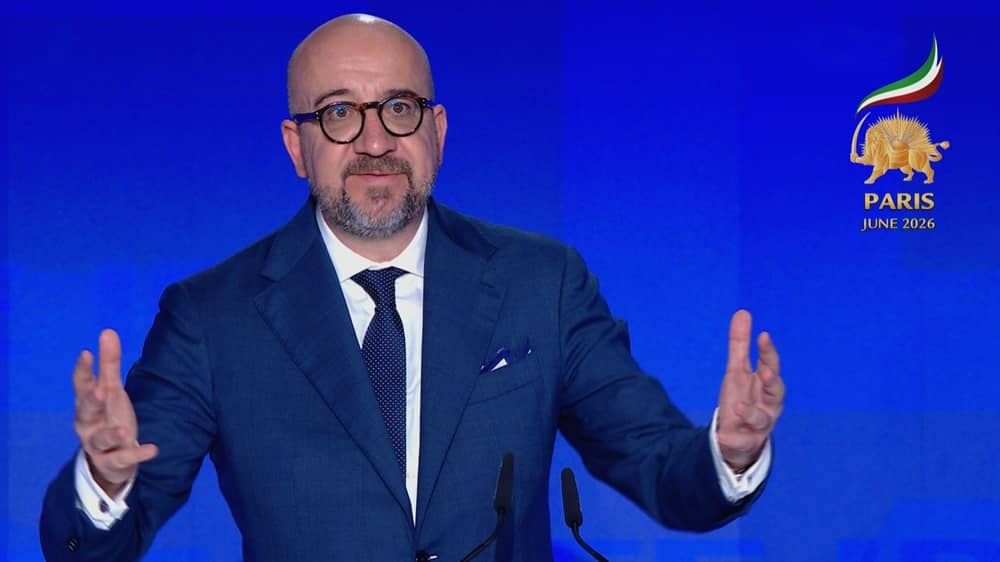

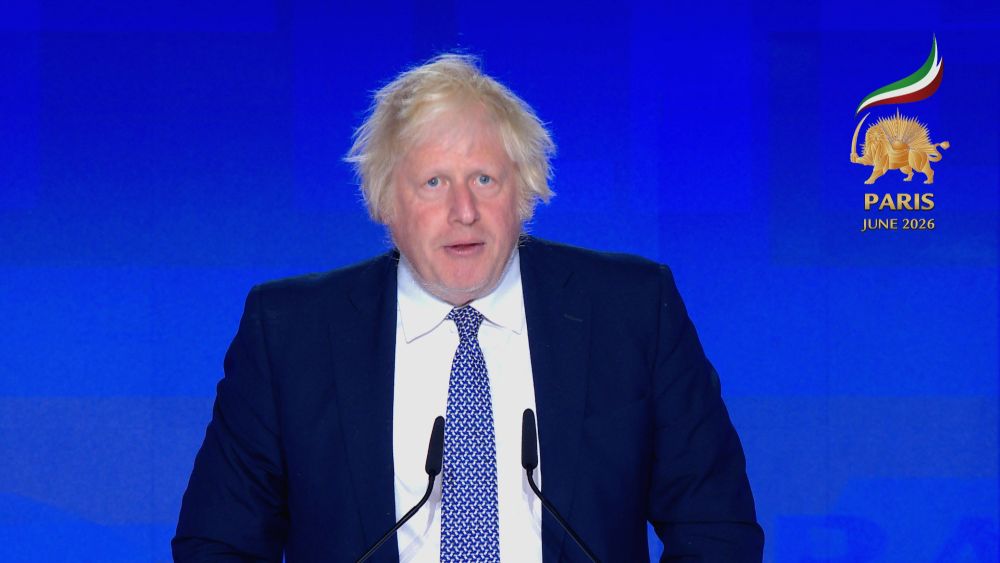
Boris Johnson: “Tomahawks Alone Cannot Secure Freedom”
Former United Kingdom Prime Minister Mr. Boris Johnson praised the resilience of the summit participants and criticized the French authorities’ decision to restrict the planned outdoor rally.
Johnson dismissed the official explanations as “absolute nonsense,” arguing that the French government “bowed cravenly” and “capitulated to a regime in Tehran that tortures and kills its opponents on an industrial scale”.
He stressed that the international community must strengthen support for Iran’s organized opposition at this historic moment, emphasizing that “Tomahawks alone cannot secure freedom” and that lasting democratic change must come from within the country.
Drawing parallels with the collapse of apartheid in South Africa and the fall of European communist regimes, Johnson argued that authoritarian systems cannot survive against an organized uprising by an educated population.
He expressed support for gender equality, freedom of speech, and an independent judiciary as principles of the resistance platform, declaring that “there really is a democratic alternative” capable of restoring Iran’s place among nations.
Petre Roman: The Collapse of Dictatorships Begins When Fear Replaces Strength
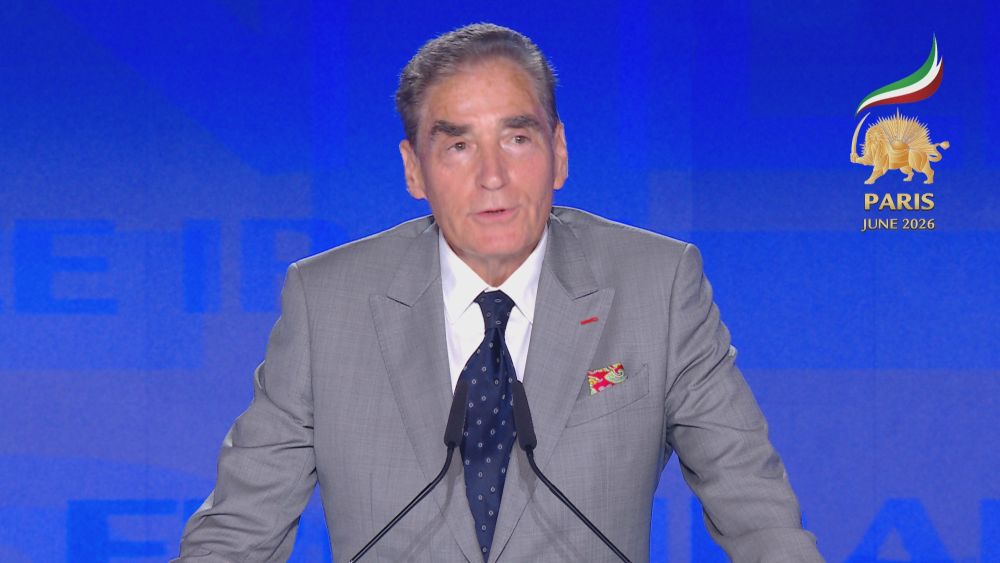
Former Romanian Prime Minister Mr. Petre Roman delivered a powerful address drawing on his personal experience in the overthrow of Nicolae Ceaușescu’s brutal Stalinist dictatorship.
Roman recalled standing on the blood-covered barricades of Bucharest, where the regime had carried out a massacre against young protesters, only to witness the entire dictatorship collapse just twelve hours later.
He argued that the Iranian regime’s current desperate measures, including the execution of thousands of citizens and attempts to block the Strait of Hormuz as a means of pressuring the global economy, represent clear signs of weakness rather than strength.
Roman emphasized that internal protesters are a living symbol of the regime’s approaching downfall, as millions of Iranians have been deprived of basic living conditions due to a devastated economy.
He strongly praised the organized resistance’s political platform, stating: “You have a very important instrument, which is the Ten-Point Plan of President Maryam Rajavi”.
For Roman, the Ten-Point Plan represents a serious and comprehensive alternative that offers the Iranian people a clear strategic vision for building a stable, prosperous, and democratic republic.
John Bercow: “You Can’t Murder an Idea”
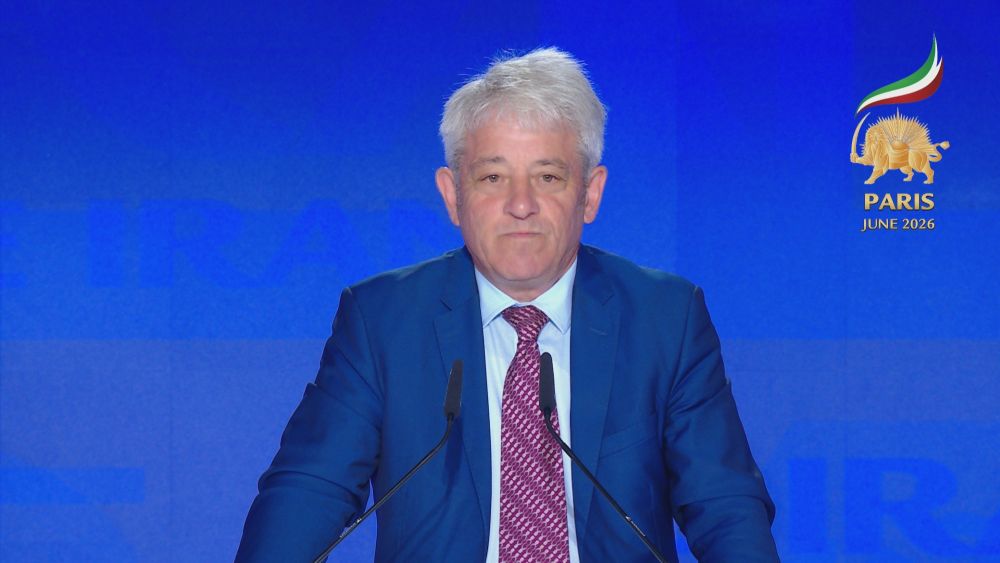
Former Speaker of the United Kingdom House of Commons Mr. John Bercow delivered a forceful speech condemning the Paris administration’s decision to restrict the planned rally, describing it as a “pathetic, abject, pitiful, craven, feeble, submissive surrender” that directly benefited the mullahs.
Bercow argued that although dictators may use extrajudicial killings against hundreds of thousands of people in an attempt to eliminate hope, “the one thing you can’t do is murder an idea,” emphasizing that the universal human aspiration for freedom cannot be destroyed.
He sharply criticized Reza Pahlavi’s efforts to present himself as a transitional leader despite what he described as a “vacuous CV,” pointing to Pahlavi’s public statements expressing pride in the actions of his father’s dictatorship.
Bercow stated that such monarchical ambitions are “utterly beyond the pale,” while praising the NCRI as a secular, pluralist movement committed to free enterprise and gender equality.
He concluded by urging Western governments to abandon failed appeasement policies, treat the clerical regime as a political leper and a pariah state, and extend full diplomatic recognition to the organized resistance.
Dmytro Kuleba: Solidarity with Iran’s Democratic Struggle
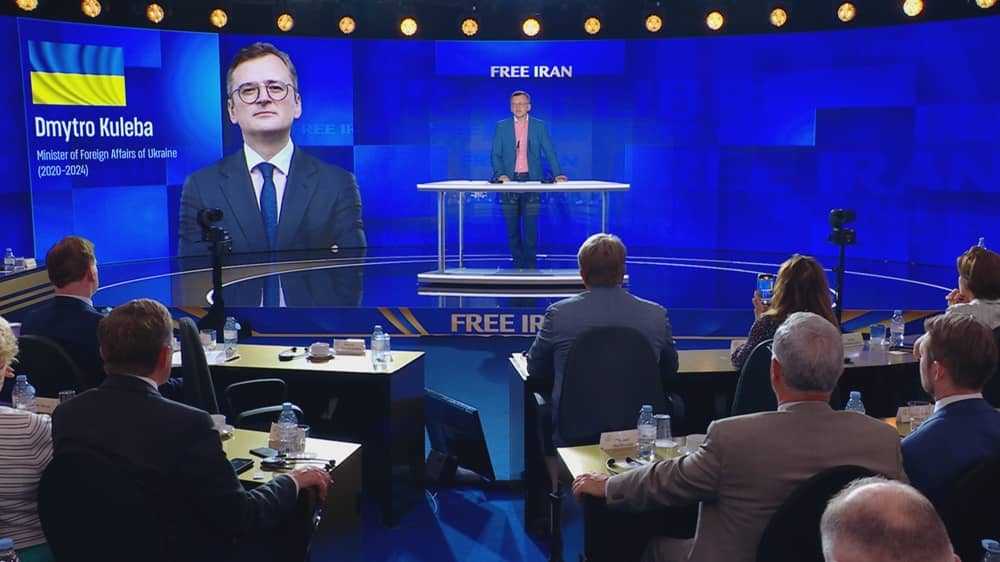
Former Foreign Minister of Ukraine Mr. Dmytro Kuleba expressed strong solidarity with the summit, highlighting the connection between the Iranian regime’s repression of its own people and its support for Russia’s use of ballistic drone technology against civilian infrastructure in Kyiv.
Drawing on his own experience during the 2013–2014 Ukrainian revolution, Kuleba emphasized that popular movements can overcome deeply rooted authoritarian systems, even when major international powers initially promote appeasement and offer little hope of success.
He stressed that history shows dictatorships eventually disappear, while the determination and will of people seeking freedom endure.
Kuleba encouraged members of the organized resistance to maintain unwavering faith, commitment, and determination throughout their difficult journey.
He praised the leadership and personal commitment of Maryam Rajavi, endorsing the resistance’s message of continuing the struggle until victory, and affirmed that “the people of Ukraine stand by those who defend democracy, freedom, liberty in their lands”.
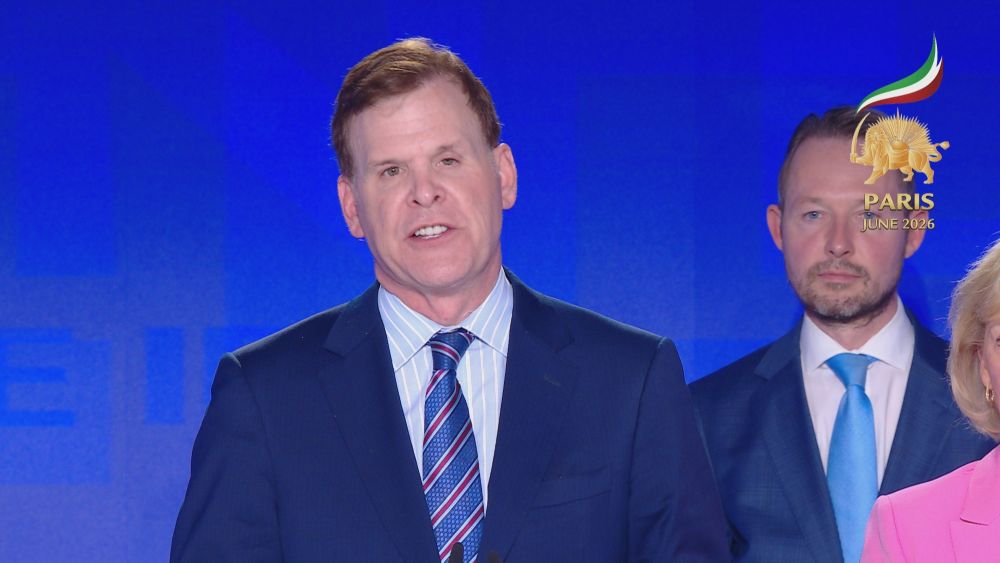
John Baird: Iran’s Future Is Not a Choice Between Two Dictatorships
Former Canadian Foreign Minister Mr. John Baird delivered a firm message calling on the international community to recognize the clerical regime as an “evil” force that cannot be negotiated with, appeased, or accommodated.
Baird rejected the claim that Iran’s future represents a choice between the current religious dictatorship and a return to the former monarchy, arguing that the organized resistance inside Iran has far greater legitimacy among the Iranian people than either the ruling mullahs or figures associated with the previous dictatorship.
He praised the courage of the Iranian people and the residents of Camp Ashraf, stating: “your fight is our fight”.
Baird endorsed the NCRI’s Ten-Point Plan as a comprehensive roadmap toward a future based on free elections, minority rights, and a non-nuclear state.
He concluded by emphasizing that international accountability will ultimately be imposed on the current rulers of Iran for their historical crimes.
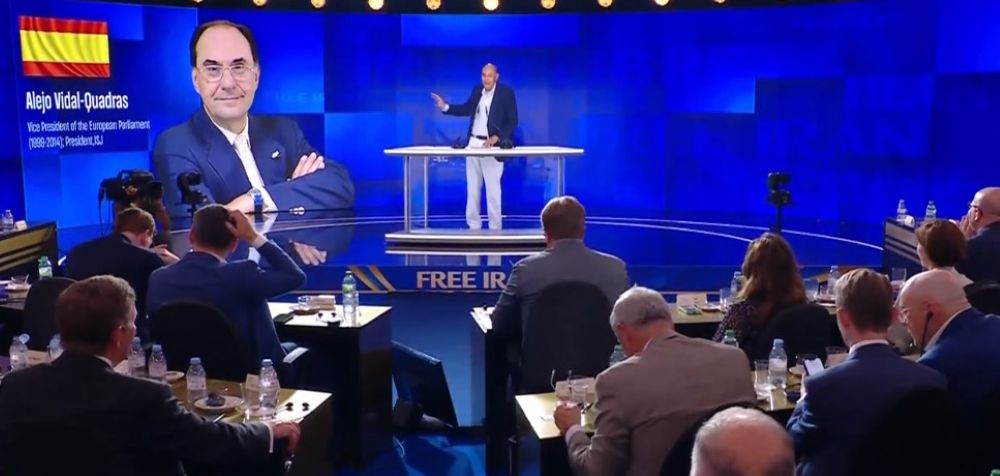
Alejo Vidal-Quadras: The World Must Support Iran’s Democratic Alternative
Former Vice President of the European Parliament Mr. Alejo Vidal-Quadras delivered a speech reflecting on his 25 years of involvement with the Iranian resistance movement.
Vidal-Quadras criticized Western governments for continuing a failed policy of appeasement toward Tehran under different names, including “constructive dialogue,” arguing that such approaches have failed the Iranian people while the regime has intensified repression.
He pointed to the execution of 853 people since the beginning of the year as evidence that the dictatorship lacks any capacity for genuine reform or moderation.
Vidal-Quadras stated that the democratic alternative led by Maryam Rajavi provides a complete roadmap for a secular republic based on judicial independence, gender equality, and peaceful coexistence.
He emphasized that the international community has a responsibility to support the courage of the internal Resistance Units, who continue risking their lives by confronting the Revolutionary Guards and other institutions of repression in order to dismantle the regime from within.

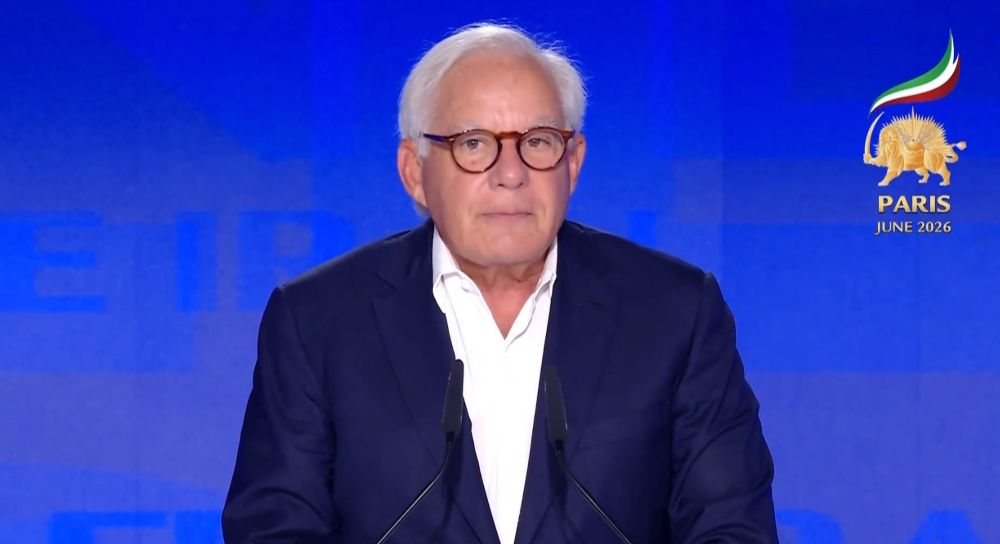
Robert Torricelli: Freedom Comes Through the Actions of the People
Former United States Senator Mr. Robert Torricelli delivered a powerful speech honoring the courage of the Resistance Units and the steadfast fighters of Ashraf.
Torricelli argued that the French government’s restrictive measures, reportedly influenced by concerns over possible disruptions by supporters of Pahlavi, demonstrated that “Pahlavi has learned nothing and is discredited as any force in any future Iran”.
He emphasized that nations are never liberated by foreign military forces or wealthy exiles living abroad, but rather through the organized actions of ordinary citizens, including shopkeepers closing their businesses, soldiers refusing to continue repression, and people taking to the streets.
Senator Torricelli noted that while the price of freedom has been extremely high, with 40,000 martyrs sacrificed in the struggle against the regime, their families and future generations will continue the movement.
He concluded by stating that the international community must remain fully aligned with the NCRI to ensure the end of the theocratic system.

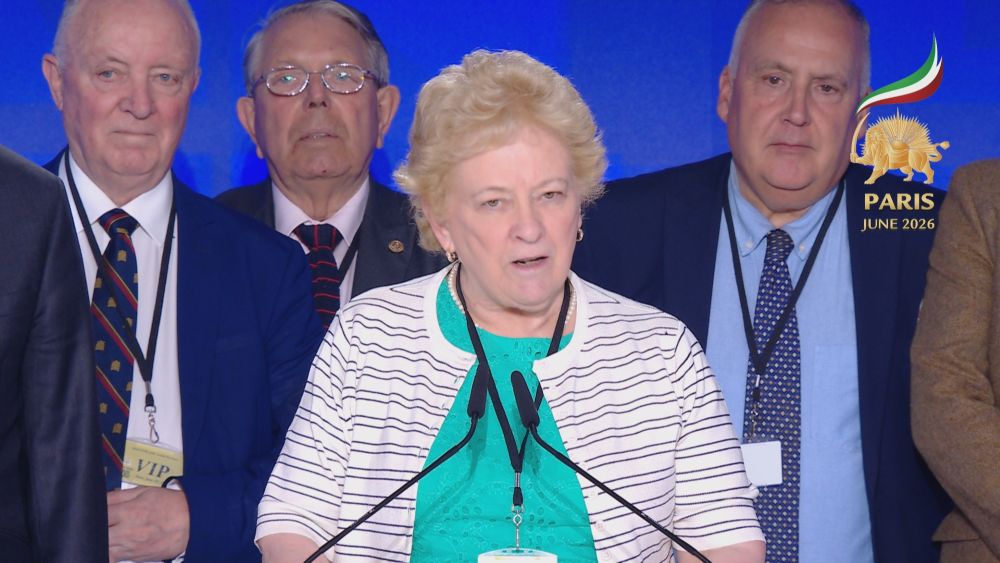
Baroness Nuala O’Loan: Western Governments Must Stand Against Appeasement
Member of the United Kingdom House of Lords Baroness Nuala O’Loan addressed the summit by condemning the French administrative ban on the rally as an unjustifiable restriction on freedom of expression, particularly following a reported telephone discussion with the Iranian Foreign Minister.
O’Loan emphasized that the NCRI has maintained a peaceful record of political activity and stated that violence and unrest are associated with attempts by agents linked to the IRGC or SAVAK to provoke confrontation.
She described restrictions imposed on international supporters of the Iranian opposition as another example of the failure of appeasement policies and called on Western governments to strengthen their support for Maryam Rajavi’s campaign.
O’Loan highlighted changing political attitudes in the United Kingdom, noting that British lawmakers are pushing beyond individual sanctions toward a complete designation of the IRGC as a terrorist organization.
She concluded by calling for Mrs. Rajavi to be formally invited to address Westminster, symbolizing an end to state-sponsored torture and the beginning of a democratic and equal Iran.
Carsten Müller: The Regime’s Repression Reveals Its Weakness
Member of the German Bundestag and Chair of the Justice Committee Mr. Carsten Müller delivered a strong address exposing the vulnerabilities behind the Iranian regime’s propaganda and repression apparatus.
Müller argued that the regime’s dependence on torture, executions, censorship, and intimidation demonstrates deep weakness and fear rather than strength.
He referred to the killing of more than 40,000 predominantly young people and women during the January uprising as evidence of the regime’s brutality and disregard for human life.
Müller expressed deep concern over the French administrative decision to prevent the Paris demonstrations, warning European governments not to become the “handlanger” of a murderous dictatorship by restricting freedom-seeking Iranians or contributing to dangerous arms proliferation.
He called on democratic forces across Europe to stand firmly with the PMOI and support Maryam Rajavi’s Ten-Point Plan, describing it as a universal framework that freedom-loving individuals can endorse.
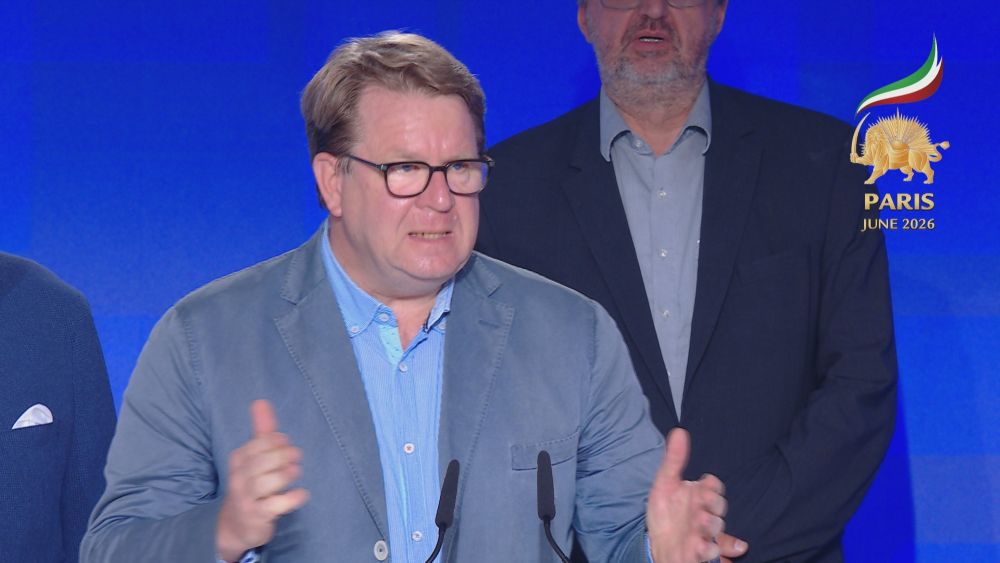
Christine Arrighi: France Must Defend Its Values of Liberty and Equality
French Deputy and President of the Parliamentary Committee for a Democratic Iran Mrs. Christine Arrighi addressed the summit on behalf of a broad coalition of parliamentary committees from Europe and North America.
Arrighi expressed deep sorrow and anger over the administrative ban on the outdoor rally at Place Vauban, declaring “J’ai mal à ma France” (I am in pain for my France) and describing the decision as both morally and diplomatically irresponsible.
She criticized the French government for yielding to the demands of Tehran following a high-level ministerial phone call, arguing that such actions undermine France’s historic principles of liberty, equality, and fraternity.
Arrighi praised the organized resistance as an independent and unified force capable of serving as a legitimate power in waiting, noting that the regime’s intense fear demonstrates its recognition of this reality.
She strongly supported Maryam Rajavi’s Ten-Point Plan for a secular republic, highlighting its commitment to placing women in key positions of political leadership and ending the oppression imposed by the clerical dictatorship.
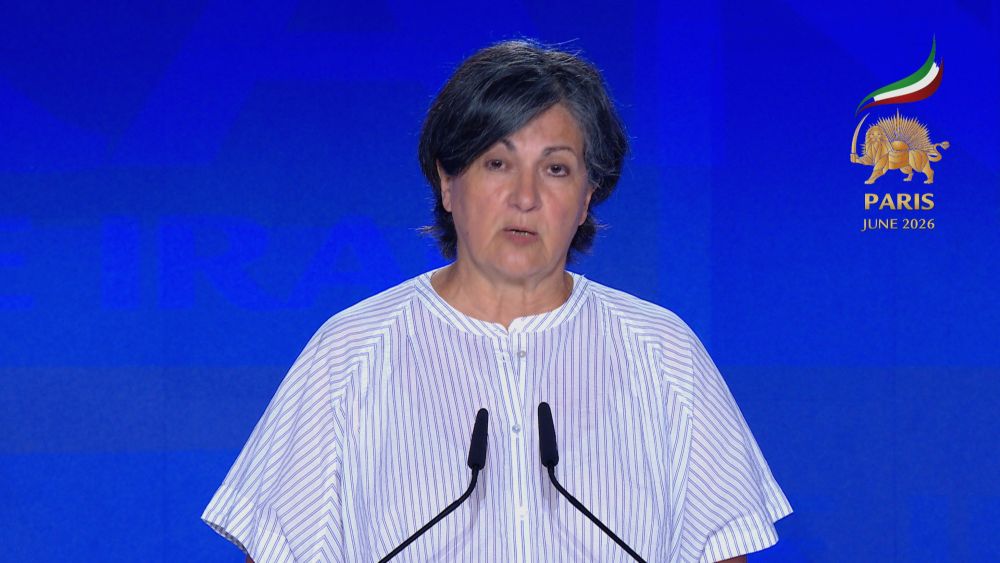
Naike Gruppioni: No Ban Can Stop a People Determined to Rise
Italian Parliamentarian Ms. Naike Gruppioni expressed her deep respect and sense of historical responsibility toward the courageous fighters of the Iranian resistance and the residents of Ashraf 3.
Gruppioni argued that the Iranian people’s desire for freedom is fundamentally stronger than the fear and repression imposed by the ruling theocracy, stating that “no ban can stop a people who have decided to rise up”.
She condemned the clerical regime for systematically persecuting dissidents, suppressing women, and using the death penalty as a tool of political control, emphasizing that the regime does not represent Iran’s rich history or its younger generations.
Gruppioni paid special tribute to Iranian women, highlighting how they have transformed suffering and hardship into an extraordinary struggle for freedom. She praised Maryam Rajavi as the most credible and authoritative expression of a secular and democratic alternative for Iran.
She pledged to use Italian and European institutional channels to continue demanding strong human rights sanctions and to support the NCRI’s democratic project.
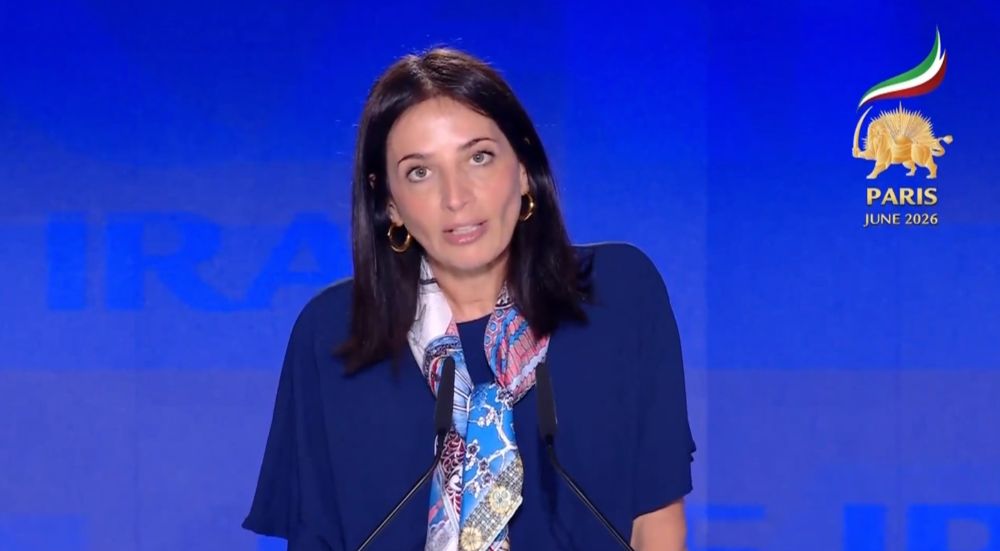

Judy Sgro: The Iranian People’s Demand for Freedom Cannot Be Ignored
Canadian Member of Parliament and Chair of the Standing Committee on International Trade Mrs. Judy Sgro spoke about her deep admiration for the continued growth and resilience of the Iranian democratic movement.
Sgro said that her years of participation in the summit had strengthened her belief that freedom for the Iranian people is approaching, overcoming doubts that emerged internationally following recent regional developments.
She highlighted support for the Iranian people within Canada, noting that she and her colleagues from across the political spectrum had witnessed hundreds of thousands of Canadian citizens participating in demonstrations in Toronto in support of the democratic aspirations of Iran’s people.
Sgro praised the NCRI’s organizational strength inside Iran and its ability to unite a broad coalition committed to ending the current regime.
She emphasized that the provisions of the Ten-Point Plan represent the future that the Iranian people are seeking, and she affirmed that accountability will ultimately be achieved for the regime’s historic crimes.
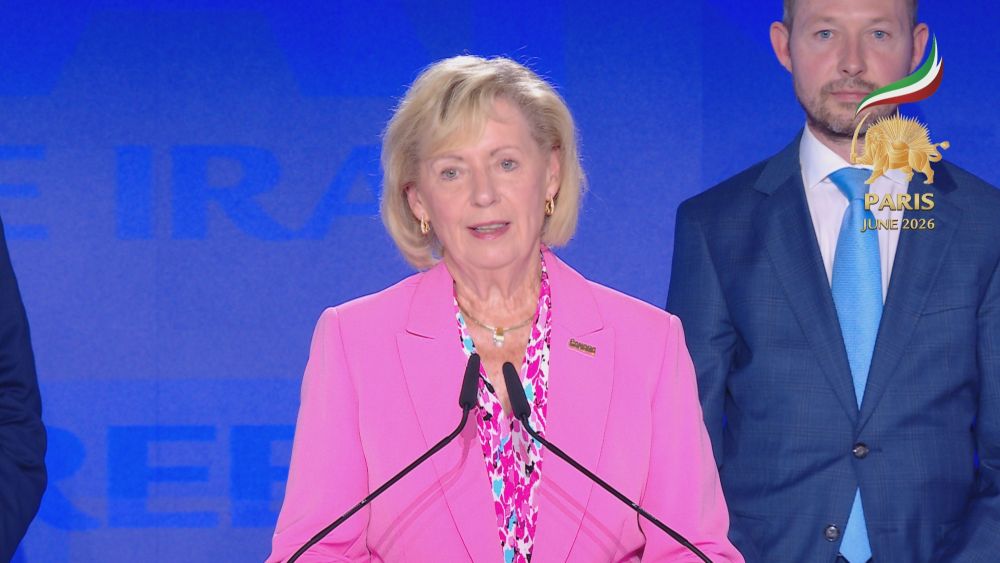
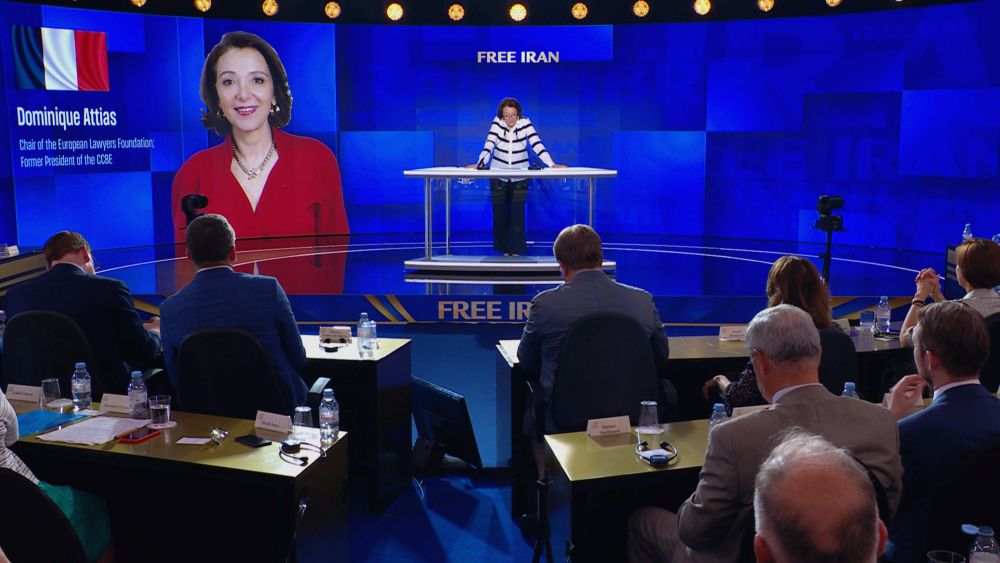
Dominique Attias: The World Must Break Its Silence and Stand on the Right Side of History
Former President of the European Lawyers Association Ms. Dominique Attias delivered the concluding speech of the summit, focusing on the legal and moral consequences of the administrative court’s decision to uphold the rally ban.
Attias described the restriction as a dishonorable “shameful climb-down” that damaged the fundamental values of the republic. She argued that it was profoundly unjust to invoke public order concerns against peaceful, unarmed citizens while remaining silent in the face of executions carried out by Tehran’s authorities.
She emphasized that the planned rally had been carefully organized as a peaceful demonstration, without hatred or weapons, with the sole purpose of giving a voice to young Iranians facing execution in cities including Shiraz, Isfahan, and Tehran.
Attias criticized the tendency of Western governments to prioritize diplomatic convenience over human rights principles and praised the determination of dissidents who continue to resist despite the regime’s repression.
She concluded by calling on the international community to end its silence, support the organized resistance, and stand firmly on the right side of history in order to help create a free and liberated future.
Conclusion: A Global Call for a Democratic Future for Iran
The Paris Summit 2026 highlighted a unified international message: Iran’s future lies in the establishment of a democratic republic based on the will of its people. Echoing Mrs. Maryam Rajavi’s call for an end to appeasement and support for a democratic alternative, speakers emphasized that lasting change must come through the courage of the Iranian people and their organized resistance.