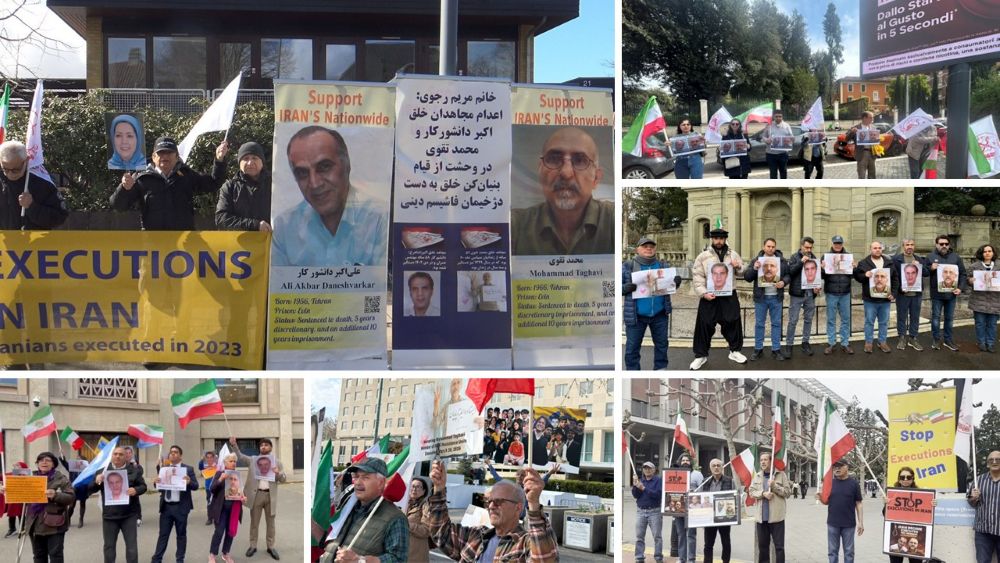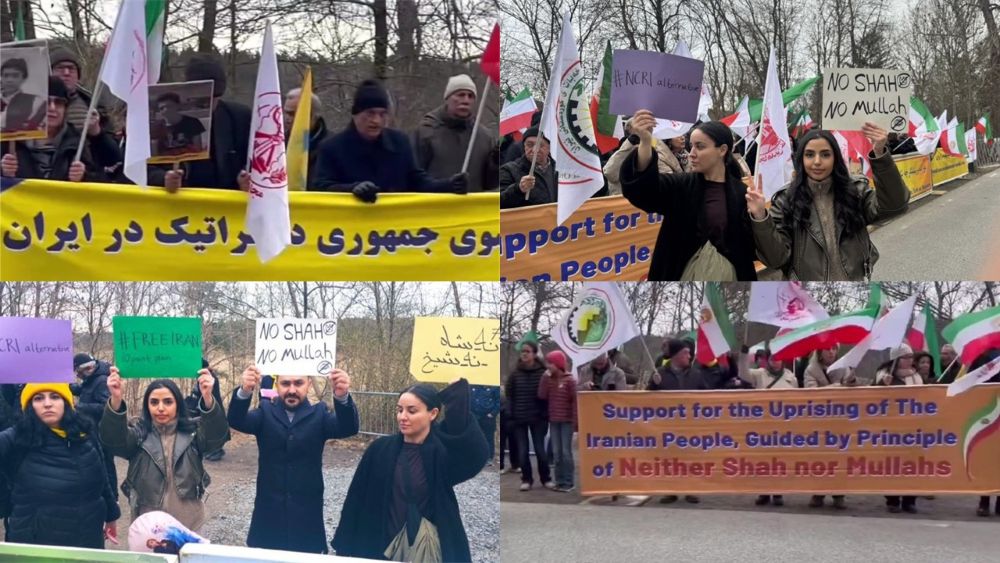
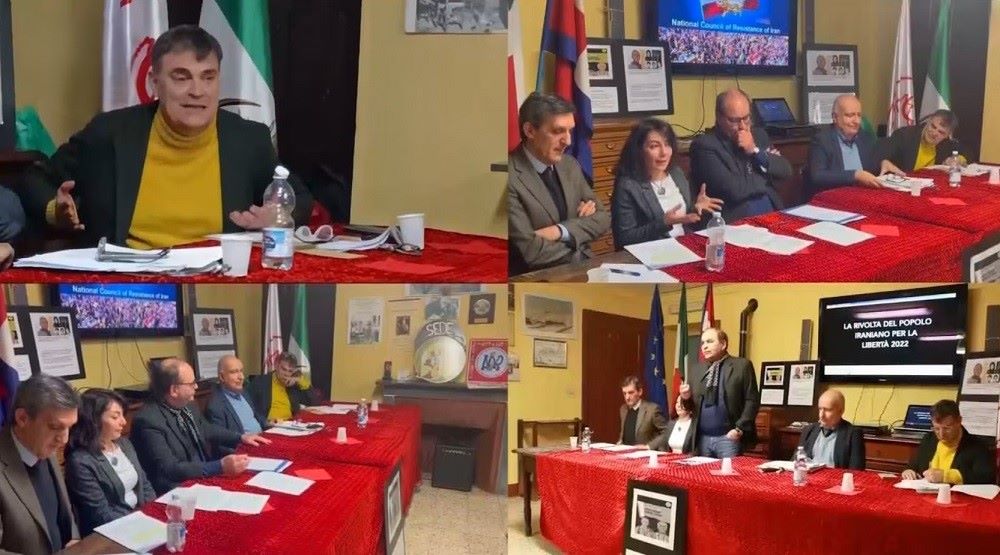
A human rights conference in Rivoli, Italy, has drawn attention to the alarming surge in executions and severe human rights violations in Iran under its mullahs’ regime. Organized by the Meridiana Human Rights Association in collaboration with the Free and Democratic Iran Association, the event brought together scholars, activists, and members of the Iranian diaspora to urge decisive international action and support for Iran’s organized resistance movement.
Bruno Merlin, president of the Meridiana Association, opened the conference by highlighting Iran’s rich cultural history and contrasting its people’s aspirations with the oppressive rule of the regime. He described Iran’s leadership as a fundamentalist dictatorship that suppresses freedom, progress, and democracy, stressing the importance of recognizing the Iranian people’s desire for change, as reflected in the country’s organized resistance.
Professor Valter Coralluzzo of the University of Turin analyzed the ideological nature of Iran’s leadership, asserting that it is inherently incompatible with peaceful global relations. He noted that, facing setbacks in the Middle East and increasing international isolation, the regime has escalated executions—particularly of political prisoners—to instill fear and suppress dissent. Coralluzzo criticized the international community’s silence on these executions, emphasizing that recent uprisings signal a rejection of both theocratic and monarchical rule. He identified the National Council of Resistance of Iran (NCRI) and its leader, Maryam Rajavi, as a democratic alternative, citing her Ten-Point Plan, which advocates for secular governance, gender equality, and civil freedoms.
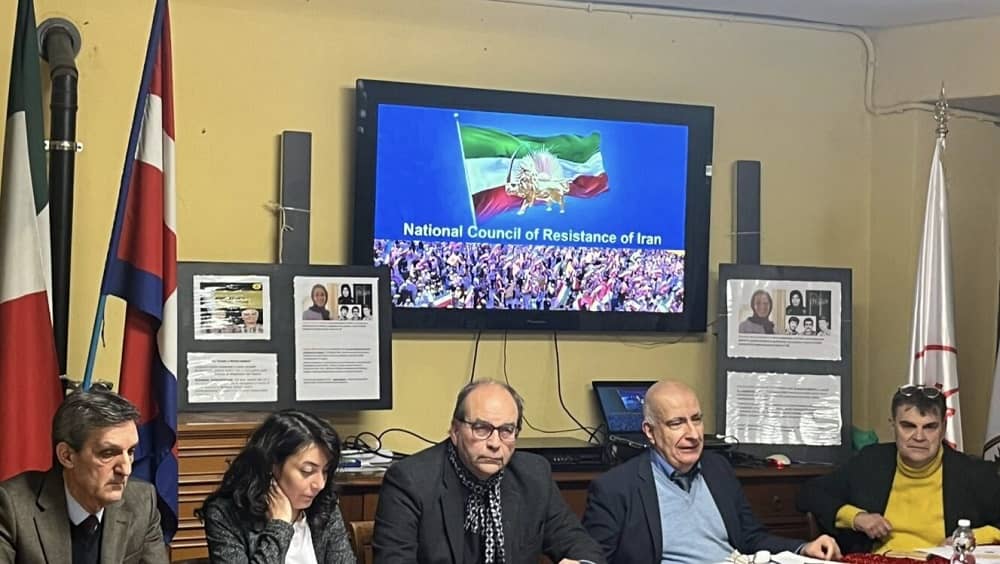
Yalda Jahandarpour, representing the Iranian Youth Association in Italy, spoke on the historical roots of Iran’s fight for freedom, particularly among women. She highlighted the active role of youth and women in recent uprisings, supported by resistance units within Iran. Jahandarpour condemned the regime’s use of executions as a means to silence opposition and prevent future protests. She urged the international community to take firm action, arguing that true democracy and human rights in Iran can only be achieved through support for the Iranian people and the NCRI.
Dr. Yousef Lesani warned that the regime, fearing internal revolt and reeling from strategic failures, has intensified repression, exacerbated mass poverty, and increased executions. He linked the regime’s corruption and sponsorship of terrorism to its desperate attempts to maintain power. Dr. Lesani reaffirmed the NCRI’s viability as a democratic alternative, crediting the MEK as its core force and emphasizing Maryam Rajavi’s Ten-Point Plan as a realistic framework for Iran’s transition to democracy. He called on Western governments to abandon appeasement policies, recognize the legitimacy of Iran’s resistance movement, and officially designate the Islamic Revolutionary Guard Corps (IRGC) as a terrorist organization.
Luca Andreani, head of Amnesty International in Italy’s Piedmont region, closed the conference with a sobering account of Iran’s rising execution rates, particularly among ethnic and religious minorities. He criticized the regime’s disregard for international legal standards, its use of hostage diplomacy, and its systematic reliance on the death penalty to stifle opposition. Andreani also underscored the plight of Iranian women, who continue to face institutionalized discrimination and violence. Despite the regime’s brutality, he expressed hope for a better future and stressed the importance of sustained international pressure.
Vi segnalo:
IRAN: UNO STATO TEOCRATICO
Giovedì 13 marzo 2025, ore 21:00
La Meridiana di Rivoli, Piazza S. Rocco 6 #Rivoli
Interverrò per @amnesty su "La violazione dei diritti di informazione ed espressione. Le azioni possibili"@amnestyitalia @AmnestyPiemonte @amnestytorino pic.twitter.com/0uc7M3FEMP— Luca Andreani (@RCAmnestyPieVdA) March 12, 2025
The conference concluded with a forceful call for the international community to abandon appeasement and support the Iranian people’s demand for change. Participants urged governments to recognize the NCRI as a legitimate democratic alternative and to take concrete measures to halt executions and hold Iran’s leadership accountable for its human rights abuses.