


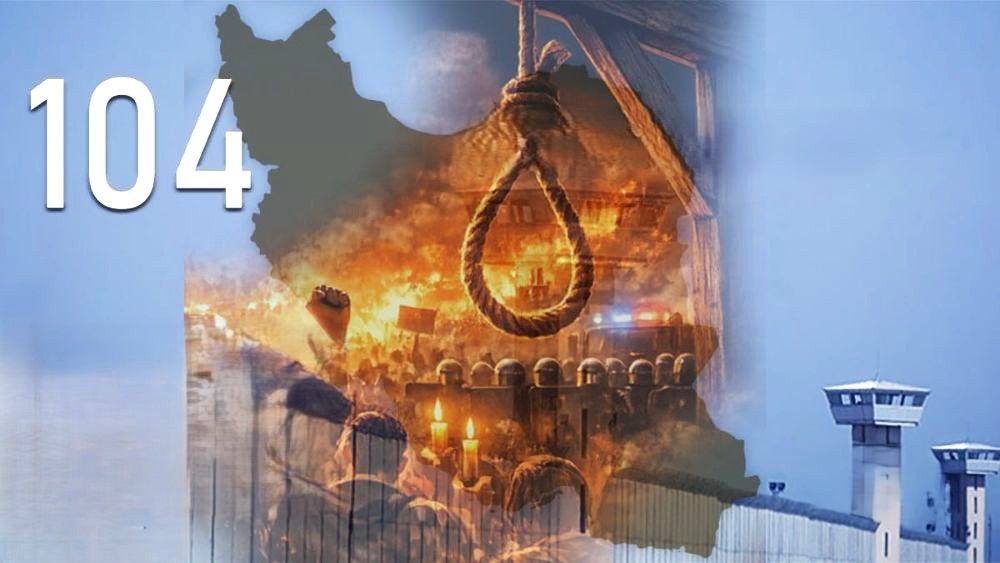
Campaign Continues at the Height of Repression
Iran Human Rights Center – Tuesday, January 20, 2026
As state repression intensifies alongside nationwide protests, widespread internet shutdowns, and mass arrests, Iran’s nationwide “No to Execution Tuesdays” campaign has entered its 104th consecutive week, marking a new phase of social reach and influence.
Although prisoners have been unable to issue their weekly statement due to internet disruptions, hunger strikes continue in at least 56 prisons across the country, underscoring the campaign’s resilience under severe repression.
For nearly two years, the campaign has persisted as a weekly act of resistance. Today, in clear convergence with street protests, it has become one of the most prominent symbols of public opposition to the death penalty in Iran.
Defying Internet Blackouts
According to field reports, the “No to Executions Tuesdays” campaign has continued despite extensive internet shutdowns imposed alongside the violent suppression of protests. Severe communication restrictions have failed to halt the movement, and the call of “No to executions” continues to echo from inside prisons and throughout society.
Human rights activists say the internet blackout aims to conceal state violence and silence dissent. However, recent weeks have demonstrated that these measures have not severed the growing connection between prisons and the streets.
A Clear Link Between Prisons and Street Protests
In recent weeks, the “No to Executions Tuesdays” campaign has become deeply intertwined with ongoing street protests, transforming into a powerful emblem of collective resistance to capital punishment.
Protesters have voiced demands aligned with the campaign’s core message—opposition to executions and rejection of policies that target human life. Observers note that this simultaneity reflects the transmission of a concrete demand from prison cells into the heart of society, now visible in chants, gatherings, and acts of protest.
Escalating Crackdown and Mass Arrests
As this connection has strengthened, state repression has intensified. Reports indicate tens of thousands of protesters have been arrested across multiple cities, with many still in detention.
Human rights sources warn that a number of detainees face serious charges, and some are already under death sentences, raising grave concerns about a new wave of executions.
Executions as a Tool of Political Repression
-
Execution of 30 prisoners amid protest crackdowns and internet shutdowns
-
At least 22 prisoners executed in 19 Iranian cities
The accelerated issuance and implementation of death sentences have further reinforced the link between street protests and the “No to Executions Tuesdays” campaign. Many protesters now view executions not merely as judicial punishments, but as systematic instruments for eliminating dissent and instilling fear.
Human rights defenders stress that the use of capital punishment in political cases reflects the securitization of Iran’s judiciary and its transformation into an arm of state repression.
From Prison Protest to Nationwide Outcry
Within this context, the “No to Executions Tuesdays” campaign has evolved from a prison-based protest into a nationwide cry against the death penalty. The widespread presence of protesters in the streets and the repetition of the campaign’s slogans highlight its growing social influence.
Observers emphasize that the campaign has become not only a human rights demand, but also an integral part of the broader movement against repression and systemic human rights violations.


Prisoners’ Resistance in the Face of Execution Threats
Despite intensified security pressures, severe restrictions, and repeated threats, prisoners continue to participate in the “No to Executions Tuesdays” campaign. Reports confirm that this act of protest has not been halted inside prisons, even as some detainees face imminent execution.
Human rights monitors describe this persistence as a powerful example of civil resistance against a state policy of death.
Rising Fears of a New Wave of Executions
As protests are violently suppressed and arrests continue, concerns are mounting over an impending wave of executions. Human rights activists warn that deploying capital punishment against protest detainees could amount to judicial mass killing.
They stress that any delay in domestic or international response places dozens of lives at immediate risk.
“No to Executions” as a National Demand
The “No to Executions Tuesdays” campaign has now emerged as a national demand. Opposition to the death penalty is no longer confined to prisons or human rights circles; it has become a central demand within Iran’s protest movement.
Observers conclude that the campaign’s persistence—despite internet shutdowns and intense repression—demonstrates that Iranian society has not retreated from its call for the abolition of capital punishment.