



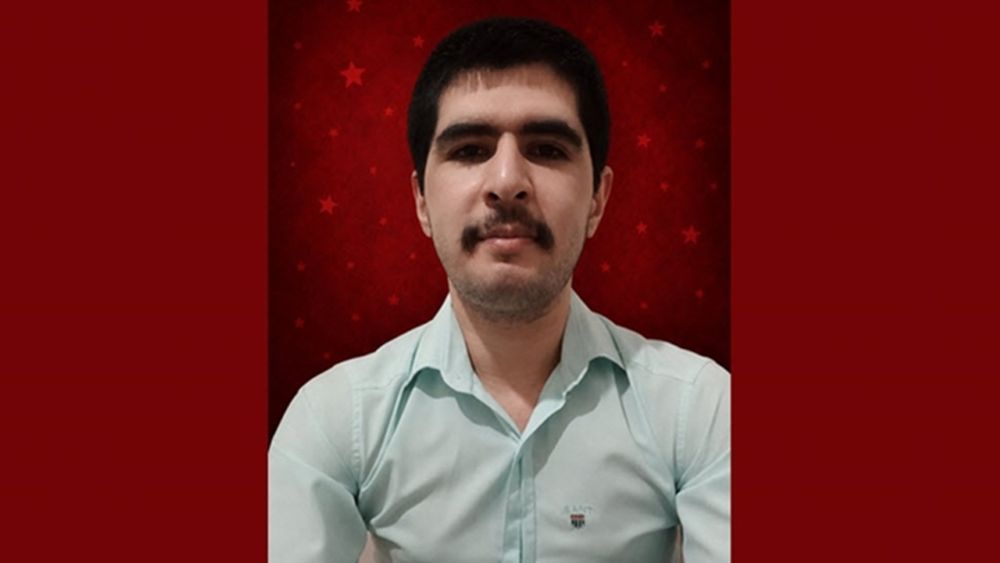
26-year-old law graduate executed after Revolutionary Court death sentence as international concerns mount over political prisoners
At dawn on Wednesday, July 22, 2026, the Iranian regime executed Mehdi Khanaki, a 26-year-old law graduate and member of the People’s Mojahedin Organization of Iran (PMOI/MEK), in Karaj. His execution marks another step in the regime’s escalating campaign against political prisoners and PMOI members, raising renewed concerns about the growing use of capital punishment to suppress political dissent.
Arrest, torture, and death sentence
Khanaki had been pursued by Iranian security forces following the January 2026 nationwide uprising before being arrested in Karaj on February 10, 2026. During months of detention, he was reportedly subjected to severe physical and psychological torture.
On March 1, 2026, information regarding his arrest and the torture he allegedly endured was submitted by the Iranian Resistance to the UN Special Rapporteur on the situation of human rights in Iran and other international human rights organizations, warning of the serious risk to his life.
Following proceedings widely described as lacking due process, the Revolutionary Court sentenced Khanaki to death and ordered the confiscation of all his property. The judiciary accused him of PMOI membership, collecting and storing weapons, and carrying out what authorities described as operations against the state linked to the January 2026 protests.
Judiciary repeats security allegations
In announcing the execution, the regime’s judiciary claimed that security forces seized five handguns, 90 rounds of ammunition, nine magazines, explosive remote controls, homemade grenades, flares, launcher tubes, explosive devices, and bomb-making materials during Khanaki’s arrest.
According to the judiciary, forensic and technical examinations allegedly concluded that some of the seized weapons had been used during the January 2026 nationwide unrest. State media initially reported the arrest without revealing Khanaki’s identity, referring only to the detention of a member of the “Monafeqin,” the regime’s derogatory term for the PMOI.
Maryam Rajavi condemns the execution
Following the execution, Mrs. Maryam Rajavi, President-elect of the National Council of Resistance of Iran (NCRI), strongly condemned the hanging of Mehdi Khanaki and the continuing executions of political prisoners and rebellious youth.
She described the executions as “a clear sign of the persistent uprising of the Iranian people and their brave children against religious fascism,” adding that they reflect “the regime’s terror of the inevitable explosion of public anger.”
The 26-year-old PMOI freedom fighter, Mehdi Khanaki, was executed this morning by the clerical regime in Iran. He had been wanted since the January uprising and was arrested on February 10 in Karaj.
His arrest and severe torture were reported to the UN Special Rapporteur and…— Maryam Rajavi (@Maryam_Rajavi) July 22, 2026
Escalating crackdown on PMOI members
Khanaki’s execution is the latest in a widening campaign targeting PMOI members. In recent months, the regime has executed Vahid Bani Amerian, Mohammad Taghavi, Babak Alipour, Pouya Ghobadi, Akbar (Shahrokh) Daneshvar Kar, Abolhassan Montazar, Hamed Validi, and Mohammad Masoum-Shahi on charges related to PMOI membership.
Several other political prisoners also remain at imminent risk of execution. Arghavan Fallahi was sentenced to death on July 1, 2026, while Zahra Tabari’s death sentence has been upheld. Masoud Jamei, Alireza Mardasi, Farshad Etemadifar, and Reza Abdali are also among PMOI members currently facing execution.
Growing fears over further political executions
Human rights advocates continue to warn that Iran is intensifying its use of the death penalty against political prisoners as part of a broader strategy to silence dissent and intimidate those seeking democratic change.
The execution of Mehdi Khanaki has renewed urgent concerns that more political prisoners could soon face the same fate unless immediate international action is taken to halt the expanding wave of executions in Iran.
