



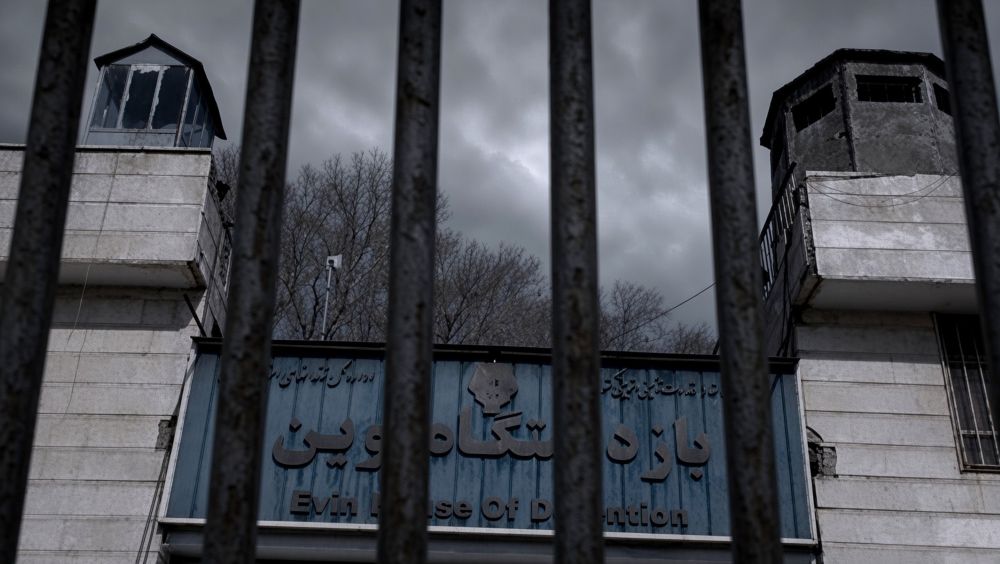
Evin Ward 7 Turned Into a “Living Hell” for Political Prisoners
The Iranian regime has sharply intensified its inhumane treatment of political prisoners, with new reports from inside Tehran’s Evin Prison revealing unbearable living conditions, severe restrictions, violent raids and systematic pressure on detainees.
Reports published on August 14 describe Ward 7 of Evin as a place where political prisoners are being subjected to extreme heat, overcrowding, inadequate sanitation and deliberate psychological and physical pressure. Temperatures inside some of the prison halls have exceeded 40 degrees Celsius, while cooling systems are dysfunctional and merely circulate hot air.
Direct sunlight striking the prison building further raises temperatures inside the halls. Prisoners are forced to spend long hours in closed, suffocating spaces, while the prison doors remain continuously shut, severely restricting their movement and access to open air.
The combination of extreme heat, overcrowding and confinement has led prisoners to describe their conditions as “crowded solitary confinement.” At the same time, widespread bedbug infestations and the lack of basic sanitary facilities have made the already intolerable conditions even more dangerous.
Political Prisoners Held Among Common Criminals
The regime is also using the composition of the prison wards as an additional instrument of pressure. Political prisoners in Ward 7 are being held alongside inmates convicted or accused of ordinary crimes.
According to the reports, approximately one-fifth of Hall 2 in Ward 7 is occupied by prisoners facing drug-related charges. The overcrowding further reduces the already limited living space available to political prisoners and adds to the physical and psychological pressure imposed on them.
The prisoners also have no sports facilities in these sections, leaving them without meaningful opportunities for physical activity while they remain confined for long periods in the oppressive conditions.
Violent Raid on Evin’s Ward 7
The pressure escalated further on Saturday, August 8, when approximately 50 Evin Prison riot guards raided Halls 3 and 4 of Ward 7 at around 11 a.m.
During the raid, guards beat several prisoners while aggressively searching their living areas. Personal belongings were destroyed or confiscated, including essential items that prisoners and their families had purchased with their own money.
The destruction and seizure of these belongings has placed an additional financial and psychological burden on prisoners and their families, who are already struggling to provide basic necessities for detainees.
The raid came amid a broader escalation of repression against political prisoners as the Iranian regime seeks to crush dissent and prevent the resurgence of nationwide protests.
Hojjat Alizadegan Faces Double Pressure After Transfer to Saravan
The intensified repression extends beyond Evin.
Hojjat Alizadegan, a political prisoner and supporter of the People’s Mojahedin Organization of Iran (PMOI/MEK), has been transferred from Yazd Prison to Saravan Prison, where he is being held among common criminals.
According to the NCRI statement, prison authorities have also refused to provide him with his medications and personal belongings. Alizadegan has been sentenced to five years in prison and exile, adding further pressure to his already harsh imprisonment.
Intelligence Ministry Arrests Political Prisoner’s Sister
In another act of repression, Iran’s intelligence apparatus arrested Atefeh Hasani, the sister of political prisoner Mohammad Hasani, a supporter of the PMOI.
The NCRI reported that her release has been conditioned on her brother abandoning his political positions. Hasani is currently imprisoned in Fardis Prison in Karaj.
The case illustrates the regime’s use of family members as an additional instrument of pressure against political prisoners, extending repression beyond prison walls and targeting relatives who seek to support or defend detainees.
Father of Executed Protester Sentenced to Three Years in Prison
The campaign of repression has also targeted families seeking justice for those executed by the regime.
The father of Abbas Akbari Faizabadi has been arrested and sentenced to three years in prison for seeking justice for his son. He is being held in Naeen Prison.
Abbas Akbari Faizabadi was executed on May 25 after being accused by the regime of being one of the armed leaders of the uprising in Naeen and charged with “moharebeh,” or “enmity against God,” as well as attacking the governorate and security centers during the uprising.
His father’s imprisonment adds another dimension to the regime’s campaign of repression: not only political prisoners but also grieving families seeking accountability are being subjected to imprisonment and intimidation.
Calls for Immediate International Action
The National Council of Resistance of Iran has called on the UN Human Rights Council, the UN High Commissioner for Human Rights, the UN Special Rapporteur on the situation of human rights in Iran and international human rights organizations to immediately condemn the escalating pressure on political prisoners.
The NCRI has also stressed the urgent need for an international fact-finding mission to visit Iranian prisons and investigate the conditions faced by political prisoners.
The latest reports from Evin portray a system in which extreme heat, overcrowding, deprivation of basic necessities, forced confinement, violent raids and pressure on prisoners’ families are being used together to break the resistance of political detainees.
The reports from Evin and the cases of Hojjat Alizadegan, Atefeh Hasani and the father of Abbas Akbari Faizabadi underscore the expanding scope of repression against political prisoners and their families across Iran.