



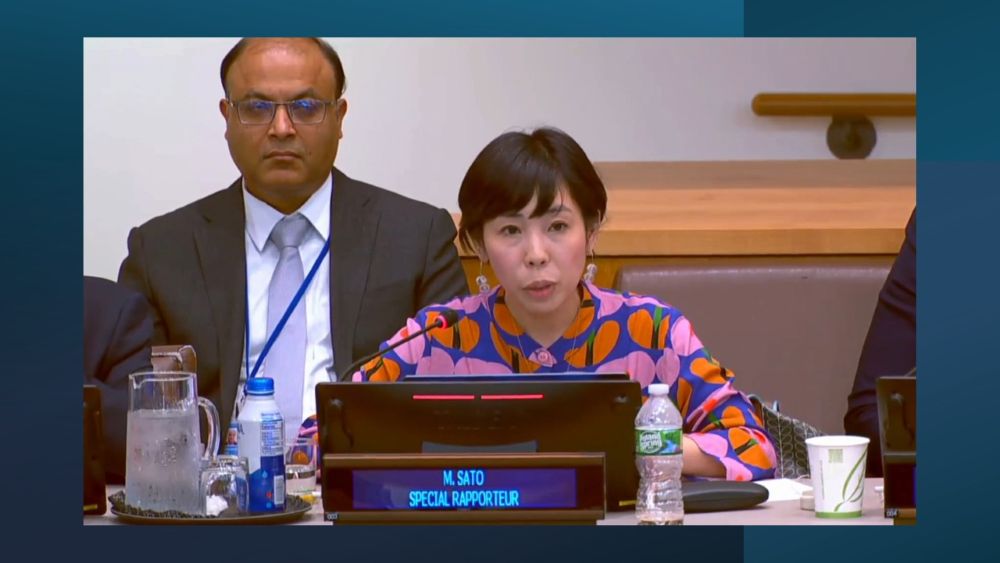
UN Special Rapporteur on the situation of human rights in Iran, Mai Sato, has highlighted that opposition to executions is also growing inside Iranian prisons, where prisoners have staged hunger strikes every Tuesday for more than two years and eight months.
UN Special Rapporteur on Iran @drmaisato speaking today:
“Opposition to the death penalty also comes from inside Iran's prisons. For more than two years and eight months, prisoners have gone on hunger strike every Tuesday to stand against all executions.”#NoToExecutionTuesdays pic.twitter.com/EobolBeFtx
— M. Hanif Jazayeri (@HanifJazayeri) October 28, 2026
Speaking at the UN General Assembly’s Third Committee, Sato said the weekly action reflects prisoners’ resistance to “all executions” in Iran. The campaign is known on social media as “No to Execution Tuesdays”.
Her report, covering February to August 2026, describes a pattern of repression following nationwide protests in January 2026, including mass arrests, enforced disappearances, pressure on families, and severe restrictions on communications.
This is the correct link for the General Assembly ID today (28 October at 3pm New York time) https://t.co/0ZU6h89P89 https://t.co/KPEjO2x4Uc
— Mai Sato (@drmaisato) October 28, 2026
According to the report, at least 34 people were executed in connection with the January protests, including at least five publicly. More than 100 people, among them women and children, reportedly remain at risk of execution.
Sato also warned that Iran’s near five-month nationwide internet blackout has made it harder for victims, witnesses, journalists, and rights groups to document abuses and share information with international bodies.
Dr. Mai Sato said: “The war has provided cover for the authorities to intensify their crackdown and tighten the repression. Safety from external attack and protection from human rights violations at home are not alternatives.”
.@drmaisato, independent expert on #Iran 🇮🇷 appointed by @UN_HRC:
"The war has provided cover for the authorities to intensify their crackdown and tighten the repression.
Safety from external attack and protection from human rights violations at home are not alternatives." pic.twitter.com/KtZPGVaSI0
— United Nations Geneva (@UNGeneva) October 29, 2026
She called on Iranian authorities to immediately halt executions, end arbitrary detention, and allow independent monitoring of the human rights situation in the country.