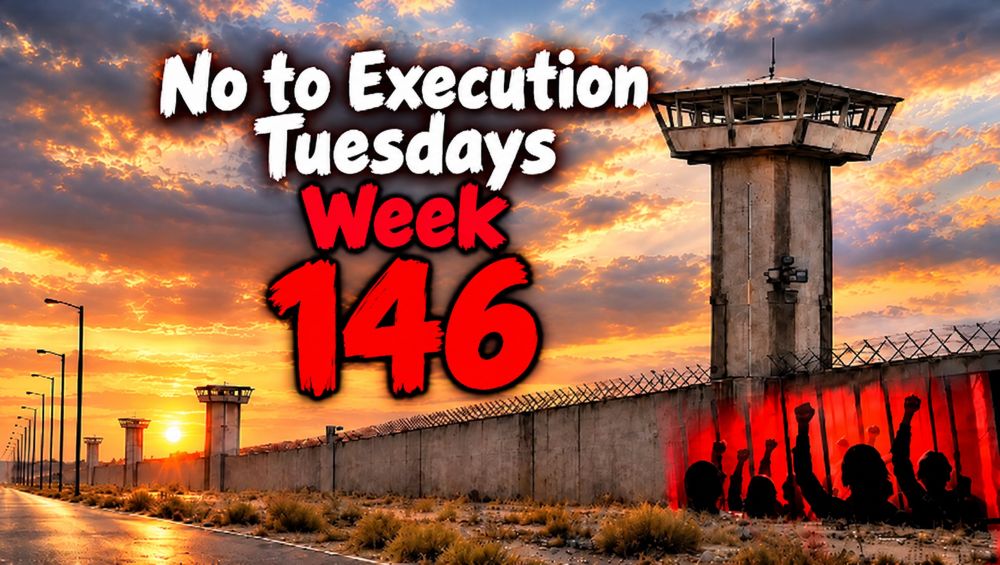
The No to Execution Tuesdays campaign has entered its 146th consecutive week. On Tuesday, 10 November 2026, prisoners in 66 prisons across Iran launched a hunger strike. Through this protest, they are opposing the growing use of the death penalty and the continued repression of political prisoners.
Meanwhile, a new wave of executions and reports of deaths under torture has raised serious concerns about human rights in Iran. Over the past week, several prisoners have been executed. Among them were political prisoners and individuals arrested during the January uprising.
On Tuesday, 3 November, Iranian authorities executed two prisoners arrested during the January uprising: Amirhossein Maleki and Amirhossein Ebrahimi. Both executions took place in Isfahan.
Later, on Saturday, authorities executed Baluch prisoner Mohammad-Aref Shahbakhsh. On Sunday, three more prisoners were executed in Karaj: Hassan Divband, Hamid Kazemi, and Reza Zanganeh.
The executions of Hassan Divband and Hamid Kazemi are particularly alarming. They took place just days after reports revealed their death sentences. Those reports also described torture and mock executions. Their rapid execution has raised further concerns about the treatment of prisoners facing the death penalty.
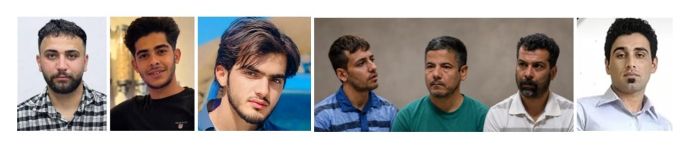
Prisoner Reportedly Dies Under Torture in Ahvaz
In another disturbing case, Hedayat Lalarizadeh reportedly died under torture at the Ahvaz security detention center. According to reports, security forces later abandoned his body in the deserts of Khuzestan province.
These cases are part of a wider pattern of executions across Iran. In fact, dozens of prisoners are reportedly executed every week. Over the past seven days alone, reports indicate that at least one political prisoner has been killed each day through execution or torture.
Furthermore, announced statistics show that the number of executions during the Iranian month of Aban has exceeded 40. Since Tuesday, 3 November, authorities have executed at least 15 people. Six of them were political prisoners.
New Death Sentences Target Political Prisoners
Alongside the executions, Iranian authorities have reportedly issued death sentences against numerous political prisoners over the past week.
The prisoners identified in these reports include:
Amirhossein Mousavi, Amirreza Rezaei, Vahid Ghahremani, Mehdi Jalali, Homayoun Shabankareh, Vahid Khedri-Khah, Hossein Rasouli-Nasab, Mehdi Zarif, Matin Shabani, Amir Delshad, Ali Zaghi, Ilia Akbari, Abolfazl Sedaghat, Mohammad-Mehdi Parsa, and Hossein Mihami.
However, these names represent only some of the cases that have become public. Many other prisoners remain at risk, while information about their cases is still unavailable.
One particularly concerning case involves Mehdi Zanganeh, a 20-year-old prisoner held in Sheiban Prison in Ahvaz. He has reportedly been informed that he has received a death sentence. Despite the seriousness of his situation, very little information about his case has reached the public.
His case highlights the vulnerability of young prisoners whose names and circumstances remain largely unknown. Without public attention and scrutiny, these prisoners face an even greater risk of execution.
Political Prisoners Across Iran Face Execution
Prisons across Iran hold large numbers of young prisoners who face execution or are awaiting death sentences.
These facilities include Vakilabad, Sheiban, Adelabad, Qezel-Hesar, Evin, Dizelabad, Lakan, Dastgerd in Isfahan, Zahedan Central Prison, and Urmia Prison. Other prisons in Karaj and across the country also hold prisoners facing similar threats.
Many of these prisoners face charges such as Moharebeh (waging war against God) and Corruption on Earth. Iranian authorities frequently use these charges in cases that carry the death penalty.
According to the campaign statement, these prisoners belong to a generation that took to the streets to demand the right to determine its own future.
They are young people who seek freedom, equality, and a dignified life. They also demand recognition of their fundamental human rights.
International Concern Over Iran’s Execution Crisis
The rising number of executions and reports of torture in Iranian prisons have prompted growing international concern.
In addition, the campaign refers to the recent report of the UN Secretary-General to the United Nations General Assembly. The report documents a significant increase in executions in Iran and a serious deterioration in prison conditions.
Against this backdrop, the No to Execution Tuesdays campaign continues its weekly protests. It calls for an end to capital punishment and urgent action to protect prisoners facing execution.
Hunger Strike in 66 Prisons Marks the 146th Week of the Campaign
On Tuesday, 10 November 2026, members of the No to Execution Tuesdays campaign began their hunger strike for the 146th consecutive week.
This week’s protest is taking place in 66 prisons across Iran. Both men’s and women’s prison wards are participating in the nationwide action.
The participating prisons are:
- Evin Prison (men’s and women’s wards)
- Qezel-Hesar Prison (Units 2, 3, and 4)
- Karaj Central Prison
- Fardis Prison in Karaj
- Greater Tehran Prison
- Qarchak Prison
- Khorin Prison in Varamin
- Choobindar Prison in Qazvin
- Ahar Prison
- Arak Prison
- Langarud Prison in Qom
- Khorramabad Prison
- Borujerd Prison
- Yasuj Prison
- Asadabad Prison in Isfahan
- Dastgerd Prison in Isfahan
- Sheiban Prison in Ahvaz
- Sepidar Prison in Ahvaz (men’s and women’s wards)
- Nezami Prison in Shiraz
- Adelabad Prison in Shiraz (men’s and women’s wards)
- Firuzabad Prison in Fars
- Dehdasht Prison
- Zahedan Prison (men’s and women’s wards)
- Borazjan Prison
- Ramhormoz Prison
- Behbahan Prison
- Bam Prison
- Yazd Prison (men’s and women’s wards)
- Kahnuj Prison
- Tabas Prison
- Birjand Central Prison
- Mashhad Prison
- Gorgan Prison
- Sabzevar Prison
- Gonbad-e Kavus Prison
- Qaemshahr Prison
- Rasht Prison (men’s and women’s wards)
- Rudsar Prison
- Havigh Prison in Talesh
- Azbaram Prison in Lahijan
- Dizelabad Prison in Kermanshah
- Ardabil Prison
- Tabriz Prison
- Urmia Prison
- Salmas Prison
- Khoy Prison
- Naqadeh Prison
- Miandoab Prison
- Mahabad Prison
- Bukan Prison
- Saqqez Prison
- Baneh Prison
- Marivan Prison
- Sanandaj Prison
- Kamyaran Prison
- Ilam Prison
- Kerman Prison
- Borujen Prison
- Nishapur Prison
- Gachsaran Prison
- Nur Prison
- Iranshahr Prison
- Bandar Abbas Prison
- Ziabar Prison in Some’eh Sara
- Darreh Shahr Prison in Ilam
- Meshginshahr Prison
No to Execution Tuesdays: A Continued Call to End Executions
The 146th week of the No to Execution Tuesdays campaign comes amid a growing wave of executions, new death sentences, and reports of torture and deaths in custody.
The participation of prisoners in 66 facilities across Iran demonstrates the campaign’s continued reach. This protest continues despite the serious risks faced by participating prisoners.
As executions increase and more political prisoners face death sentences, the campaign maintains its central demand: an end to executions in Iran and the protection of the lives and fundamental rights of all prisoners.
Tuesday, 10 November 2026 — 146th Week of the Campaign