



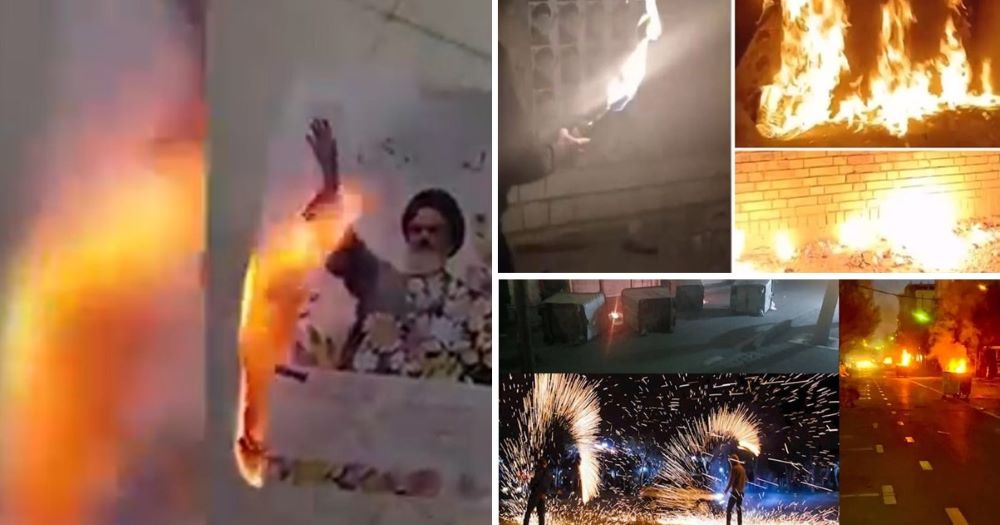

Iran’s annual Fire Festival (Chaharshanbe Suri), traditionally marking the approach of Nowruz celebrations, ignited widespread anti-regime demonstrations across major cities on March 18, 2025. Protesters in Tehran, Karaj, Mashhad, Isfahan, Ahvaz, Tabriz, and other urban centers defied security forces, setting fire to images of Supreme Leader Ali Khamenei and chanting slogans demanding the downfall of the clerical regime. The event, long associated with political dissent, witnessed intensified confrontations between demonstrators and state security forces.
People celebrate Iran’s Fire Festival (Charshanbe Suri) by burning photos of Khomeini and Khamenei and chant: “In Iran’s calendar year 1404, the fire will strike the head of the snake.”
#چهارشنبه_سوری #IranProtestspic.twitter.com/PmdFDIWUYm— People’s Mojahedin Organization of Iran (PMOI/MEK) (@Mojahedineng) March 18, 2025
Despite a heavy police presence and preemptive warnings from authorities, Iranians turned the National Fire Festival into a platform for political defiance. Reports confirmed protests in cities such as Rasht, Qom, Sanandaj, Dezful, and Bandar Abbas, where demonstrators shouted “Death to Khamenei” and “Death to the Oppressor, Be it Shah or Supreme Leader.” In Mashhad, protesters threw Molotov cocktails at images of Khamenei, symbolizing their rejection of the ruling establishment.
People in Karaj, Lahijan, Lordegan, Semirom, and Kashan mark Iran’s Fire Festival (Charshanbe Suri) by burning photos of Khomeini and Khamenei while chanting:
“Down with Khamenei, damned be Khomeini”#چهارشنبه_سوری #IranProtestspic.twitter.com/zeLxgnp7SX— People’s Mojahedin Organization of Iran (PMOI/MEK) (@Mojahedineng) March 18, 2025
In Tehran’s Haft-e Tir Square, youths torched state banners while others clashed with riot police in multiple neighborhoods. In Karaj, demonstrators targeted security vehicles with firecrackers and homemade explosives, prompting a harsh police crackdown. The commander of Tehran’s police force had previously warned that those attacking officers with fireworks would be arrested, reflecting the regime’s growing anxiety over public uprisings.
The protests extended beyond urban centers. Reports indicated that in rural and provincial areas such as Lordegan, Larestan, and Golpayegan, locals also participated in anti-regime demonstrations. Video footage circulating online showed people lighting bonfires in defiance of government restrictions while chanting anti-regime slogans.
Activists dubbed this year’s Fire Festival “The National Uprising of Flames,” marking it as a pivotal moment in the ongoing resistance against the clerical regime. Opposition groups released a statement declaring, “The only response to the Supreme Leader’s tyranny is fire—fire that will cleanse the nation of oppression.”
People celebrate Iran’s Fire Festival (Charshanbe Suri) Tehran and Chalus by burning photos of Khomeini and Khamenei and chant, “We will answer fire with fire.”
#چهارشنبه_سوری #IranProtestspic.twitter.com/Ox2FuoFAAC— People’s Mojahedin Organization of Iran (PMOI/MEK) (@Mojahedineng) March 18, 2025
The Fire Festival protests followed closely on the heels of the latest round of “No to Executions Tuesdays” demonstrations, during which families of death row political prisoners gathered in Sanandaj to demand a halt to planned executions. The families of six imprisoned activists, including Vahid Bani Amrian and Pouya Ghobadi, staged a sit-in, urging international organizations to intervene. Amnesty International had previously condemned the Iranian judiciary for sentencing these individuals to death on politically motivated charges.
Meanwhile, Iranian security forces intensified their presence in key cities ahead of the festival, attempting to preempt large gatherings. However, the scale of protests demonstrated the public’s determination despite state repression. Security forces deployed tear gas and rubber bullets in several locations but failed to disperse resolute demonstrators. While officials sought to downplay the scale of the unrest, the government’s repressive measures only fueled further resentment.
As one anonymous protester in Isfahan told a local activist group, “We are not afraid anymore. This regime only understands force, and we will resist until the end.”
The Fire Festival protests have highlighted the regime’s weakening grip on power amid relentless public discontent. With inflation soaring, the economy in freefall, and living conditions deteriorating, many Iranians see no hope in reforms and instead demand the complete overthrow of the clerical dictatorship.
March 18—Bandar Anzali, northern Iran
Iranians mark the Fire Festival (Charshanbe Suri) by chanting slogans against the regime:
“Down with Khamenei, damned be Khomeini”#IranProtests #چهارشنبه_سوری pic.twitter.com/0Pl8uN4T1b— People’s Mojahedin Organization of Iran (PMOI/MEK) (@Mojahedineng) March 18, 2025
The overwhelming turnout for the Fire Festival protests signals that Iran may be on the brink of another nationwide rebellion. The regime’s brutal crackdowns and failed attempts at suppression have only intensified public fury, setting the stage for an unstoppable wave of resistance. As the Persian New Year dawns, 2025 may be remembered as the year that determined the fate of Iran’s ruling elite.