



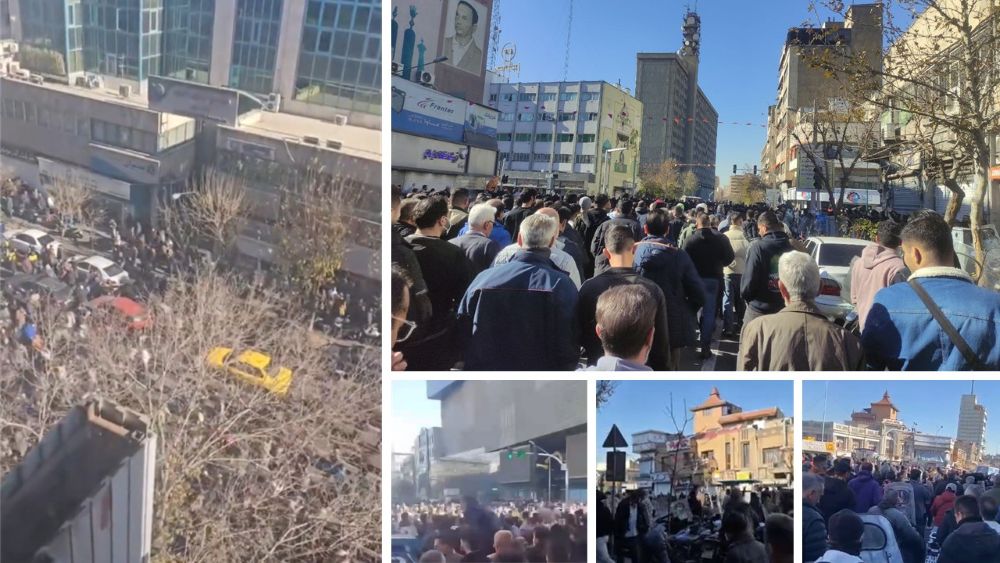
Tehran, Iran – Widespread protests and strikes by merchants in Tehran’s bustling bazaars entered a second day on December 29, 2025, fueled by the regime’s economic mismanagement, skyrocketing inflation, and the rapid depreciation of the rial. As the dollar exchange rate surged toward 145,000 tomans, shopkeepers shuttered their stores in a bold display of defiance, expanding from central commercial hubs to surrounding neighborhoods and even peripheral areas like Pakdasht.
December 29—Tehran, Iran
On the 2nd day of strikes, Tehran bazaar merchants protest runaway prices, rising inflation, and systemic corruption driving the economy. Reports and videos show large sections of the Grand Bazaar shut down amid a tense atmosphere.#IranProtests pic.twitter.com/BA7mty99al— People's Mojahedin Organization of Iran (PMOI/MEK) (@Mojahedineng) December 29, 2025
The unrest began on Sunday, December 28, with merchants in key locations such as Alaeddin Passage, Charsou Commercial Complex on Jomhouri Street, Ahangaran Alley in the Grand Bazaar, Cheragh Bargh, Shush Bazaar, and the mobile phone sellers’ alley in Pakdasht closing shops and taking to the streets. Protesters chanted slogans like “Don’t be afraid, don’t be afraid; we are all together,” “Support, support,” “Close up, close up,” and “The merchant will die but not accept humiliation,” urging others to join. Videos circulating on social media captured crowds gathering outside major complexes, with many businesses in the Grand Bazaar, including Ahangaran Alley, fully shut down, while areas around Hafez Bridge and Jomhouri Street grew tense.
By Monday, December 29, the strikes intensified and spread to additional sites, including Beyn-ol-Haramayn, Chaharsouq, the Gold Market, Jafari Bazaar, Saray-e Melli, Rouhi, Mellat, Qaem, and Soligheh. Merchants in Lalehzar, Sarcheshmeh, South Saadi, the Aluminum Building, and other districts joined in full force. Extensive gatherings formed in Hamamchal Alley and paths leading to Golobandak, where chants echoed: “This year is the year of blood; Seyyed Ali [Khamenei] will be overthrown,” “Death to the dictator,” “Pezeshkian, shame on you; leave this country alone,” “Bazaar merchant may die but will never accept humiliation,” “Merchant with honor, support, support,” “Inflation and high prices are the scourge of the people,” “We close, we close,” and “Until the mullah is buried, this homeland won’t be a homeland.” These protests reflect deep-seated rage against the velayat-e faqih regime’s policies, which have driven inflation to over 53% by year’s end, as admitted by regime officials.

On December 26, state-run Khabar Online quoted economists warning that the Islamic Republic’s legitimacy is at a historic low, with corruption permeating all sectors and 40% of banking assets deemed imaginary. Former regime vice president Hossein Marashi highlighted how Iran’s economy has been hostage to nuclear issues for 20 years, exacerbating a food supply crisis that could spark mass hunger strikes. Regime MP Kiassari lamented in parliament that “the fire of inflation rages” while those in power fuel it with conflicting interests, as currency fluctuations ignite waves of price hikes in drugs, food, and housing.
In response, the terrified regime placed the Tharallah security headquarters on high alert and issued 100% readiness orders to suppressive units like the Fatehin and Ashura battalions, as well as Basij forces in Tehran. IRGC units in Mazandaran, Qom, and Semnan provinces were mobilized for potential reinforcements, fearing the protests could ignite a broader uprising.
#Breaking #Iran News Alert
Reports from Iran indicate that as demonstrations unfolded, Khamenei’s IRGC and security forces were reportedly placed on 100% alert across 22 districts of Tehran, reflecting the regime’s heightened concern over the growing unrest and a looming… https://t.co/YFcmKURYjs— SIMAY AZADI TV (@en_simayazadi) December 28, 2025
Mrs. Maryam Rajavi, the President-elect of the National Council of Resistance of Iran (NCRI), hailed the honorable merchants’ stand in a message on X (formerly Twitter): “The rapid depreciation of the currency, soaring inflation, unprecedented recession, and systematic government discrimination and corruption have exasperated the overwhelming majority of the people of Iran. The only way is protest and resistance.”
In her follow-up statement on December 29, Mrs. Rajavi emphasized that the protesters’ slogans pinpoint both the root cause—the vile velayat-e faqih system—and the solution: resistance and uprising. “This reflects the rage of a people driven to the brink by inflation, poverty, and the crushing of freedoms under the rule of the mullahs, who are no longer willing to remain silent,” she said. “I call on the public, especially rebellious and freedom-seeking youth, to show solidarity with and support the uprising of the bazaar merchants.”
The strike and protests by the honorable Tehran bazaar merchants expanded further for a second consecutive day, spreading across multiple markets and areas, including Beyn-ol-Haramayn, Chaharsouq, the Aluminum Building, Jafari Bazaar, Saray-e Melli, Lalehzar, Toopkhaneh,… pic.twitter.com/kO6cZhR0Bt
— Maryam Rajavi (@Maryam_Rajavi) December 29, 2025
Social media calls for expanded strikes on December 30 underscore the growing momentum, with merchants citing dollar volatility, livelihood pressures, and economic instability as reasons to persist in unity until conditions change. These events occur amid regime President Pezeshkian’s hollow claims in parliament of prioritizing inflation control, met with public skepticism as protests swell.

The NCRI Secretariat warns that the regime’s plunder has left the nation on the edge, with no reliable statistics and systemic corruption eroding all trust. As one aerial video from the protests shows massive crowds filling streets near high-rises and commercial buildings, the message is clear: Iran’s people demand an end to the mullahs’ tyranny through sustained resistance.
5-Tehran Bazaar protests on Dec 29, 2025: Outrage against soaring prices, runaway inflation, skyrocketing exchange rates, & the plundering policies of Khamenei's anti-people regime.
"Brave bazaaris, support, support!"
"Iranian dies, but won't accept humiliation!" #IranProtests pic.twitter.com/wep0oR4iZH— Iran Freedom (@4FreedominIran) December 29, 2025