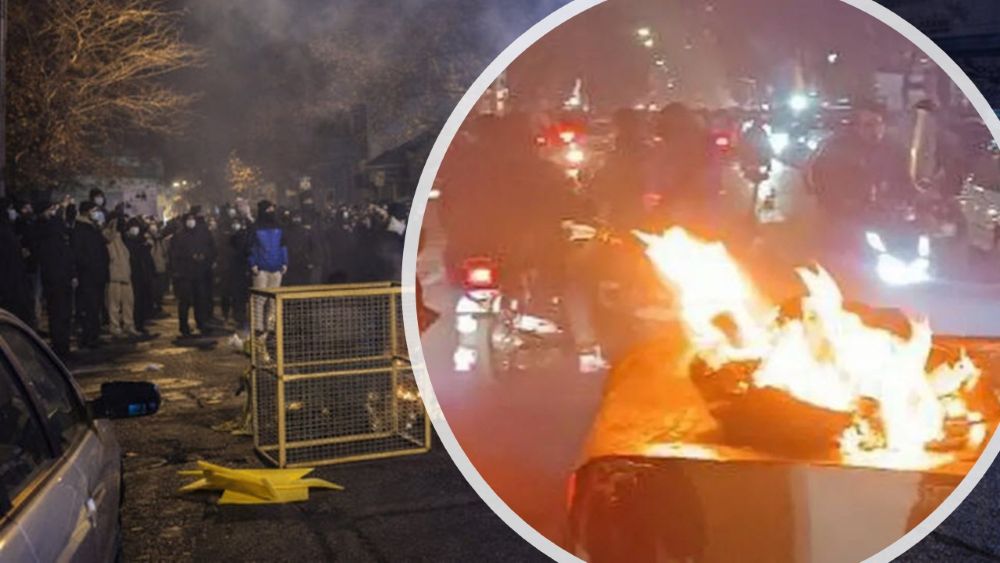
Day 21 uprising: Tehran turned into a militarized garrison with 52,000 regime and proxy forces, heavy machine guns, and snipers, as rebellious youths clash in Tehran and provinces while global calls to blacklist the IRGC and its Quds Force escalate.
As the uprising entered its 21st day on Saturday, January 17, 2026, the regime, under a week-long internet blackout, put Tehran on “100% alert,” deploying tens of thousands of IRGC, Basij, State Security Force, army units, and 5,000 Iraqi Hashd al-Shaabi mercenaries across the capital, effectively imposing martial law with checkpoints, armored patrols, and 12.7mm DShK heavy machine guns in major squares. Despite this siege, rebellious youths mounted hit-and-run confrontations in Tehran’s Naziabad, Tehranpars, Piroozi, Ekbatan and in cities like Izeh, Saveh, Kermanshah, and Qirokarezin, where bazaar strikes and armed clashes by Bakhtiari youth underscored a nationwide revolt that the regime’s militarization has failed to crush.
Tehran Under Military Occupation
On January 17, PMOI Social Headquarters reported that 52,000 suppressive forces—24,000 IRGC/Basij, 21,000 SSF, 2,000 army units under Khamenei, and 5,000 Hashd al-Shaabi proxies—were arrayed solely to hold Tehran, guarding power plants, IRIB, and key infrastructure. The capital resembled a war zone, with heavy machine guns and snipers on rooftops, 24‑hour armed patrols using buses and motorized units with Kalashnikovs, shotguns, and gas launchers, plus paintball marking of protesters, homes, and shops at random checkpoints.
Nationwide Defiance and Street Clashes
Despite the siege, Tehran youths waged hit‑and‑run battles in Naziabad, Tehranpars, Piroozi, and Ekbatan, defying a de facto state of siege. Parallel resistance flared as Zahedan protesters again chanted “Death to Khamenei” and “Death to the Basiji,” Bakhtiari youths in Izeh engaged in armed clashes with IRGC, Saveh youths confronted regime mercenaries, and Qirokarezin’s bazaar strike paralyzed local economic life.
PMOI Announces 31 More Martyrs
The PMOI announced the names of 31 additional martyrs of the uprising on January 16, bringing the number of identified victims in this wave to 161, including six women. The roll of martyrs spans Iran’s geography and youth, among them 15‑year‑old Arnika Dabbagh from Gorgan, 17‑year‑old Abolfazl Yaghmouri from Fardis‑Karaj, 20‑year‑old Ali Janani from Eslamshahr, 23‑year‑old Pouya Rostami from Ilam, and 23‑year‑old Parnia Shad Bejarkenari from Rasht.
IRGC Blacklist Drive and Global Condemnation
Argentine President Javier Milei signed a decree designating the IRGC’s Quds Force and 13 associated individuals as terrorists, citing historic bombings in Buenos Aires and the unit’s role in the current massacre of Iranian protesters. European Parliament President Roberta Metsola vowed to keep pushing for IRGC terror designation to cut its cash flow, while French Foreign Minister Jean‑Noel Barrot and Austrian Chancellor Christian Stocker backed new EU sanctions and condemned “unprecedented violence,” as US Senator Thom Tillis praised Washington’s sanctions for confronting the regime’s egregious human rights abuses.
Maryam Rajavi Welcomes IRGC Terror Designation Push
Mrs. Maryam Rajavi, NCRI President‑elect, hailed the intensified calls by Roberta Metsola and others to blacklist the IRGC, stressing that this force is the principal instrument of repression, criminal violence, and state terror under Ali Khamenei. She warned that, after the January crimes against humanity, any delay in terror designation is “unacceptable” and in practice only serves to prolong the life of the ruling religious fascism that is now fighting not for legitimacy but sheer survival.
The timely and renewed call by Ms. Roberta Metsola, @EP_President for the imposition of tougher sanctions on the Iranian regime, particularly the designation of the Revolutionary Guard Corps (IRGC) as a terrorist organization, comes at a moment marked by the brutal killing of… pic.twitter.com/igKbEcrBTb
— Maryam Rajavi (@Maryam_Rajavi) January 17, 2026