Nationwide protests on 13th day of uprising
On Friday, January 9, 2026, the 13th day of Iran’s nationwide uprising, cities across the country witnessed widespread demonstrations and hit‑and‑run clashes between protesters and suppressive forces, with the movement now encompassing at least 180 cities. In Tehran, Mashhad, Isfahan, Shiraz, Karaj, Zahedan, Kermanshah, Islamabad‑e Gharb, Gilan‑e Gharb, Qom and numerous other cities, protesters confronted security forces, chanting slogans such as “Death to the dictator” and “Death to Khamenei.”
Zahedan uprising amid lethal crackdown
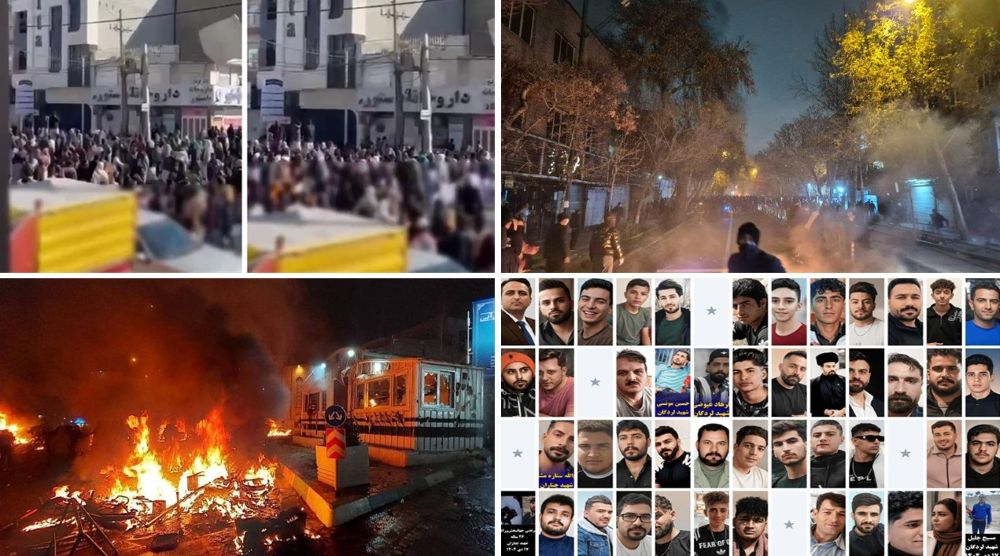
In Zahedan, Sistan and Baluchestan province, large crowds gathered around Makki Mosque after Friday prayers on January 9, chanting “Death to the dictator” and “Down with Khamenei” despite a heavy security atmosphere and severe internet blackout. Security forces responded with extensive use of tear gas, birdshot and live ammunition against demonstrators, injuring several protesters whose exact number remains unknown due to connectivity being reduced to around 1% of normal levels.
Street battles in Tehran, Karaj, Mashhad and other cities
In Tehran, rebellious youths clashed with security forces in at least 20 locations, including Nezamabad, Ferdowsi Square, Saadatabad, Mirdamad, Valiasr, Andarzgoo, Chitgar, Yousefabad, Moshiriyeh, Zafaraniyeh, Sattar Khan, Rahahan, Ekbatan, Seyed Khandan, Khak‑Sefid, Sadeghieh, Jannat Abad and Narmak, where fires were lit and slogans such as “This is the year of blood; Seyed Ali will be overthrown” were heard. In Karaj’s Fardis district and other areas such as Golshahr, protesters resumed nightly rallies, chanting “Basij, IRGC, to us, you are ISIS” and “We won’t have a country until the mullahs are gone,” while similar anti‑regime protests continued in Mashhad, Izeh, Pakdasht, Yazd, Qom, Fuladshahr and other cities.
Islamabad‑e Gharb and western fronts of the uprising
In Islamabad‑e Gharb, protesters controlled the city until 2:00 pm on January 9, seizing or setting fire to the governor’s office and several government buildings used by suppressive forces, and disabling all city‑wide surveillance cameras. During intense clashes there, at least six members of the suppressive forces were killed, while in Gilan‑e Gharb several government buildings and an IRGC vehicle were set ablaze and reinforcements could not be dispatched from the provincial center.
Death toll and newly identified martyrs
The People’s Mojahedin Organization of Iran (PMOI/MEK) announced on Friday, January 9, the names of 10 additional martyrs of the uprising, bringing the total number of identified protesters killed by direct fire from suppressive forces over the past two weeks to 54. The newly identified victims include five protesters from Chenaran in Razavi Khorasan province, three from Lordegan in Chaharmahal and Bakhtiari province, one from Malard in Tehran province and one from Kermanshah, alongside an earlier published list of 44 martyrs from cities including Fuladshahr, Kuhdasht, Izeh, Azna, Marvdasht, Qom, Malekshahi, Neyriz, Hafshejan, Kermanshah, Khoshkbijar and others.