



Forty Days of Mourning Fuel Nationwide Defiance
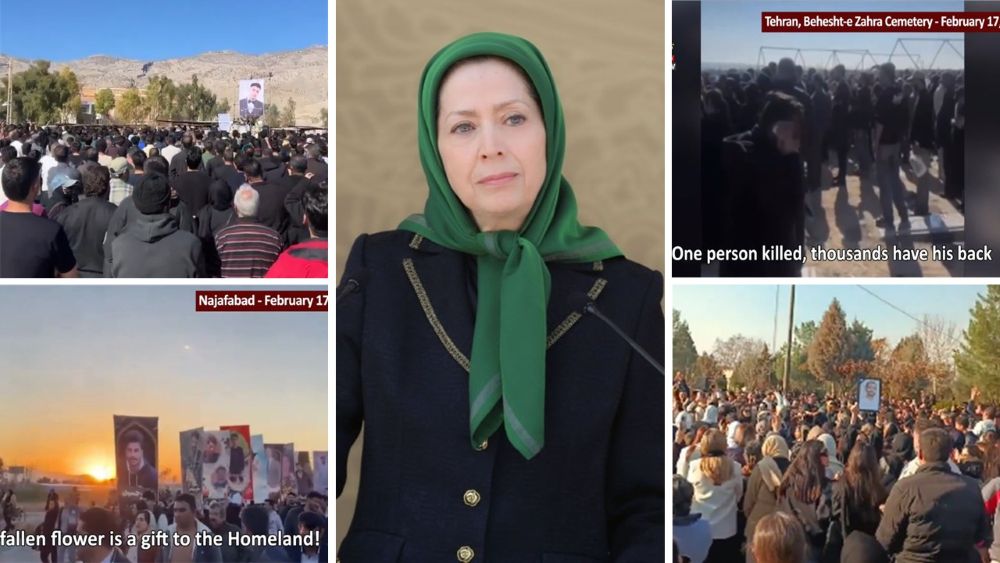
Forty days after the January 2026 uprising in Iran, mourning ceremonies for the martyrs have transformed into widespread protests. From Tehran to Abdanan, Mashhad, and western provinces, these memorial gatherings have become focal points for anti-regime sentiment, reflecting both grief and organized defiance.
Memorials Turn Into Protest Sites
In Abdanan, demonstrations began on February 16 and escalated into clashes with suppressive forces the following day. Authorities deployed tear gas, reinforcements, and even live fire to quell the crowds. Protesters responded with chants of “Death to Khamenei, curses on Khomeini,” signaling deep public anger.
#IranProtests update – Feb 17: On the 40th day since the killing of freedom martyr Alireza Seidi, the people of #Abdanan have taken to the streets, igniting a new wave of uprising with chants of “Death to Khamenei.”#IranMassacre #IranRevolution2026 pic.twitter.com/PK7GYxt2or
— Iran Freedom (@4FreedominIran) February 17, 2026
In Mashhad, attendees at the 40th-day memorial of martyr Hamid Mahdavi defied security forces by chanting, “We swear by the blood of our comrades, we stand until the end” and “We did not offer martyrs to compromise, to praise the murderous leader.”
#IranProtests update – Feb 17: On the 40th day of the nationwide #IranMassacre, the people of #Mashhad have once again taken to the streets in protest. They are chanting: “By the blood of our fallen comrades, we will stand until the end.”#IranRevolution2026 pic.twitter.com/jsFxnPOYAQ
— Iran Freedom (@4FreedominIran) February 17, 2026
Tehran’s Behesht-e Zahra cemetery hosted a large gathering at the grave of Sepehr Shakouri, known as “Sepehr Baba.” Demonstrators renewed pledges to the fallen with chants like “Cannons, tanks, machine guns are no longer effective,” “So many years of crime, death to this Velayat [regime],” and “Death to the oppressor.”
#IranProtests update: #Tehran — Behesht-e Zahra Cemetery — February 17, 2026
Large crowds gathered for the 40th-day memorial of those killed in the #IranRevolution2026. Protesters are chanting:
“For every person killed, a thousand will rise behind them.”#IranMassacre pic.twitter.com/m4lONQphz2— Iran Freedom (@4FreedominIran) February 17, 2026
Other cities including Najafabad, Hashtgerd, Zanjan, Kermanshah, Shahin Shahr, Bandar Ganaveh, Shahriar, Saveh, Bukan, and Quchan also witnessed massive turnouts, memorial marches, and anti-regime chants. Ceremonies often combined mourning with defiance, featuring fiery speeches from families of martyrs and slogans such as “For every person killed, a thousand rise to replace him.”
🚨 Iran Protests | Cities Round-Up
Newly received footage shows memorial gatherings and protests continuing across several cities, with participants chanting anti-regime slogans and honoring martyrs of the uprising.
📍 Tehran — Andisheh and Behesht Zahra Cemetery
📍 Hashtgerd… pic.twitter.com/sRY3k9R65A— SIMAY AZADI TV (@en_simayazadi) February 17, 2026
Widespread Crisis and Regime Paralysis
The National Council of Resistance of Iran (NCRI) reported that tens of thousands of young people continue to face arrests, interrogations, and torture, including medical personnel who treated the wounded. Despite the regime’s crackdown, public defiance remains strong, and the fear of the authorities is growing.
Vice President Mohammad-Reza Aref described the January events as a “lose-lose game,” reflecting internal recognition that traditional tools of control—heavy-handed suppression and limited reforms—are failing. Over 8,800 indictments have been issued, and more than 10,000 individuals summoned for trial, highlighting the scale of the regime’s legal crackdown.
Economic Collapse Intensifies Anger
Economic stagnation has compounded societal unrest. Iran faces a negative 15 percent capital growth rate and systemic capital depletion, pushing both the middle class and urban poor into a unified, combustible demographic. Internet censorship has failed to stem the demand for VPNs, which now constitute a 30 trillion-toman illegal market, reflecting public skepticism toward the regime’s control even in the digital realm.
Message from Maryam Rajavi: Renewal of Defiance
Mrs. Maryam Rajavi, President-elect of the NCRI, addressed the Iranian people on the 40th day since the uprising, saluting the families of martyrs and reaffirming the commitment to carry the movement to victory. She emphasized that the fortieth day of mourning has become “a source of pride and strength for the people, and a source of dread and despair for those who oppress them,” with the names of fallen heroes resonating across Iran from the Persian Gulf to the Caspian Sea.
40 days on: Tribute to the heroes of the January 2026 uprising-
To the mothers, fathers, families, and compatriots across Iran who, on the fortieth day since the loss of your children, stand in mourning and in defiance,
This fortieth day of that sea of blood, this fortieth day of… pic.twitter.com/rPP2jLpIm1— Maryam Rajavi (@Maryam_Rajavi) February 17, 2026
As memorial ceremonies continue to ignite protests and public outcry, Iran remains on the precipice of a wider societal reckoning, where grief, anger, and defiance are converging into an unstoppable call for change.