



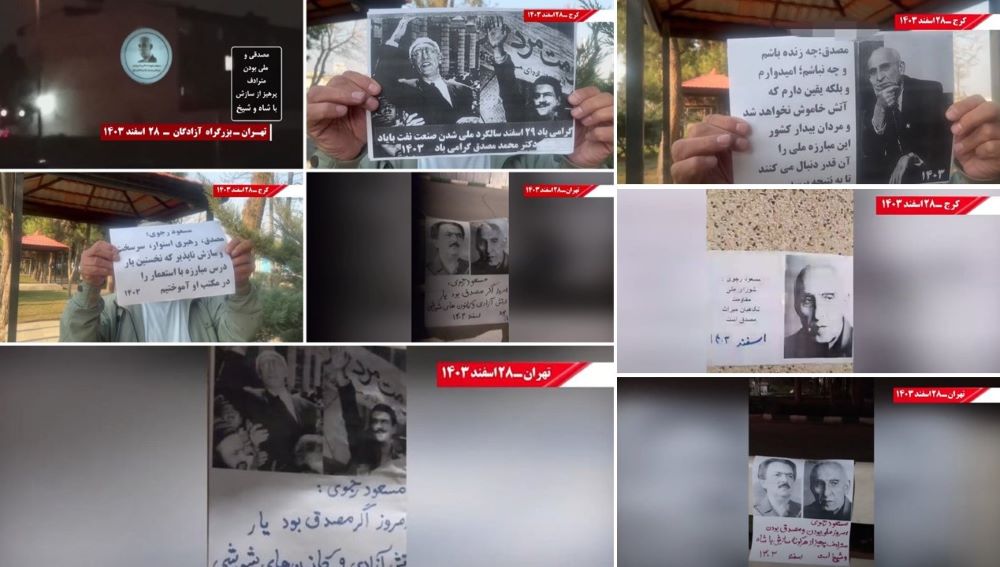
On the anniversary of the nationalization of Iran’s oil industry, the People’s Mojahedin Organization of Iran (PMOI/MEK) Resistance Units carried out a series of activities across multiple cities to commemorate Dr. Mohammad Mossadegh, the leader of Iran’s oil nationalization movement and a symbol of the country’s independence.
Tributes Across Iran
In Tehran, Resistance Units projected a large image of Mohammad Mossadegh onto the Azadegan Highway using a video projector. This symbolic act, conducted in one of the busiest areas of the capital, drew public attention and underscored the ongoing relevance of Mossadegh’s legacy in the fight for freedom and sovereignty.

Similar activities took place in other cities, including Bandar Abbas and Karaj, where Resistance Units distributed flyers featuring images of both Mohammad Mossadegh and Massoud Rajavi, the leader of the Iranian Resistance. These materials emphasized Rajavi’s role as the contemporary successor to Mossadegh, reinforcing the continuity of the struggle against dictatorship in Iran.
Mossadegh’s Enduring Legacy
Mohammad Mossadegh remains one of the most influential figures in Iran’s modern history. By leading the effort to nationalize the country’s oil industry, he challenged British colonial dominance and secured Iran’s economic independence. His unwavering dedication to democracy and national sovereignty earned him the status of a national hero, despite facing immense opposition from both internal and external forces.
Opposition from the Shah and the Mullahs
Throughout history, both the monarchy and the clerical establishment have demonstrated hostility toward Mossadegh. The Shah’s regime, closely aligned with foreign interests, played a pivotal role in orchestrating the August 19, 1953 (28 Mordad 1332) coup, with support from Britain, the United States, and clerical elements led by Ayatollah Kashani, a key ideological figure for Ruhollah Khomeini.
Following the fall of the monarchy, Khomeini and the ruling clerics continued to malign Mossadegh’s legacy. Khomeini frequently insulted the former prime minister, even mockingly stating that Mossadegh was “slapped,” reflecting the regime’s longstanding disdain for his nationalist principles. The shared enmity of both the Shah and the clerics toward Mossadegh underscores their fundamentally anti-democratic and anti-national stances.
Resistance Units Continue Mossadegh’s Fight
As Iran’s current ruling regime continues its oppressive policies and economic exploitation of the people, the Resistance Units remain steadfast in their efforts to achieve national sovereignty and democracy. Their actions on the anniversary of Iran’s oil nationalization reaffirm that the spirit of resistance is alive and well.
By honoring the legacy of Mohammad Mossadegh and aligning themselves with his ideals, the Resistance Units demonstrate their commitment to the ongoing struggle for a free and democratic Iran. Until the ultimate overthrow of tyranny, the path paved by Mossadegh, Massoud Rajavi, and countless freedom fighters will continue to inspire generations in their quest for justice and self-determination.
