Introduction: A Historic Speech in Paris
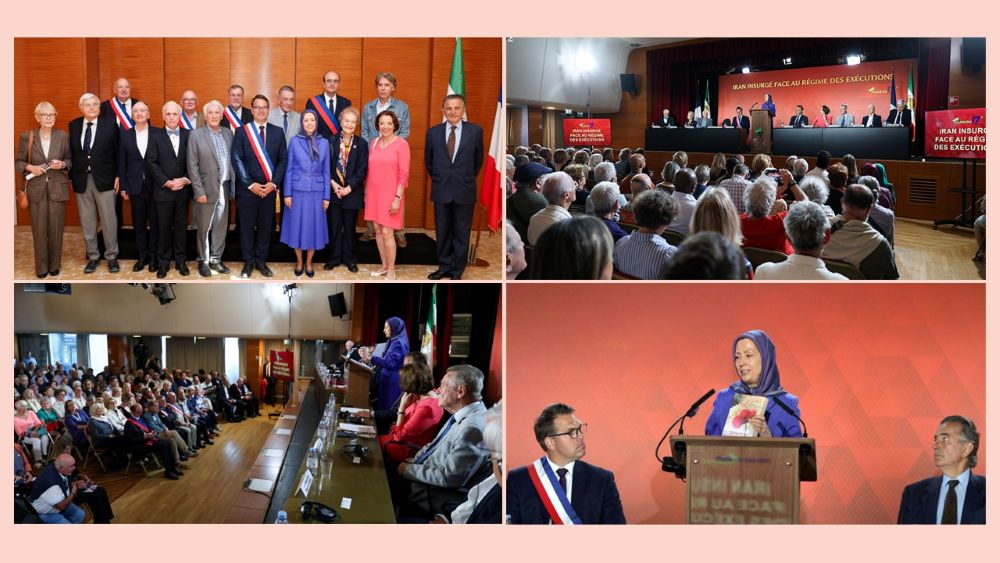
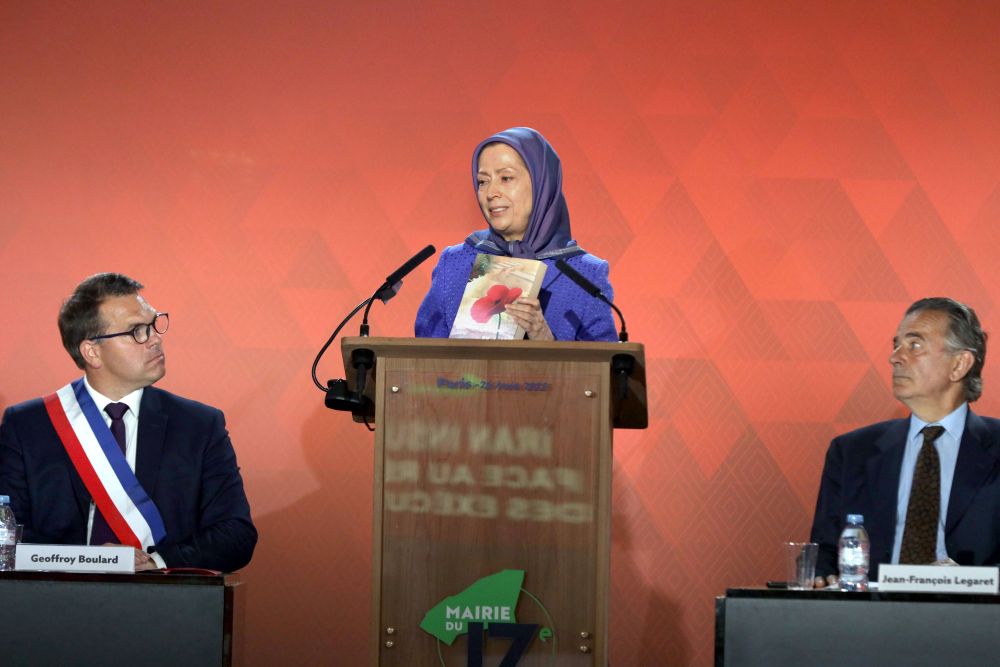
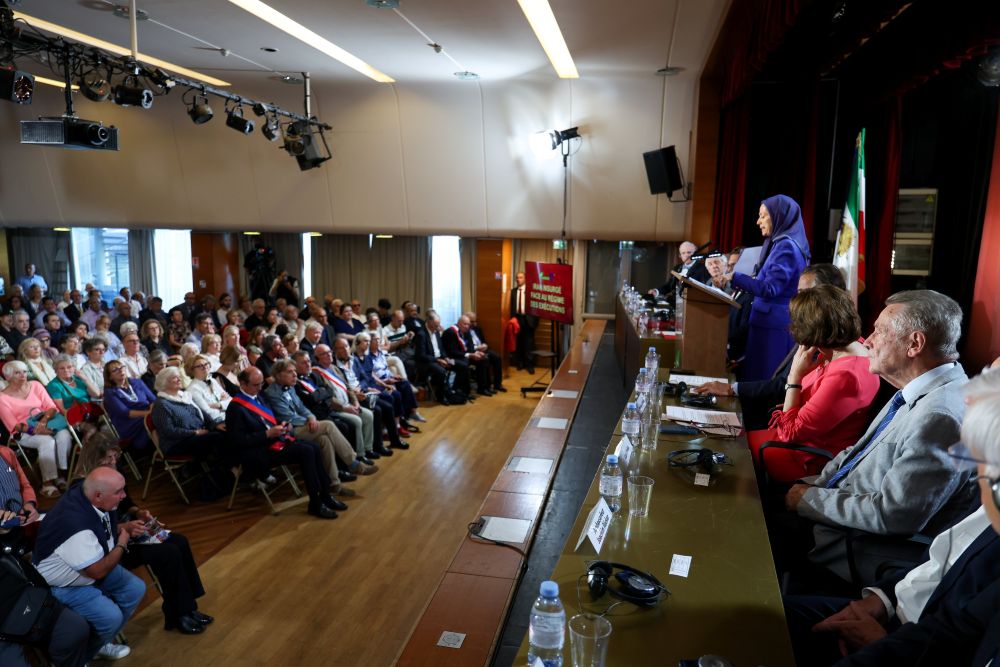
During the Conference in Paris District 17 on August 26, 2025, Mrs. Maryam Rajavi, President-elect of the National Council of Resistance of Iran (NCRI), addressed Mayor Boulard, honored representatives, and supporters. She recalled how, on the same date in 1789, the French National Constituent Assembly declared the Rights of Man and of the Citizen—an immortal milestone in humanity’s march toward liberty and justice. Yet, she questioned why, in the present day, governments continue to appease a regime in Iran that tramples every principle enshrined in that declaration.
#Breaking Iran News — Aug 26
Mrs. @Maryam_Rajavi addressed a major conference at Paris’s 17th District City Hall on Iran’s crisis.
Speakers included @geoffroyboulard, Gilbert Mitterrand, Jean-François Legaret, @MarkEllisIBA, Alain Vivien, @AttiasDominique, Wolfgang Schomburg,… pic.twitter.com/yttnp2Z7WS
— SIMAY AZADI TV (@en_simayazadi) August 26, 2025
The Clerical Regime’s Record of Repression
Executions and Human Rights Violations
Mrs. Rajavi spoke of the clerical regime’s four-decade campaign of repression and bloodshed, pointing out that accountability has never been enforced. Only weeks earlier, two members of the People’s Mojahedin Organization of Iran (PMOI), Behrouz Ehsani and Mehdi Hassani, were executed, while fourteen more faced death sentences solely due to their affiliation with the organization.
In July alone, at least 114 people were executed. During the single year of Masoud Pezeshkian’s presidency—a man the regime paraded as a “moderate”—at least 1,630 executions took place.
Fear and Impunity: The Regime’s Tools of Survival
She explained two fundamental reasons behind this frenzied violence: fear and impunity. The regime, terrified of losing control, responds to daily protests and cries of “Freedom!” in cities like Shiraz and Kazerun with brutal attacks by the Revolutionary Guards. The people endure unbearable hardship—no electricity, no clean water, soaring prices—while repression becomes the regime’s sole strategy to avoid collapse. Impunity is the second factor: those who commit atrocities today are the same individuals responsible for the 1980s massacres, especially the 1988 massacre of 30,000 political prisoners, mostly PMOI members.
1988 Massacre and Erasure of Evidence
A Genocide Exposed
Mrs. Rajavi referred to the book The Genocide of the Mojahedin – The 1988 Massacre in Iran’s Provinces, which documents the genocide across 26 provinces. She recalled how Professor Javaid Rehman, in his final report of July 2024, described these executions as genocide and crimes against humanity, urging international prosecution of the perpetrators—a call that the world ignored.
Desecration of Martyrs’ Graves
She condemned the regime’s desecration of martyrs’ graves. On August 10, the judiciary chief denied the existence of political prisoners, echoing lies once told by the Shah’s regime. Today, at least 3,700 political prisoners endure relentless torture and abuse: being beaten by mobs of guards, confined to cages, thrown into solitary cells, denied medical care, subjected to fabricated charges, and exiled to harsher conditions.
PMOI supporters face constant execution threats, while their families suffer psychological torment. Guards secretly bury the executed, and families are even arrested and dispossessed. Mrs. Rajavi cited a shocking recent act: plans to turn Section 41 of Tehran’s cemetery—where PMOI members from the 1980s rest—into a parking lot, aiming to erase evidence of genocide.
Resistance Against Oppression
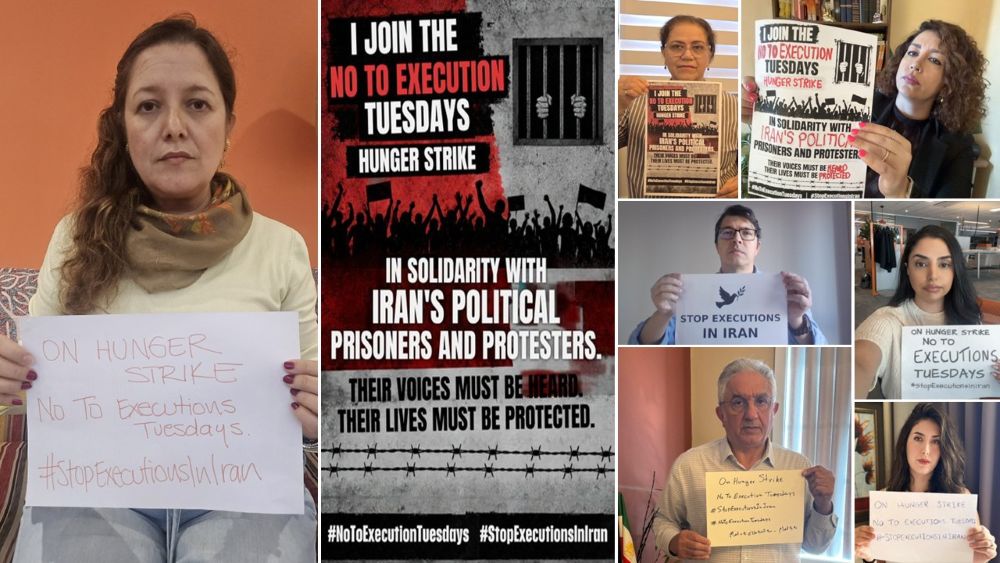
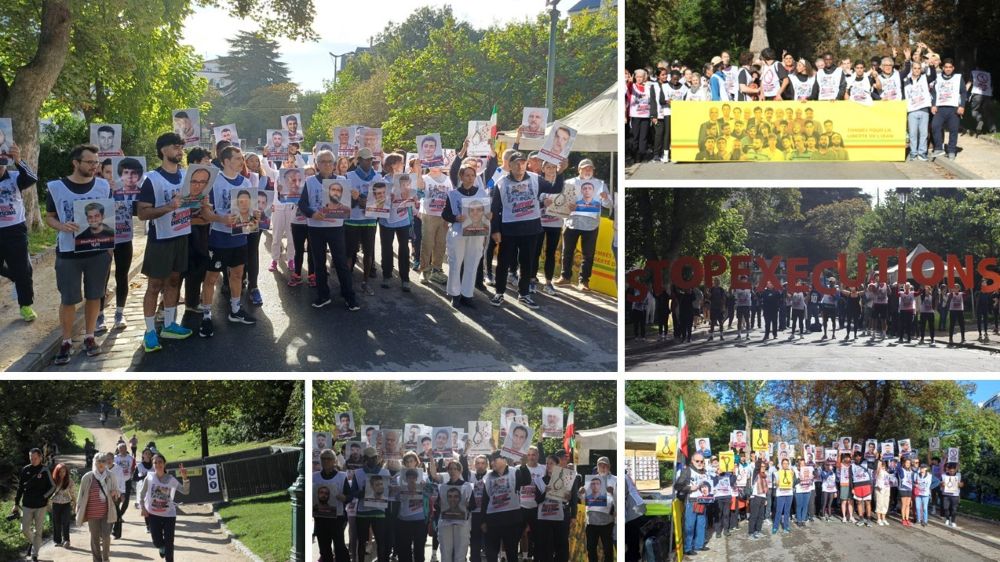
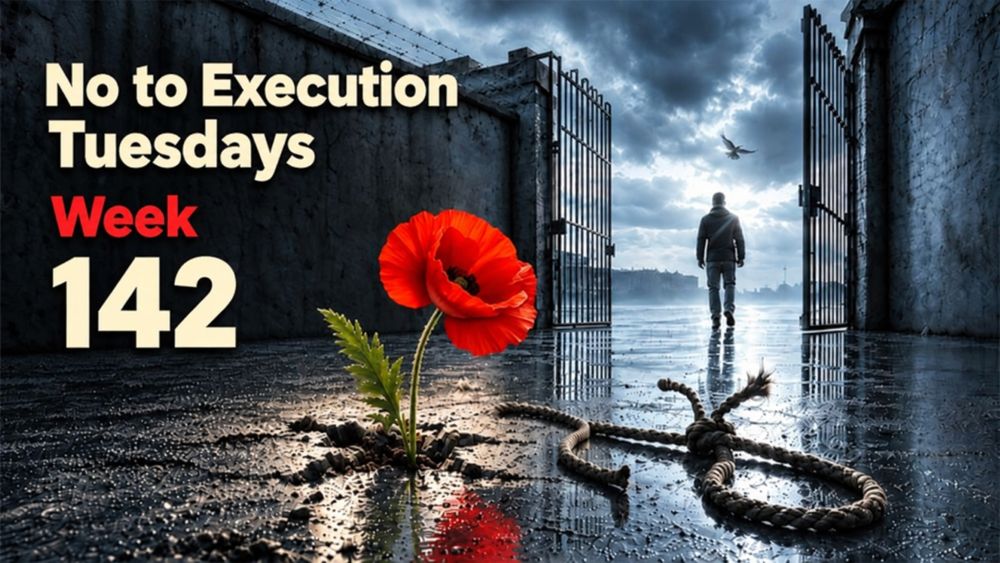
At the top of responsibility for these crimes, Mrs. Rajavi declared, stands Khamenei. Resistance, however, grows stronger. Political prisoners have launched repeated protests, including the “Tuesdays Against Executions” campaign that began in Ghezel Hesar prison in January 2024 and now spans 50 prisons nationwide.
Call for a New Western Policy
Beyond Nuclear Talks: Focus on Human Rights
She emphasized that the issue of Iran cannot be reduced to its nuclear program or missiles. The Iranian people’s right to freedom must not be ignored. Forty years of Western policy, built on appeasement and neglecting Iran’s organized resistance, have failed. The true solution, she asserted, lies neither in foreign war nor conciliation but in the overthrow of the regime by the Iranian people and their resistance.
France’s Historic Role and Values
Mrs. Rajavi invoked the memory of Paris’s liberation on August 25, 1944, and General de Gaulle’s march down the Champs-Élysées the following day. Resistance, and the ideals of liberty, equality, and fraternity, remain at the heart of the French Republic. She honored France for defending these values and supporting the Iranian Resistance.
Vision for a Free Iran
She spoke of an Iran without executions, torture, censorship, or clerical oppression—an Iran that respects all faiths and women’s rights. The slogans were clear: “Woman, Resistance, Freedom,” and “No to compulsory hijab, compulsory religion, and compulsory governance.” She promised that Tehran would one day be liberated by the Resistance and extended an invitation to celebrate in a free Iran.
Justice and Human Rights Guarantees in Tomorrow’s Iran
Justice as a Cornerstone of Democracy
Mrs. Rajavi outlined the NCRI’s vision for safeguarding human rights in Iran’s future. Justice, she insisted, must anchor liberty and democracy, for without it, chaos and dictatorship would prevail. She recounted the regime’s destruction of graves in Behesht-e Zahra Cemetery, carried out on Khamenei’s orders to obliterate evidence of crimes against humanity—a continuation of those crimes under international law.
She reiterated that the campaign for justice would persist until every name is documented and every martyr’s grave identified. Each supporter could play a role in this monumental struggle.
Global Terrorism and International Action
Highlighting the regime’s global crimes, Mrs. Rajavi cited Australia’s recent expulsion of Iran’s ambassador due to state-sponsored terrorism—a step long overdue. For three decades, NCRI had called for the closure of the regime’s embassies, which function as terror hubs. Even Zarif, the regime’s former foreign minister, had admitted the security nature of these missions. The clerical regime’s terrorism, she noted, is an extension of its domestic repression.
NCRI Commitments for Tomorrow’s Iran
Mrs. Rajavi reaffirmed that in the Iran of tomorrow, the people will enjoy freedoms guaranteed by the Universal Declaration of Human Rights and international conventions such as the ICCPR, the Convention Against Torture, and CEDAW.
She listed the NCRI’s commitments:
-
Abolishing the death penalty.
-
Banning all forms of torture.
-
Ensuring full freedoms of expression, religion, press, and political association.
-
Transforming state media into platforms for uncensored news and open debate.
-
Dismantling the Revolutionary Guards and all instruments of repression.
-
Establishing an independent judiciary based on due process and presumption of innocence.
Conclusion: The Path to Freedom
She declared that what they sought—and what the Iranian people yearned for—was a society built on human rights, democracy, and equality. This was not a dream but a hard-won goal, achieved through sacrifice, imprisonment, and resistance. Freedom, she said, is a priceless treasure demanding immense struggle—and for Iran’s freedom, they would stand unwavering until victory.