



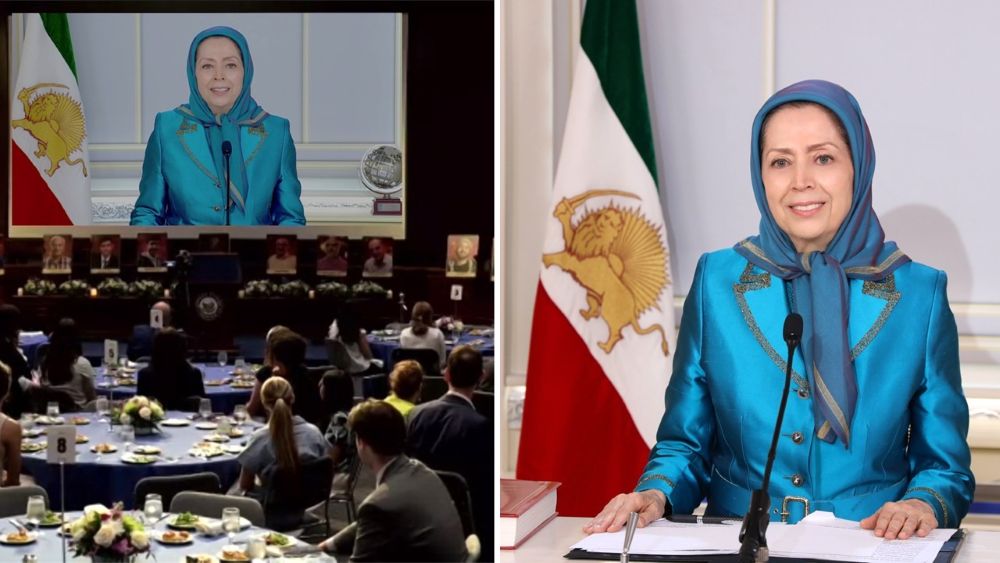
Maryam Rajavi Addresses U.S. Senate Briefing on Iran Crisis and Path to Change
Mrs. Maryam Rajavi, President-elect of the National Council of Resistance of Iran (NCRI), delivered a video message to a U.S. Senate briefing titled “Iran: Towards Peace and Freedom” on April 16, 2026. In her remarks, she addressed the ongoing crisis in Iran, highlighting the role of the Iranian people, their courage, and organized resistance as the central solution to the country’s challenges.
This is a critical moment, not only in Iran’s history, but also in the history of the Middle East and the world.
I call on all of you to support the Iranian people and Resistance, and their effort to bring about regime change.#FreeIran10PointPlanhttps://t.co/Ep3Bn6niI7 pic.twitter.com/0KYvVxpEOT— Maryam Rajavi (@Maryam_Rajavi) April 16, 2026
The briefing focused on Iran’s internal situation, regional policies, and prospects for peace and democratic transition. In her message, Mrs. Rajavi stated that decades of international approaches—including appeasement, dialogue, negotiations, and conflict—have failed to resolve the crisis. She emphasized that the ruling regime remains unchanged in its policies of repression, pursuit of nuclear capabilities, and regional interference.
Mrs. Rajavi also referred to recent political executions in Iran, noting that at least 13 individuals, including members of the PMOI and protesters, had been executed since March 19. She said these actions were aimed at intensifying fear and preventing further uprisings.
Organized Resistance and Public Support in Iran
She underscored the presence of an organized resistance movement within Iran, describing it as experienced, determined, and supported by a new generation. She added that the Iranian people reject both the current religious dictatorship and any return to the previous monarchical system.
Mrs. Rajavi expressed support for a ceasefire decision by the United States, stating that it could contribute to ending conflict and opening a path toward peace. However, she reiterated that lasting peace requires the overthrow of the current system by the Iranian people and their organized resistance.
Despite decades of repression, there is a determined, selfless, and organized resistance inside Iran. This movement is prepared to pay the highest price for freedom and has risen through multiple massacres. This movement has four decades of experience confronting the… pic.twitter.com/MesKqp4DSQ
— Maryam Rajavi (@Maryam_Rajavi) April 16, 2026
She also addressed claims by Iranian authorities regarding public support, suggesting that such claims should be tested through free elections under United Nations supervision based on popular sovereignty.
Call for Policy Shift and Support for Iranian People
Highlighting what she described as a missing element in Western policy, Mrs. Rajavi called for greater recognition of the Iranian people and their resistance movement. She urged lawmakers to support these forces, including Resistance Units operating inside the country.
She outlined the National Council of Resistance of Iran’s proposed framework for a peaceful transition, including holding free elections within six months after a change in government and transferring power to elected representatives. She referenced a Ten-Point Plan that includes principles such as free elections, gender equality, separation of religion and state, rights for ethnic groups, and a non-nuclear policy.
Mrs. Rajavi concluded by stating that the question is no longer whether change in Iran is possible, but whether the international community is prepared to recognize the Iranian people’s resistance and support their efforts.