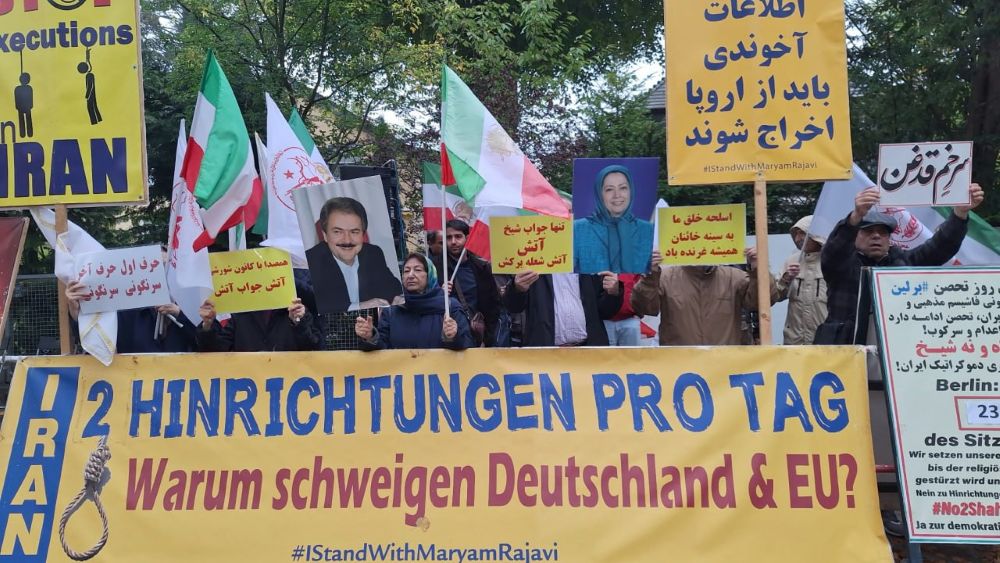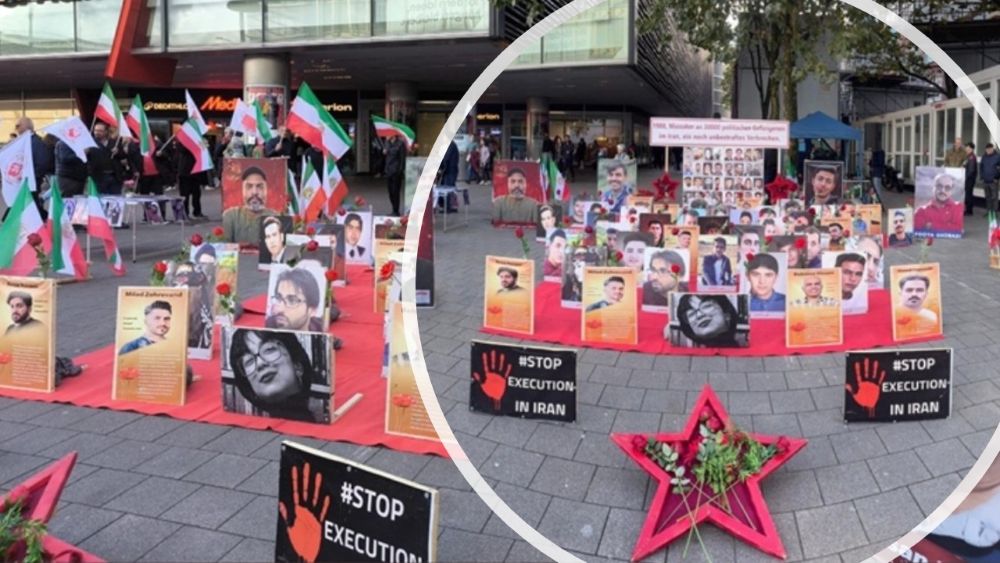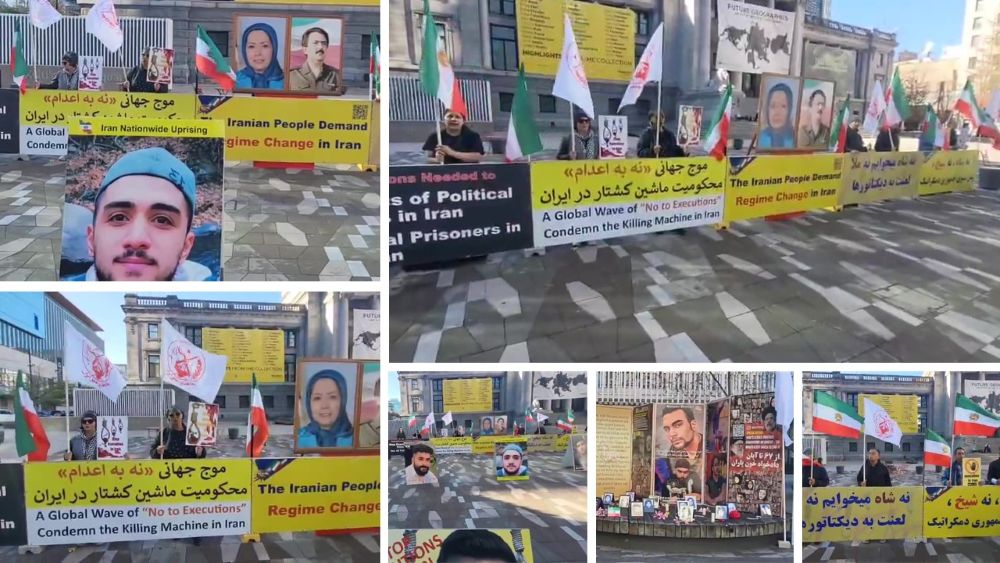
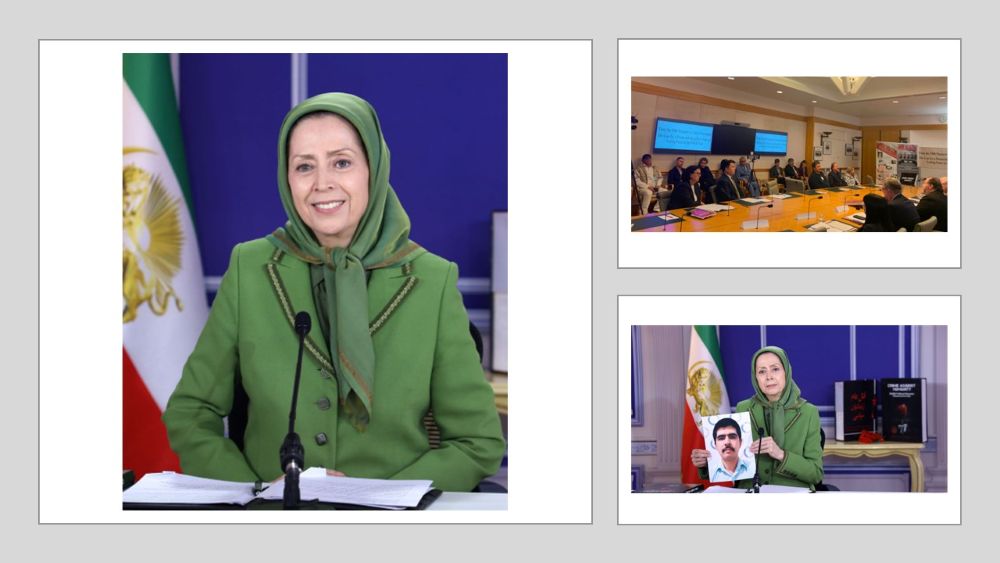
In a message to a conference at the Australian Parliament, the NCRI’s President-elect links the 1988 killings to current executions and calls for international accountability.
From the 1988 Massacre to Executions Today
Mrs. Maryam Rajavi, President-elect of the National Council of Resistance of Iran (NCRI), has called on the Australian Parliament and government to take concrete international action against executions and human rights abuses in Iran, warning that the pattern of repression that culminated in the 1988 massacre of political prisoners continues today.
In a message to a conference held at the Parliament of Australia to mark the 38th anniversary of the massacre, Mrs. Rajavi addressed Australian lawmakers and Iranian compatriots, recalling the mass killings that followed an order issued in July 1988 by Ayatollah Ruhollah Khomeini, founder of Iran’s clerical regime.
According to Mrs. Rajavi, Khomeini ordered the immediate execution of members of the People’s Mojahedin Organization of Iran (PMOI) who remained steadfast in their opposition to the regime despite years of imprisonment, torture and abuse. She said approximately 30,000 political prisoners were executed, around 90 percent of them PMOI members, and referred to documentation containing the names of 5,000 massacred PMOI members.
Mrs. Rajavi argued that the 1988 massacre was driven by the regime’s fear of the PMOI and of a popular uprising capable of threatening its survival. She said that, over the past 38 years, the same pattern of repression has continued as the authorities have repeatedly sought to crush popular protests and resistance movements.
Message to the Conference at the Parliament of Australia entitled, “From #1988Massacre to Executions Today”
The conference marking the anniversary of the massacre of political prisoners in Iran in 1988 was held in the presence of members of the Australian Parliament. It… pic.twitter.com/wpZ66TPRRp— Maryam Rajavi (@Maryam_Rajavi) August 19, 2026
Resistance and Executions Continue
Mrs. Rajavi said resistance to the Iranian government has nevertheless persisted, with people continuing to take to the streets in protest.
She highlighted the activities of Resistance Units, which she described as part of the organized PMOI network operating in Iranian cities. According to her message, these units carried out 200 anti-repression operations across Iran’s provinces during the previous month.
She also pointed to the recent execution of nine PMOI members, along with the hanging of dozens of other young people who had participated in anti-government uprisings.
Mrs. Rajavi said some of those facing execution openly declared in the regime’s courts that they had risen up with the aim of overthrowing the government. She added that, immediately before their executions, groups of prisoners sang songs of freedom inside their cells.
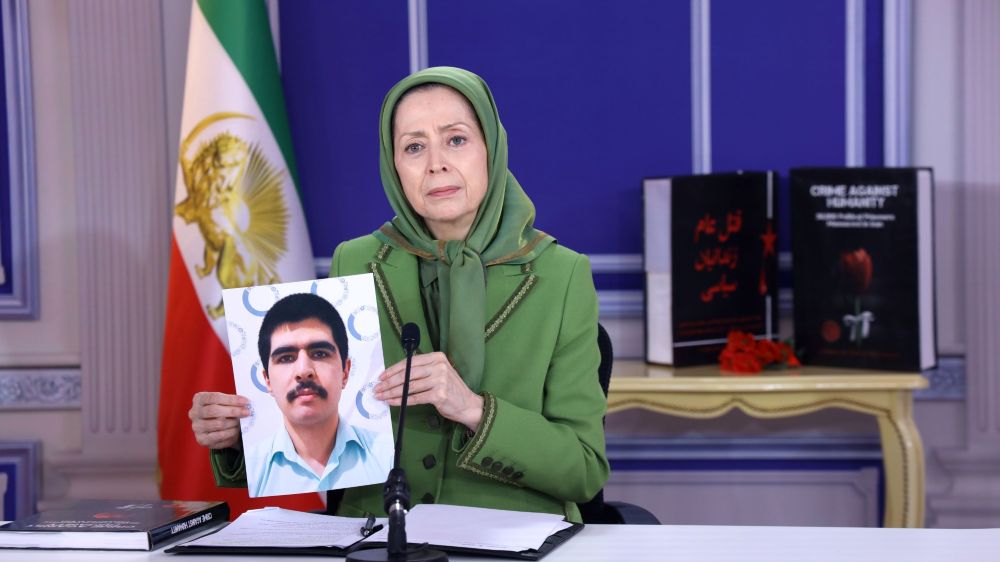
Among those she singled out was Mehdi Khanaki, a 26-year-old law graduate and PMOI member who, according to Rajavi, was executed on July 22. In one of his final letters, Khanaki pledged to remain committed to “freedom, justice, and liberation” for Iran.
Mrs. Rajavi presented Khanaki and other executed protesters as representatives of a younger generation that, in her account, has embraced the struggle to overthrow Iran’s clerical establishment.
War as a Cover for Domestic Repression
Mrs. Rajavi further argued that the Iranian regime has used the prolonged war conditions of the past 15 months as a means of confronting what she described as its principal internal adversary: the Iranian people and their organized resistance.
She said the government’s display of military strength should not obscure what she characterized as its fundamental political weakness. According to Rajavi, deep divisions within the ruling establishment are among the clearest indications of what she called the regime’s “deadly impasse.”
She maintained that those seeking to preserve dictatorship are the main advocates of continued war inside Iran.
At the same time, Rajavi criticized supporters and remnants of Iran’s former monarchy, accusing them of attempting to revive the political system that was overthrown in 1979. She referred in particular to statements advocating the restoration of SAVAK, the Shah’s secret police, and to proposals involving the suppression of nationalities and the imposition of martial law.
Mrs. Rajavi argued that neither the current clerical dictatorship nor a return to the former monarchy represents the aspirations of the Iranian people.
“A country whose people pay such a heavy price for freedom,” she said in her message, “will neither tolerate the current dictatorship nor return to the past.”
NCRI Presents an Alternative Vision for Iran
Against both systems, Mrs. Rajavi presented theNational Council of Resistance of Iran as a political alternative. She described the NCRI as a coalition of the PMOI and other organizations that was established 45 years ago and said it represents the Iranian people’s desire for a democratic republic based on the separation of religion and state and free elections.
She said the NCRI has raised what she called the “flag of peace and freedom,” positioning the coalition as an alternative to both continued clerical rule and a restoration of the monarchy.
Justice for the Victims of the 1988 Massacre
A central part of Rajavi’s message focused on the Iranian Resistance’s longstanding campaign for justice for the victims of the 1988 massacre.
She recalled that, in the first weeks after the killings began, Massoud Rajavi, identified in her message as the leader of the Iranian Resistance, sent telegrams to the United Nations Secretary-General exposing the secret execution decree and drawing attention to the regime’s broader campaign of arrests and executions.
Rajavi said these efforts contributed to the massacre receiving greater international attention. She noted that the United Nations General Assembly included the issue of the 1988 massacre of political prisoners in a resolution for the first time in the previous year.
She also cited a 2024 report by Professor Javaid Rehman, then the UN Special Rapporteur on the situation of human rights in Iran, which characterized the 1988 massacre as a crime against humanity and genocide.
Call for Action by Australia and the International Community
Concluding her message, Rajavi called on the international community, with particular emphasis on the Australian Parliament and government, to take practical measures against executions and what she described as massacres and systematic abuses in Iran.
She outlined three principal demands.
First, she called for governments to prosecute Iranian officials responsible for serious crimes under the principle of universal jurisdiction.
Second, she urged the international community to refer the 1988 massacre of political prisoners, which she described as a crime against humanity, together with other major crimes committed by the Iranian regime against its people, to the United Nations Security Council.
Third, she called for an end to executions in Iran to be established as a central demand of the Iranian people in any future international agreement involving the Iranian government.
Mrs. Rajavi’s message ultimately framed the 1988 massacre not as an isolated historical atrocity, but as part of what she described as an ongoing system of repression. By linking the mass executions of 1988 with the imprisonment and execution of protesters and PMOI members today, she urged Australian lawmakers and the wider international community to treat accountability, an end to executions and support for the Iranian people’s demand for political change as urgent international priorities.