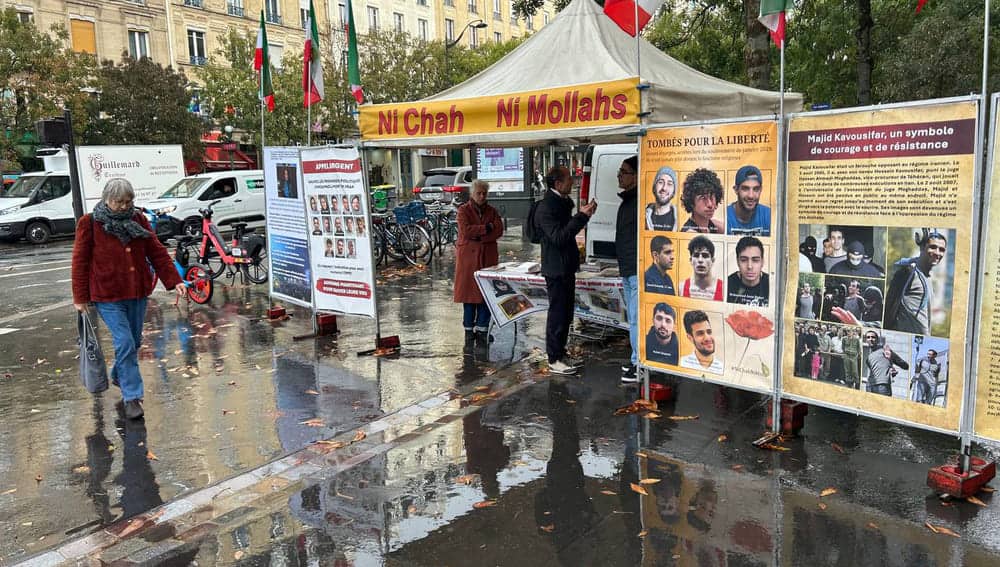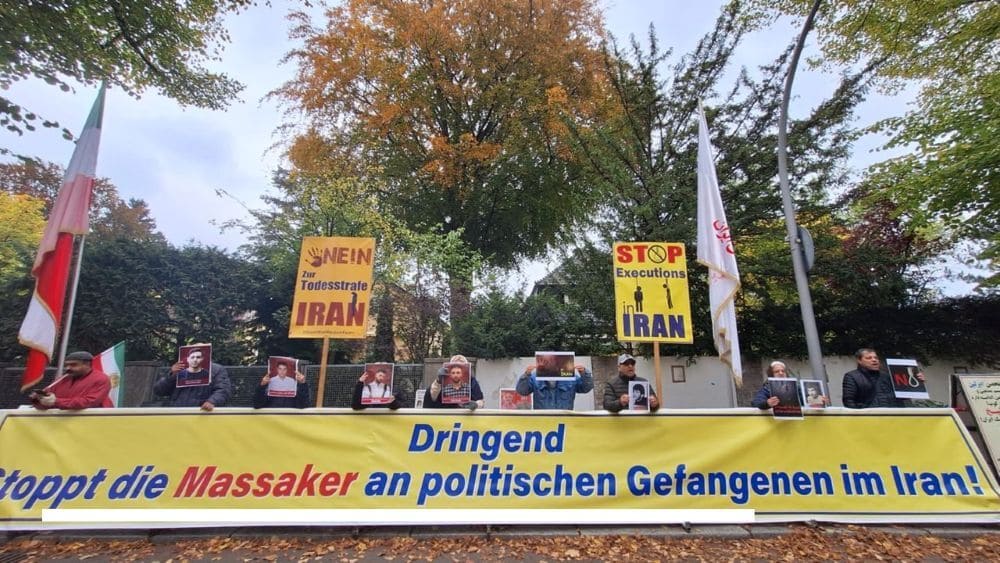

Mrs. Maryam Rajavi, President-elect of the National Council of Resistance of Iran (NCRI), sent a message to a conference at the UK Parliament on September 9, focusing on the link between human rights and democratic change in Iran.
Addressing members of the House of Commons and House of Lords, Mrs. Rajavi said that human rights and their vital link with democratic change represented the main issue facing Iran today. She said that young people in Iran were standing up to end religious dictatorship and establish “a free and democratic republic.”
Message to the conference at UK Parliament: #HumanRights and democratic change in Iran
Ignoring executions lies in the heart of a policy that helps the clerical regimehttps://t.co/SBtZ5K0K94 pic.twitter.com/gjIXmhQ5rO— Maryam Rajavi (@Maryam_Rajavi) September 9, 2026
The Execution of Mehdi Khanaki
Mrs. Rajavi referred to the case of Mehdi Khanaki, a 26-year-old law graduate and PMOI member who, according to her message, was arrested on February 10, 2026, and executed on July 22, 2026.
She cited a letter written by Khanaki in which he described his hope of destroying the walls of Qezel Hesar prison and ending imprisonment in facilities built under the Shah and inherited by the clerical regime.
“My only hope is to destroy the Qezel Hesar prison walls. I want to destroy all prisons built by the Shah and inherited by the clerical regime. So that no one will be held captive again. Every day of delay is a shame and makes me sad.”
Mrs. Rajavi said his words reflected the goals and beliefs of a younger generation in Iran that had turned to the PMOI.
Message to the conference at UK Parliament: Human rights and democratic change in Iran
Long years of experience prove that ignoring executions and ignoring the Iranian people’s Resistance lie in the heart of a policy that has helped the regime over several decades.
Now, it is… pic.twitter.com/EHveqXnbsf— Maryam Rajavi (@Maryam_Rajavi) September 9, 2026
“We Are Generation Z”
Mrs. Rajavi also referred to messages recently sent by political prisoners marking the 61st anniversary of the founding of the PMOI.
She cited messages from two young women, Arghavan Fallahi and Forough Taghipour, from Evin Prison:
“We are Generation Z. We are anti-dictatorship and anti-dependency. We are against Shah and the mullahs. The day is not far when this shaky regime of executions will be crushed.”
According to Mrs. Rajavi, these statements demonstrated that executions, widespread arrests and other repressive measures had failed to stop Iranian youth.
She said the ruling regime was facing foreign conflict, a broken economy and intense disputes among its factions, while identifying the young generation prepared to make sacrifices to overthrow the regime as its biggest challenge.
Death Sentences and Conditions in Iranian Prisons
Mrs. Rajavi said that since the January 2026 uprising, tens of political prisoners had been hanged and many protesters had been sentenced to death, including a considerable number of PMOI members and supporters.
She said the fate of many PMOI supporters who had participated in the uprising remained unknown.
Mrs. Rajavi also said the death sentences were issued following unfair trials that ignored international legal standards and systematically deprived defendants of the right to a defense.
She described conditions in prisons holding detained protesters as very poor, citing overcrowding, insufficient food and medicine and inadequate access to medical treatment.
Protests and the “No to Executions” Campaign
Despite these conditions, Mrs. Rajavi said protests in Iran had continued and grown in recent weeks.
She referred to demonstrations by nurses, young job seekers and retired workers, and said prisoners inside Iranian prisons had participated in the “No to Executions” campaign for 137 weeks in 62 prisons.
She also said that the regime relied on war in an effort to stop the uprising.
According to her message, despite concessions made to the regime in a Memorandum of Understanding, it attacked ships in the Strait of Hormuz and discredited the agreement.
Mrs. Rajavi said one of the fundamental reasons for Iran’s economic collapse was the allocation of most of the nation’s revenues to war and repression.
“The People of Iran Do Not Want War”
Mrs. Rajavi said that the people of Iran did not want war and identified the NCRI’s slogan as “peace and freedom.”
“In Iran, only the regime and the remnants of the old dictatorship want war. They see war as their only chance. They want to bring back the old dictatorship and its brutal secret police, the SAVAK.”
She said the Shah had taken power through a military coup and ruled through torture, and referred to statements by his son saying that he was proud of everything his family had done.

A Call for a New British Policy
Mrs. Rajavi said that years of experience demonstrated that ignoring executions and the Iranian people’s Resistance had been at the heart of a policy that had helped the regime for decades.
“Now, it is time for the world to stand with the people of Iran.”
She called for a new British policy that would stop appeasement and reject war, while viewing the Iranian people as the only force for change.
She said such a policy should support the Iranian people’s demand for a democratic republic with no torture, no executions, separation of religion and state, and full equality for women and men.
Recognition of the Iranian Resistance and the NCRI Provisional Government
Mrs. Rajavi said the British Parliament could take the first step by recognizing the Iranian Resistance and the provisional government proposed by the NCRI.
She added that more than 600 members of Parliament already supported the NCRI’s democratic plan.
She then set out three measures she said should be taken against the Iranian regime.
First, she called for all diplomatic and trade relations to be made conditional on an end to executions.
Second, she called for the use of international jurisdiction to prosecute those responsible for the 1988 massacre and recent killings.
Third, she called for any international agreement to include a real and verified stop to executions.
Message to the conference at UK Parliament: Human rights and democratic change in Iran
To stop the uprising, the regime relies on war. Despite the concessions made to the regime in the Memorandum of Understanding, it attacked ships in the Strait of Hormuz and discredited the… pic.twitter.com/CGXBqyEvlO
— Maryam Rajavi (@Maryam_Rajavi) September 9, 2026
Reference to the Blacklisting of the IRGC
In the closing part of her message, Mrs. Rajavi addressed the British parliamentarians directly and referred to their efforts concerning the Islamic Revolutionary Guard Corps.
“Your efforts, led by Mr. Blackman, succeeded in blacklisting the IRGC. I hope your efforts will now help stop executions and facilitate a principled policy in support of the Iranian people’s resistance.”
The message concluded with this call for continued efforts to stop executions and support the Iranian people’s Resistance.