Maryam Rajavi Rajavi Addresses Geneva Conference on Human Rights in Iran
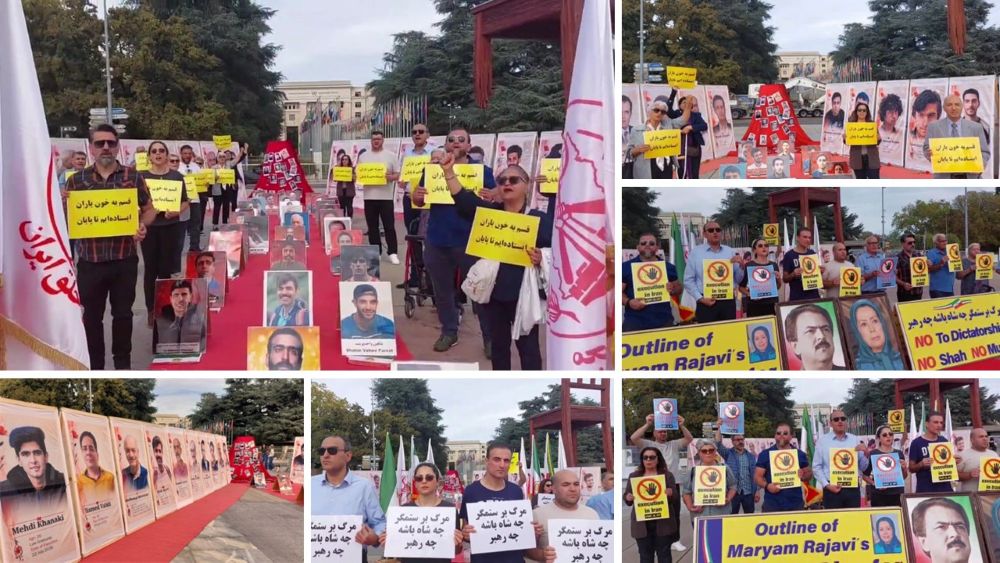
Geneva, Switzerland – September 28, 2026: A conference on human rights violations in Iran was held in Geneva alongside the 63rd session of the United Nations Human Rights Council. Jurists, experts, and international figures attended the conference.
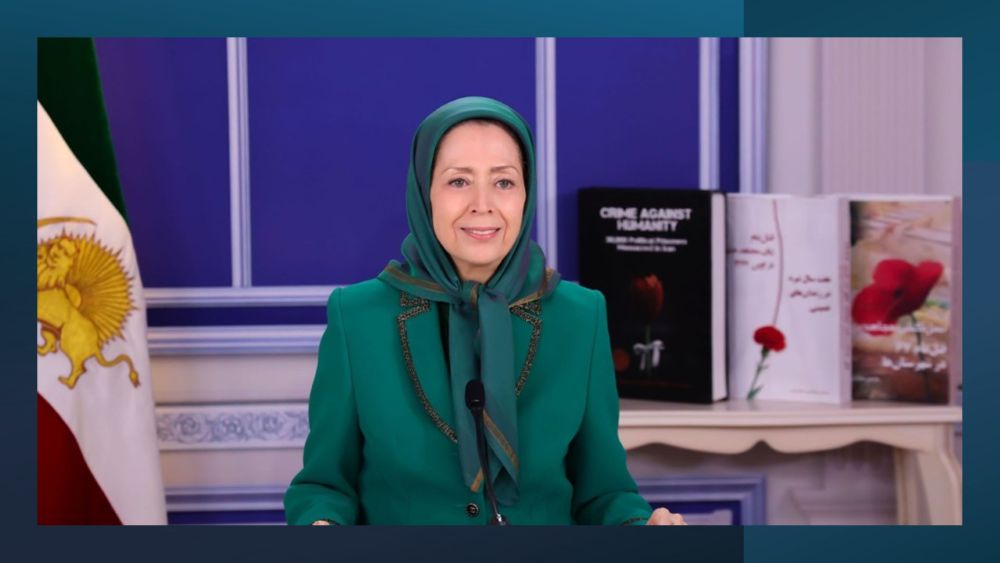
Mrs. Maryam Rajavi, the President-elect of the National Council of Resistance of Iran (NCRI), sent a message to the conference. In her message, Mrs. Rajavi thanked the organizers for holding the event in support of the human rights of the people of Iran.
Mrs. Rajavi said that human rights violations in Iran had intensified in recent months. She said these violations included the daily execution of prisoners, particularly members of the People’s Mojahedin Organization of Iran (PMOI/MEK) and participants in the January uprising, widespread arrests, and the torture and ill-treatment of political prisoners. She also referred to the adoption of a law that considers any connection or cooperation with foreign media a crime.
Addressing the rising number of executions in Iran, Mrs. Rajavi said that at least 646 people had been executed in 2022, at least 864 in 2023, and at least 1,000 in 2024. She said that 2025 had brought a shocking escalation, with 2,200 executions.
Mrs. Rajavi said that, in 2026, in addition to executions, more than 50 people had been executed on political grounds over the previous few months—the first such occurrence since the 1988 massacre—and that more than 100 people remained on death row.
She said that the rise in executions was closely linked to the rise of resistance and popular uprisings, revealing, in her words, the Iranian regime’s fear of the Iranian people and their Resistance. Mrs. Rajavi added that Iran had witnessed repeated uprisings and that a new generation of courageous and selfless young people had turned toward the Mojahedin.
Mrs. Rajavi said that the courage shown by those facing execution in the days before their executions had impressed both the people of Iran and people around the world.
Message to the UN Human Rights conference, Geneva
The rise in executions is closely linked to the rise of resistance and popular uprisings, revealing the regime’s fear of the Iranian people and their Resistance.On the one hand, Iran has witnessed repeated uprisings. On the… pic.twitter.com/fhxax9VrBH
— Maryam Rajavi (@Maryam_Rajavi) September 28, 2026
Referring to the number of people killed and arrested during successive uprisings, Mrs. Rajavi said that dozens had been killed and at least 8,000 arrested during the 2017–2018 uprising. She said that 1,500 people had been killed and more than 12,000 arrested during the November 2019 uprising.
Regarding the 2022 uprising, Mrs. Rajavi said that more than 750 people had been killed and 90,000 arrested. She said that several thousand people had been killed and at least 50,000 arrested during the January 2026 uprising.
Mrs. Rajavi said that these figures revealed what she described as the brutal system of repression and bloodshed ruling Iran. She added that, despite this, the “killing machine” had failed to stop the people’s uprisings and the organized Resistance.
She said that the past four decades had been marked by the silence of governments in the face of the Iranian regime’s crimes. Mrs. Rajavi then said that, instead of offering her own explanation, she would read part of remarks by Marc Trévidic, a former anti-terrorism investigating judge in Paris, broadcast on September 10 by Radio Présence in Toulouse.
According to the remarks quoted by Mrs. Rajavi, Trévidic said that, while working at the anti-terrorism prosecutor’s office in the early 2000s, he had witnessed what he described as a close relationship between France and Iran. He said that France had sought to sign profitable contracts with Iran, particularly in the oil and gas sector.
Trévidic also said, as quoted in Mrs. Rajavi’s message, that the Iranian regime had made the arrest of its opponents a condition and that the PMOI in Auvers-sur-Oise had been among those targeted. He described this as a misuse of the judicial system for political purposes.
Mrs. Rajavi said that this accusation had been used to justify greater repression and further executions of PMOI members and supporters.
International Findings Cited
Mrs. Rajavi said that, in recent years, international human rights bodies had increasingly characterized systematic human rights violations in Iran as crimes against humanity.
She referred to a 2024 report by Professor Javaid Rehman, the United Nations Special Rapporteur on the situation of human rights in Iran. Mrs. Rajavi said that Rehman had described the 1988 massacre as the worst human rights violation of its time and had characterized it as genocide and a crime against humanity.
Mrs. Rajavi also said that, in 2025, the United Nations General Assembly had referred, for the first time, to the 1988 massacre of political prisoners in its resolution on Iran.
She further said that the United Nations Fact-Finding Mission on Iran had described the repression of the Iranian people’s uprisings as crimes against humanity in its 2024 and 2026 reports. Mrs. Rajavi added that Amnesty International had most recently confirmed this finding in its latest report.
Mrs. Rajavi said that the Resistance’s more than four decades of opposition to what she called the ruling religious fascism sought to establish a democratic republic in which no one would enjoy privileges because of their religion or heritage.
She said that the NCRI was committed to respecting international conventions, freedom of speech, freedom of assembly and political parties, gender equality, the full independence of the judiciary, the principle of the presumption of innocence, the right to defense, and the abolition of the death penalty.
Mrs. Rajavi’s Proposals
On behalf of the NCRI, Mrs. Rajavi proposed an international mechanism to hold the Iranian regime accountable for human rights violations. Her proposals were:
-
Referring the human rights situation in Iran, including the case of the 1988 massacre of political prisoners, to the United Nations Security Council and taking the necessary measures to end impunity for those responsible for these crimes.
-
Requiring the Iranian regime to allow independent international visits to its prisons.
-
Prosecuting Iranian regime officials for crimes against humanity based on the principle of universal jurisdiction.
-
Including the demand to end executions in Iran in all political, economic, and international relations with the Iranian regime.
Read the full text of Maryam Rajavi’s message to the Geneva conference here.
Message to the UN Human Rights conference, Geneva
Proposing an international mechanism to hold the Iranian regime accountable#HumanRights violations in Iran have intensified in recent months. These violations include the daily executions of prisoners, particularly members of… pic.twitter.com/Fe5kLxmhXA— Maryam Rajavi (@Maryam_Rajavi) September 28, 2026