


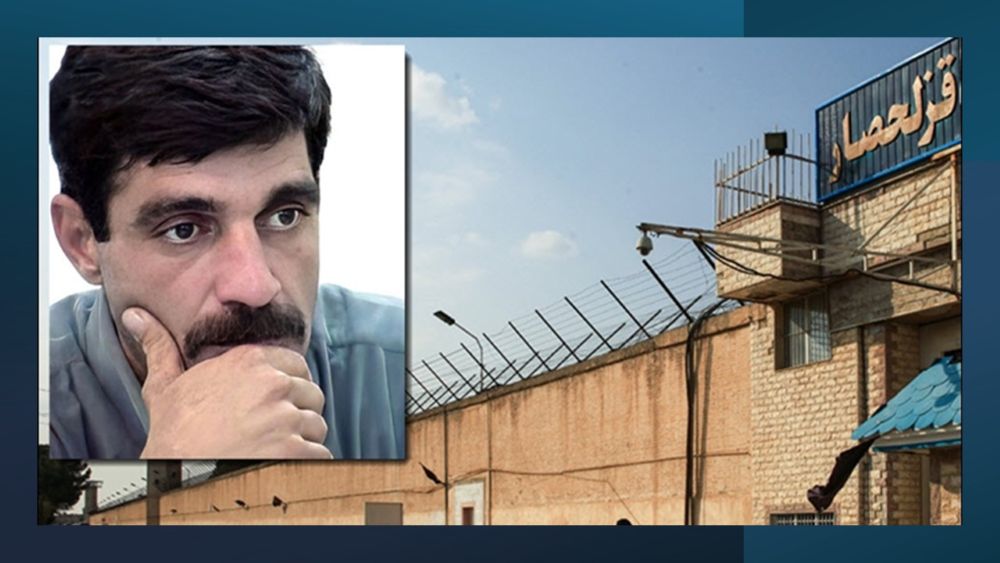
On July 16, 2025, the Iranian regime’s security forces launched an aggressive raid on Ghezel Hesar Prison in an alarming and brazen act of violence. Their target was Saeed Masouri, one of Iran’s longest-held political prisoners, a steadfast supporter of the People’s Mojahedin Organization of Iran (PMOI/MEK). In a report from the Iran Human Rights Society (HRS), it was revealed that the authorities stormed the political prisoners’ ward without a legal warrant, aiming to relocate Masouri to an undisclosed location. However, their efforts were thwarted by the collective resistance of Masouri’s fellow inmates, who managed to push the security forces back.
This attack is not an isolated incident but a clear sign of a new, intensifying wave of repression. Masouri, who has spent 25 years in prison since his arrest in December 2000, represents a symbol of unyielding resistance. For over two decades, he has endured imprisonment without a single day of leave, demonstrating an indomitable spirit against a regime that seeks to crush all opposition.
"A crime is in progress."
Political prisoner Saeed Masouri warns of covert mass suppression under the guise of "prison transfers."
He compares the regime’s tactics to the 1988 massacre—now rebranded as “fire at will.”
This is not strength. It is desperation.#Iran #FreeIran2025 pic.twitter.com/bmQm95ig8C— SIMAY AZADI TV (@en_simayazadi) July 17, 2025
“A Crime is in Progress”: Political Prisoner Saeed Masouri’s Urgent Cry from Iran’s Prison
In a poignant letter written on July 17, 2025, Saeed Masouri clarified that his refusal to comply with the regime’s demands was not born of fear but of a conscious decision to prevent history from repeating itself. He draws a harrowing parallel between the current repression and the mass execution of political prisoners in 1988. Masouri emphasizes that his resistance is to ensure that the massacre does not happen in silence and secrecy as it did back then.
He speaks of the regime’s relentless goal of “suppression, suppression, and more suppression,” alongside an increasing number of executions. The current situation, where security forces operate with a “fire at will” mandate, is eerily reminiscent of the 1988 “Death Committee” that sentenced thousands to death. Masouri’s message is clear and urgent: “Let the world hear this time that a crime is in progress—and that resistance is underway.”
Exposing the the Regime’s Tactics: Eliminate the Voice, Distract the World
The attempt to silence Masouri is part of a two-pronged strategy by the regime. The first goal is his outright elimination. The HRS report reveals that Ministry of Intelligence agents have recently threatened Masouri’s life, and his family has been subjected to menacing phone calls. These actions suggest a plan to forcibly disappear Masouri, a common tactic used by the regime to execute its political enemies under the radar.
The second element of this strategy involves using Masouri’s case as a smokescreen to divert attention from a broader, more insidious campaign. As the regime escalates its violent actions against Masouri, it is also accelerating the executions of other political prisoners at Ghezel Hesar. Among the prisoners facing imminent danger are Behrouz Ehsani, Mehdi Hasani, and Abolhassan Montazer—whose requests for a retrial have been denied. Masouri’s letter emphasizes that this brutal crackdown is not a sign of the regime’s strength, but rather a confession of its “helplessness” and the “collapse” of its structures, which it tries to conceal by retaliating against its prisoners.
Enduring Defiance: Masouri’s Stand and the Global Responsibility
Despite 25 years of torture, persecution, and imprisonment, Saeed Masouri’s spirit remains resolute. In his letter, he draws upon the rich history of Iranian resistance, citing figures like Siavash and Ario Barzan, and he finds strength in the liberating teachings of Islam. Masouri vows that he will never “take a step back on the path of freedom and justice,” no matter the obstacles in his way.
His unyielding courage places a moral responsibility on the international community. Human rights organizations have made it clear: if any harm comes to Saeed Masouri, it will be considered an extrajudicial execution, with direct accountability resting on the shoulders of the judicial and security authorities, under the command of Supreme Leader Ali Khamenei. Silence in the face of such atrocities amounts to complicity. The world must take immediate action, turning their condemnations into concrete political measures. The lives of Saeed Masouri and all political prisoners in Iran must be treated as a red line.