



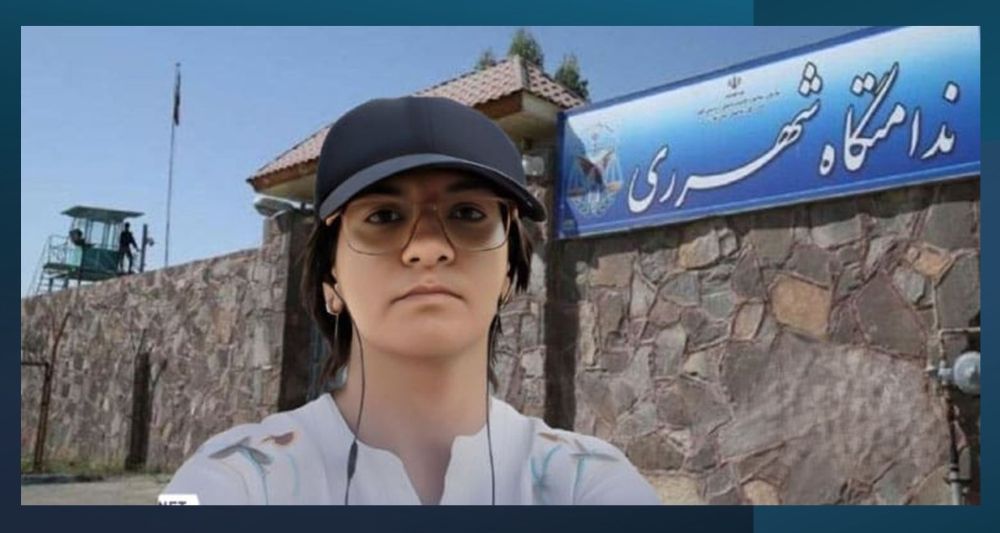
Somayeh Rashidi, a 42-year-old political prisoner and mother, has died after prolonged medical neglect in Iran’s notorious Qarchak Prison. State-run media had accused her of links to the People’s Mojahedin Organization of Iran (PMOI/MEK). Rashidi, who suffered from epilepsy, was arrested on April 24, 2025, for writing anti-regime slogans in Tehran. After brief detention and interrogation in an unknown location, she was transferred to Evin Prison and later moved to Qarchak, where her health rapidly deteriorated.
Despite repeated seizures witnessed by fellow inmates, prison authorities dismissed her condition as malingering and refused to send her to a hospital. Only after she collapsed and fell into a coma was she finally transferred to Mofatteh Hospital in Varamin, where doctors found her in critical condition. She remained in a coma for ten days before passing away on September 25.
Inmates at both Qarchak and Evin prisons held memorials for Rashidi, chanting slogans such as “Death to the dictator, death to Khamenei” and singing in her honor. One refrain declared: “Somayeh, though ill, has now joined the martyrs.” These tributes recalled her defiance, including her public slogans of “Death to Khamenei, hail to Maryam Rajavi.”

The regime also sought to distort the circumstances of her death. State-run outlets claimed her demise was due to drug use or pre-existing conditions. Fellow inmates, however, categorically rejected these fabrications, affirming that Rashidi was neither a drug addict nor mentally unstable, but a principled opponent of tyranny.
Political prisoners in Qarchak stressed that Rashidi’s epilepsy was well known to prison officials, yet she was deliberately denied treatment until her illness became fatal. The refusal to grant her temporary release on bail despite her critical health, they said, was evidence of a calculated policy of “silent execution.”
Her death has now become emblematic of systemic medical neglect in Iran’s prisons, where denial of healthcare is used as a weapon against political prisoners. As her fellow inmates noted, hers is not an isolated case but part of a broader pattern of cruelty that has already claimed many lives — and threatens many more.