



Maryam Rajavi warns that silence enables repression as executions surge
At a conference held in the UK Parliament on April 28, 2026, President–elect of the NCRI, Mrs. Maryam Rajavi delivered a stark warning about the escalating human rights crisis in Iran, emphasizing that both the Iranian people and political prisoners are paying the price for international inaction.
Addressing members of the House of Commons and the House of Lords, Mrs. Rajavi thanked lawmakers for their support but underscored the urgency of the situation. “Today, our people and our country are facing very difficult conditions,” she said, pointing to both external pressures and intensifying domestic repression.
Rising Executions and Systematic Repression
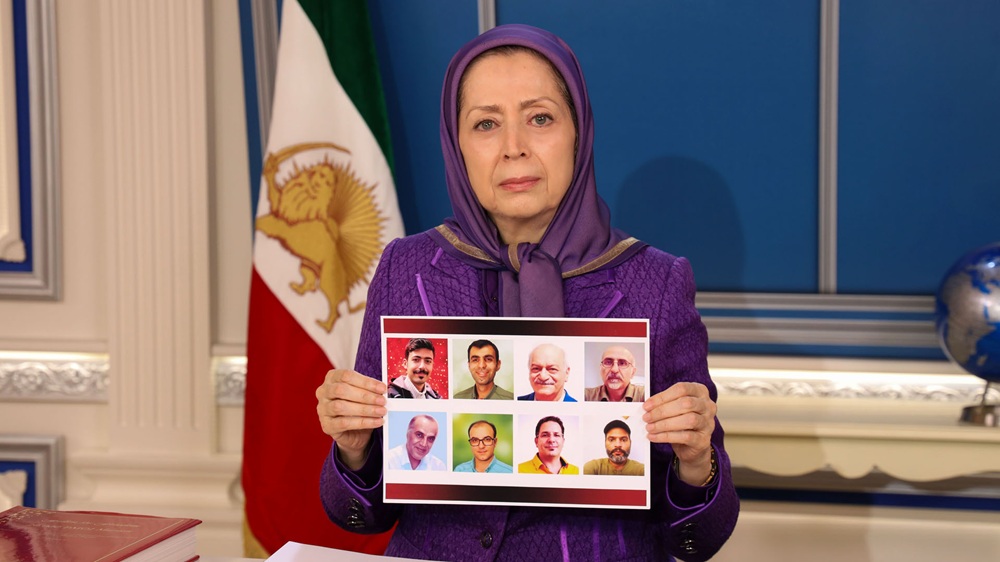
Mrs. Rajavi highlighted a sharp increase in executions, describing them as a deliberate strategy to suppress dissent. “Since March 19, the ruling clerics have executed 18 political prisoners,” she stated, noting that “eight of them were members of the PMOI, and the other ten were from among rebellious protesters.”
She condemned the judicial process behind these sentences, saying the victims “were tried and sentenced to death in unjust courts that violated minimum judicial standards,” and had been “deprived of all their rights, subjected to torture.”
The impact extends beyond those executed. According to Mrs. Rajavi, “their families were denied the right to mourn, and even the bodies of their loved ones were not returned to them.”
She also pointed to statements by Iran’s judiciary leadership as evidence of a broader crackdown, quoting officials who admit that “the judiciary has adopted a fully wartime position” in dealing with the population.
Fear of Uprising Drives Crackdown
According to Mrs. Rajavi, the surge in executions reflects the regime’s fear of renewed popular uprisings. “Through these brutal executions, the regime seeks to terrorize young people and to prevent them from joining the Resistance Units,” she said.
However, she argued that this strategy is failing. “The regime is facing a generation that has found its path in resistance and is no longer willing to tolerate the clerics’ repression and dictatorship.”
She also criticized European governments for their lack of response, warning that “the regime benefits from Europe’s silence on executions and torture in Iran,” while continuing destabilizing activities abroad.
A Call for Democratic Change
Mrs. Rajavi reiterated the position of the Iranian Resistance, framing it around the dual goals of peace and freedom. “The realization of both requires the overthrow of the religious dictatorship,” she stated.
She emphasized that such change must come from within Iran: “The overthrow of the regime is… the only solution to the issue of Iran… it is achievable… and it will be carried out by the people and their organized resistance.”
Citing recent activities, she noted that resistance networks have expanded significantly and played a role in past uprisings, including operations targeting state institutions.
Mrs. Rajavi also rejected any return to monarchy, stressing that “neither Shah nor the mullahs” represents the aspirations of the Iranian people, particularly younger generations.
The People and Political Prisoners Pay the Price of Silence against Executions in Iran#StopExecutionsInIranhttps://t.co/OpLI6BWX1n pic.twitter.com/LxirWftJ30
— Maryam Rajavi (@Maryam_Rajavi) April 28, 2026
Demands to the International Community
In her closing remarks, Mrs. Rajavi issued a direct appeal to Western governments, warning that inaction has consequences. “When Western governments do not speak a single word in response to these daily executions, the Iranian people and political prisoners pay the price,” she said.
She urged policymakers to adopt concrete measures, including conditioning relations with Iran on halting executions, prosecuting Iranian leaders under international law, and designating the Revolutionary Guard Corps as a terrorist organization.
Mrs. Rajavi also called for formal recognition of the National Council of Resistance of Iran’s provisional government, presenting it as a viable democratic alternative.
As the conference concluded, her message remained clear: without decisive international action, repression in Iran will continue—and so will the resistance against it.