



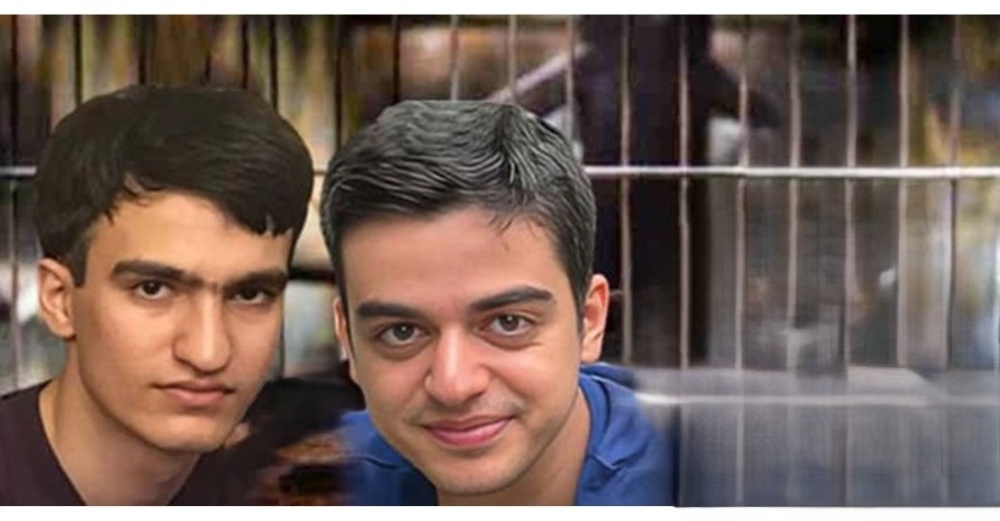
Two imprisoned Sharif University students denounce Tehran’s offer of clemency, calling it an insult to executed dissidents and grieving families.
A Rejection That Echoes Beyond Prison Walls
On May 12, 2026, two of Iran’s most prominent political prisoners—Sharif University students Amirhossein Moradi and Ali Younesi—issued powerful statements rejecting what they described as the Iranian regime’s “sham amnesty.” Both men, imprisoned on charges related to affiliation with the People’s Mojahedin Organization of Iran (PMOI/MEK), refused to accept clemency from authorities they accuse of carrying out systematic repression and executions.
Their letters, written separately from Evin and Ghezel Hesar prisons, were not appeals for mercy. Instead, they stood as uncompromising indictments of a government they hold responsible for the deaths of countless dissidents.
Amirhossein Moradi: “We Neither Forgive Nor Forget”
Amirhossein Moradi, a physics student at Sharif University and silver medalist in Iran’s National Astronomy Olympiad, wrote from Evin Prison with a message centered on memory, sacrifice, and resistance.
Recalling fellow prisoners transferred from Evin to Ghezel Hesar before their executions, Moradi described how they refused to surrender their dignity even in their final moments. He specifically named Vahid Bani-Amerian, Pouya Ghobadi, Babak Alipour, Mohammad Taghavi, Shahrokh Daneshvarkar, and Abolhassan Montazer as symbols of steadfast resistance.
Moradi reiterated that he had already rejected any possibility of accepting state clemency in September 2024. Referring to recent executions and the deadly crackdown following the January 2026 uprising, he declared that it is the Iranian people—not the authorities—who possess the moral authority to forgive.
His closing words carried a stark warning: the victims of repression “neither forgive nor forget.”
Ali Younesi: “Freedom Is a Right, Not a Favor”
Ali Younesi, a computer engineering student and gold medalist in the National Astronomy Olympiad, received notice on May 11, 2026, that the remaining seven months of his prison sentence could be pardoned.
Writing from Ghezel Hesar Prison, Younesi firmly rejected the offer.
He stated that he had never requested amnesty and never would, arguing that freedom is an inherent right taken by force—not a privilege to be negotiated. He emphasized that accepting clemency while fellow prisoners had gone to the gallows without compromise would be dishonorable.
Younesi also invoked the words of executed political prisoner Vahid Bani-Amerian, asking whether the prisoners should be the ones seeking pardon from the very authorities accused of committing injustice.
Addressing the families of those killed or imprisoned, he said that forgiveness belongs first to grieving parents and loved ones. He described continued resistance, exile, and imprisonment as a duty rather than a burden, insisting that the struggle for freedom remains a source of pride.
A Wider Crackdown on Alleged PMOI Supporters
The cases of Moradi and Younesi are part of a broader campaign against individuals accused of links to the PMOI/MEK.
In a related case, Ali Younesi’s father, Mir Yousef Younesi, was arrested in January 2023 and later sentenced to five years in prison by Iran’s Revolutionary Court. State media and intelligence authorities accused him of cooperating with the MEK and participating in a financial support network for the organization inside Iran.
Supporters of the Iranian Resistance argue that such prosecutions undermine official claims that opposition movements rely solely on foreign backing. Instead, they point to the arrests of ordinary citizens—including professionals, workers, and family members—as evidence of domestic support for anti-government resistance.
The Legacy of Executed Prisoners
The letters from Moradi and Younesi repeatedly referenced six executed prisoners associated with the PMOI/MEK Resistance Units. According to the statements, the men were transferred to Ghezel Hesar Prison in March and April 2026 before being executed.
Their refusal to seek compromise or submit to pressure has become a defining symbol for many opposition supporters, particularly after the unrest and crackdown surrounding the January 2026 uprising.
For critics of the Iranian government, the executions were intended to reinforce fear. Instead, they argue, the deaths have intensified public anger and strengthened calls for resistance.
Resistance in the Shadow of Repression
As Iranian authorities continue mass arrests, executions, and security trials in an effort to suppress dissent, the letters from Moradi and Younesi have resonated far beyond prison walls.
Their refusal to accept clemency transformed what authorities may have intended as an act of leniency into a public challenge to the legitimacy of the state itself.
The two students—young academics with internationally recognized talent and promising futures—chose confrontation over silence. Their words now stand among the growing body of prison testimonies emerging from Iran’s ongoing political crisis.
For many observers, the significance of these letters lies not only in their rejection of amnesty, but in what they reveal about a generation unwilling to bargain with fear, even under the shadow of the gallows.
