



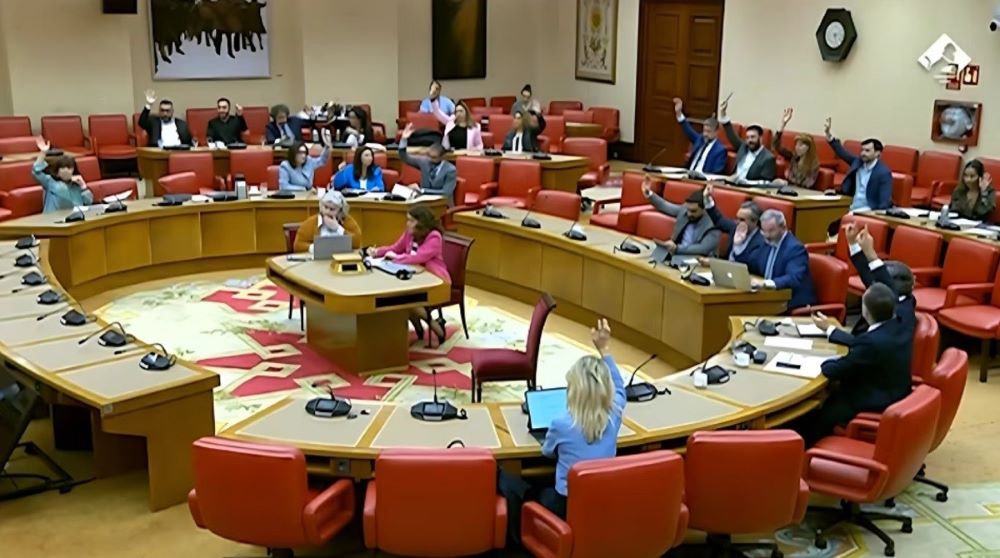
On May 6, 2025, Spain’s Congress of Deputies Foreign Affairs Committee unanimously passed a resolution denouncing the Iranian regime’s extensive and systematic human rights violations. The cross-party support marked a rare show of national unity on foreign policy.
The resolution, introduced by the Popular Party and endorsed by all parliamentary factions, calls on the Spanish government to take a clear and firm stance against Iran’s repression. It urges sanctions and diplomatic actions against officials involved in gender-based violence and other abuses, particularly those enforcing discriminatory laws against women.
Referencing statistics from the National Council of Resistance of Iran (NCRI), the resolution noted over 1,000 executions took place in Iran in 2024—the highest annual figure in the past 30 years. The NCRI was commended for uncovering these abuses and for its leadership in organizing a major opposition rally in Paris on February 8, 2025, advocating democratic change in Iran.
#BREAKING: In rare unanimity 🇪🇸 Spain’s Parliament votes to condemn Iran’s human rights abuses, cites NCRI’s reports on 1,000+ executions in 2024, honors Maryam Rajavi’s leading role in advancing women’s rights, supports establishing a democratic republic in Iran, backs political… pic.twitter.com/cvABgaOUPs
— Hanif 𝕏 FreeIran (@HanifFreeIran) May 10, 2025
Special tribute was paid to Maryam Rajavi, the NCRI’s President-elect, for her advocacy at the International Women’s Conference earlier this year, where she highlighted the vital role of Iranian women in resisting oppression.
The resolution spotlighted the cases of political prisoners Mehdi Hassani and Behrouz Ehsani, who were reportedly tortured and sentenced to death. It condemned the Iranian Supreme Court’s February 23, 2025 decision to deny a review of their cases.
Echoing findings from the United Nations Independent International Fact-Finding Mission, the Spanish Parliament classified Iran’s practices—such as torture, arbitrary detention, sexual violence, and extrajudicial executions—as possible crimes against humanity.
Spanish Parliament Unanimously Adopts Resolution Backing Iranian People and Condemning Human Rights Abuses
On 6 May 2025, the Foreign Affairs Committee of the Spanish Parliament unanimously adopted a resolution condemning the Iranian regime for its grave and ongoing human rights… pic.twitter.com/1ujGdlbjUp
— Firouz Mahvi (@FirouzMahvi) May 10, 2025
It also condemned Iran’s entrenched discrimination against women, including compulsory hijab laws, restrictions in public and legal spheres, and violations of international commitments under the Convention on the Elimination of All Forms of Discrimination Against Women (CEDAW).
The resolution concludes by urging democratic nations to intensify pressure on Tehran, support international investigations, and promote structural reforms to uphold human rights in Iran.