UK Lawmakers Unite to Back Iranian Resistance and Call for Firm Action Against Tehran Regime
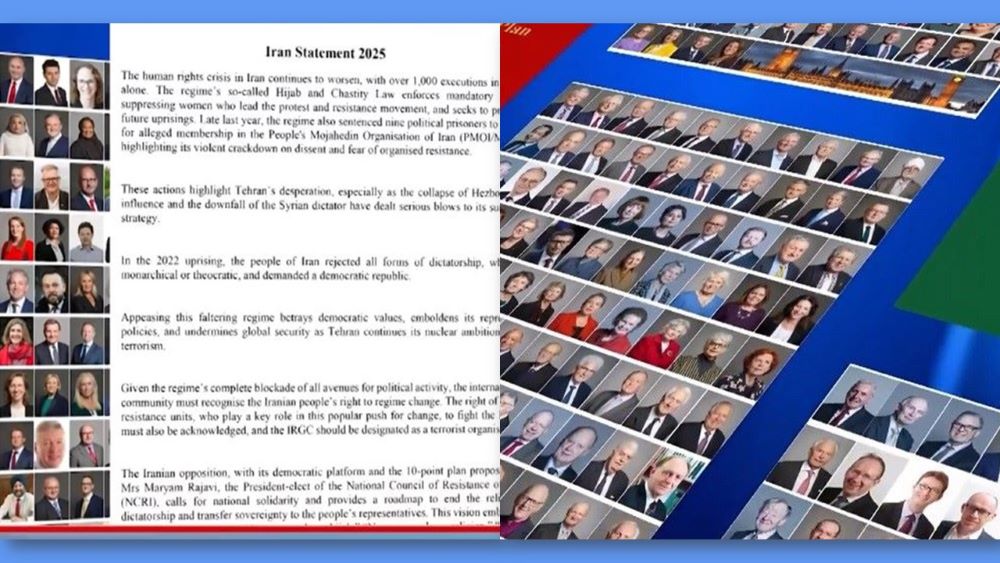
In a powerful bipartisan initiative, 560 members of the UK Parliament—comprising 230 MPs from the House of Commons and 330 peers from the House of Lords—have issued a forceful joint declaration expressing deep alarm over the worsening human rights crisis in Iran. Dated February 2025, the statement also advocates for global recognition of the Iranian people’s right to change their regime. It reaffirms strong support for the democratic agenda of the Iranian Resistance, led by the National Council of Resistance of Iran (NCRI), as a pathway to a free and democratic Iran.
The declaration sheds light on Iran’s dire human rights conditions, emphasizing the Iranian regime’s execution of at least 1,000 individuals in 2024, including 34 women. It denounces the “Hijab and Chastity Law,” characterizing it as a means not only to enforce compulsory hijab but also to extend broad police control over society. This policy starkly contrasts with the democratic opposition’s platform, which promotes fundamental freedoms with slogans like “No to compulsory hijab, no to compulsory religion, and no to compulsory rule,” as well as a campaign against capital punishment under the banner “No to Executions.”
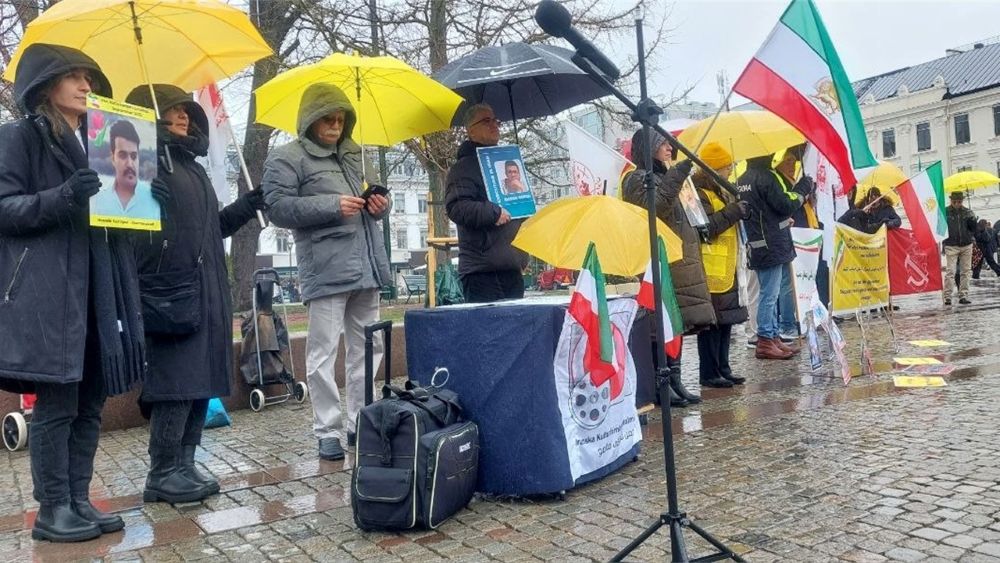
One of the most alarming points raised is the late 2024 sentencing to death of nine political prisoners, accused of affiliation with the People’s Mojahedin Organization of Iran (PMOI/MEK). The statement notes that despite increased crackdowns, repression, and executions, the regime has failed to stifle the surge of nationwide protests and the persistent activities of the PMOI-led Resistance Units.
A landmark joint statement by 560 UK lawmakers—incl. 230 from the Commons majority & 330 Lords—raises deep concern over Iran’s dire situation. A powerful show of cross-party support for democracy & human rights in Iran.#FreeIran2025 #en_simayazadi pic.twitter.com/thVzTFMLCv
— SIMAY AZADI TV (@en_simayazadi) May 19, 2025
A Vulnerable Regime: Proxy Tactics and Declining Influence
According to the lawmakers, the Iranian regime’s strategy for maintaining power heavily relies on regional proxy networks and exerting control over neighboring countries. Yet, they observe that the weakening of Hezbollah’s influence and the swift collapse of the Assad regime in Syria have exposed the Iranian regime’s vulnerabilities. These developments, they argue, dismantle the myth of regime invincibility and illustrate that such authoritarian systems can collapse under pressure.
The parliamentarians strongly warn against appeasement or investment in such regimes, asserting that doing so undermines democratic principles and has damaging political and economic consequences. Instead, they stress that standing with the Iranian people, who continue to call for regime change, is both strategically sound and morally necessary.
They further highlight the Iranian population’s clear rejection of both monarchic and theocratic rule, as demonstrated by the nationwide protests in 2022 and the widespread boycott of the regime’s orchestrated presidential elections. These acts, they contend, signify an undeniable demand for a democratic republic.
Acknowledging that the Iranian regime has closed off all peaceful avenues for political engagement, the signatories emphasize that the people of Iran have a legitimate right to pursue regime change. They also affirm the right of the Resistance Units to oppose and fight the Islamic Revolutionary Guard Corps (IRGC), calling explicitly for the IRGC to be designated as a terrorist entity.
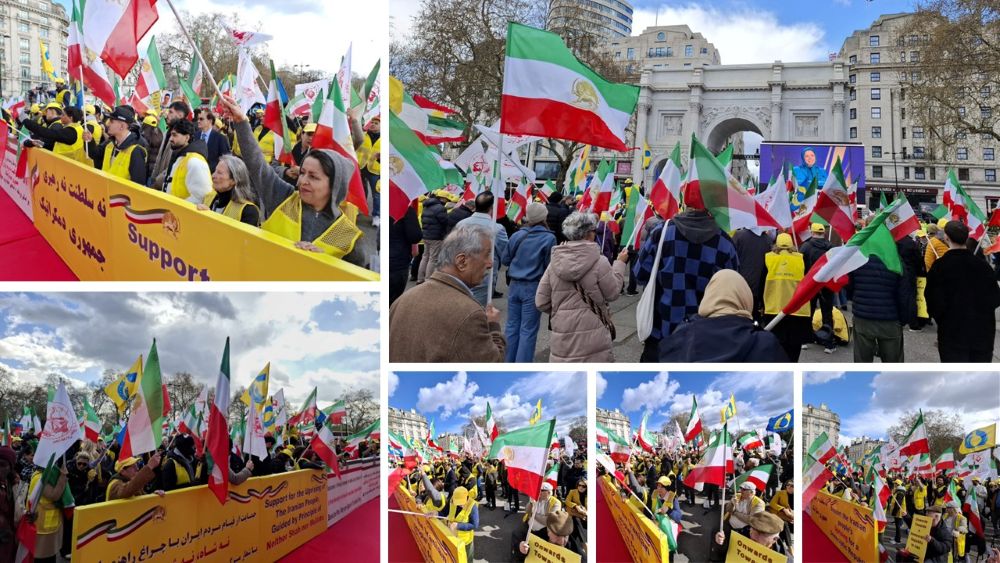
A privilege to join current & former parliamentarians for this weekend's #FreeIran2025 Conference hosted by President Elect @Maryam_Rajavi. Inspiring to hear the commitment of @iran_policy to restore freedom & #Liberal democracy to #Iran #TenPointPlan #IranProtests #Paris2025 🕊 https://t.co/4TIZVdZYhz pic.twitter.com/JCJuAdSghs
— William Powell🔶🏴 (@WmPowell2021) May 18, 2025
The Democratic Path Forward
The declaration champions the democratic roadmap proposed by the Iranian opposition. Central to this is the Ten-Point Plan introduced by NCRI President-elect Mrs. Maryam Rajavi, which advocates for national unity, the end of religious dictatorship, and the transfer of power to freely elected representatives. The plan encompasses core principles such as the separation of religion and state and the establishment of gender equality.
Significantly, the statement references the widespread international support for this vision. In June 2024, over 4,000 lawmakers from various political backgrounds and more than 100 former world leaders issued endorsements of the Ten-Point Plan. UK lawmakers echo this call and urge governments worldwide to lend their support to this vital blueprint for a free and democratic Iran.