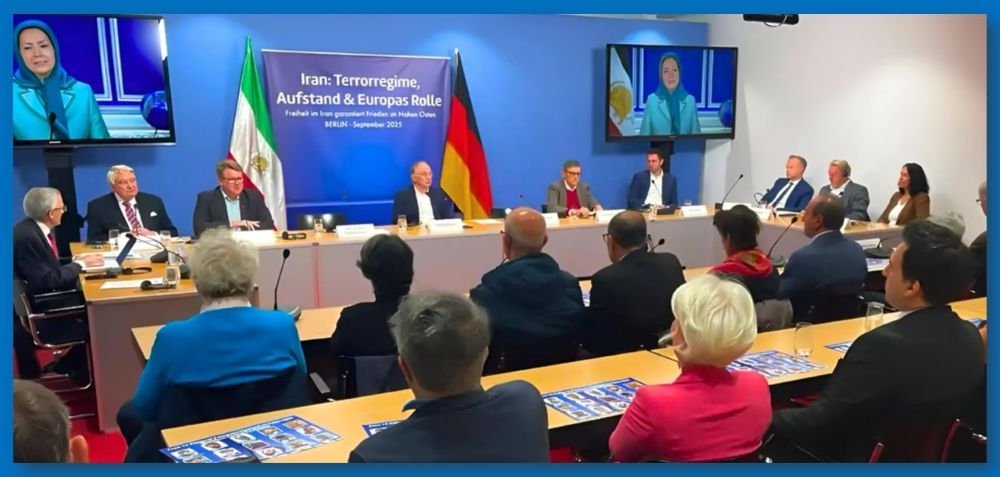
A Call for Democratic Change in Iran
Berlin, 25 September 2025 — At a high-profile conference titled “Iran: Reign of Terror, Popular Uprisings, and the Role of Europe”, German parliamentarians, former diplomats, and Iranian opposition leaders united in urging Europe to align its policies with the Iranian people’s democratic aspirations. Maryam Rajavi, President-elect of the National Council of Resistance of Iran (NCRI), alongside prominent European speakers, called for sanctions, political pressure, and recognition of the NCRI’s Ten-Point Plan as a framework for democratic transition.
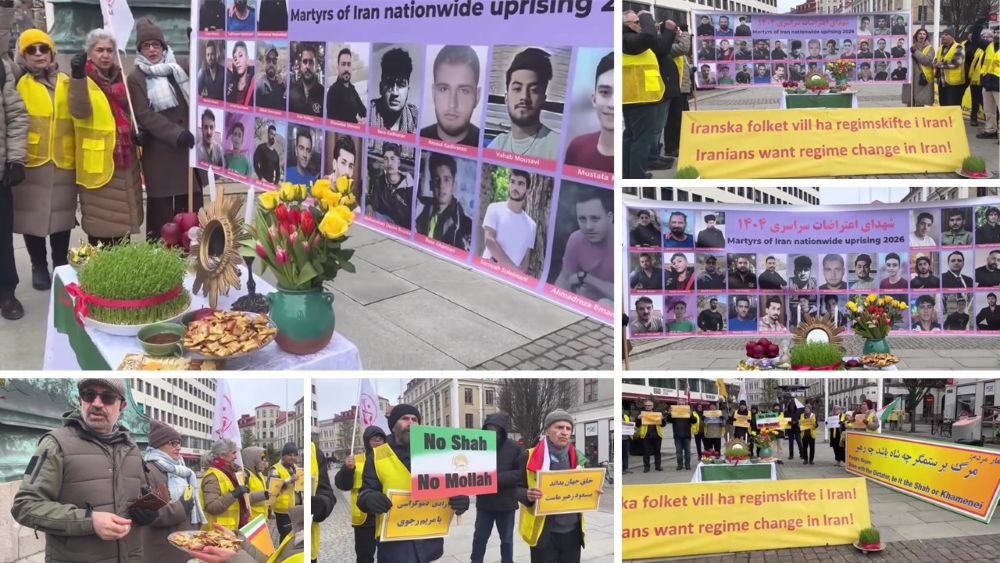
The event came in the wake of major rallies—tens of thousands in Brussels marking the 60th anniversary of the PMOI/MEK and another in New York—amplifying the slogan: “No to Shah, no to mullahs—yes to a democratic republic.”
#BerlinFreeIranKonferenz: Demokratische Alternative zum Mullah-Regime unterstützen!; #IranThirdOption ist die Lösung der #Iran-Krise; #Snapback aktivieren!#NCRIAlternative #No2ShahNo2Mullahs
25. Sept #Berlin – Zahlreiche Abgeordnete des Bundestags sowie führende Persönlichkeiten… pic.twitter.com/InJG5C1sYQ— Javad Dabiran (@JavadDabiran) September 25, 2025
Maryam Rajavi: Resistance Units as the Engine of Change
Opening the conference, Maryam Rajavi stressed that despite heightened repression and executions, “important changes are taking place on the people’s front in Iran.” She connected global rallies to domestic unrest, noting:
-
Tens of thousands gathered in Brussels on September 6.
-
Iranian communities rallied in New York only days earlier.
Mrs. Rajavi highlighted Resistance Units as the driving force:
-
Nearly 3,000 anti-repression operations in one year.
-
Over 35,000 acts of resistance across all 31 provinces.
She emphasized: “The real conflict is between the people of Iran and the clerical regime. On one side stands the Revolutionary Guards; on the other side is a rebellious force acting daily against repression.”
On the nuclear issue, she recalled the Resistance’s 133 revelations of secret sites, warning that the regime holds over 400 kilograms of 60% enriched uranium with stalled negotiations. She dismissed the false binary of “nuclear bomb or war,” insisting that regime change by the Iranian people is the real solution.
Mrs. Rajavi urged Europe:
-
Recognize the Iranian people’s struggle.
-
Place the IRGC on terror lists.
-
Reject appeasement and dictatorship alike.
German Lawmakers Call for Stronger Action
Carsten Müller (CDU, Bundestag) welcomed cross-party support and endorsed Rajavi’s Ten-Point Plan as a roadmap to a democratic, secular state. He underscored that sanctions must be tightened, linking them to the people’s demand for regime change.
Amb. Dr. Hans-Ulrich Seidt, former German Ambassador to Afghanistan, assessed Tehran’s weakening regional position, pointing to the setbacks of Hezbollah, Assad, and the Houthis. He argued that the regime faces an existential crisis both at home and abroad.
Martin Patzelt, former Bundestag member, likened today’s regime to the GDR’s apparatus of disinformation. He defended the NCRI/MEK as “intelligently organized” and praised its female-led leadership under Maryam Rajavi as a mark of credibility.
Prof. Rita Süssmuth, former Bundestag President, delivered a written message calling this a “fateful moment,” emphasizing the NCRI as a viable democratic alternative rooted in European values.
Jan Metzler (CDU, Bundestag) called the delegation’s presence a deliberate act of solidarity, recalling his impression of Rajavi’s leadership: “If people in Iran risk everything for freedom, the least we in Germany can do is stand with them.”
Human Rights and Security Concerns
Joachim Rücker, former German Ambassador and UN Human Rights Council President, highlighted Iran’s high execution rate and urged:
-
Placing the IRGC on the EU terror list.
-
Conditioning any engagement on the abolition of executions and release of political prisoners.
-
Expanding universal-jurisdiction trials against regime officials.
Leo Dautzenberg, Chair of the German Solidarity Committee for a Free Iran (DSFI), tied Iran’s drone and missile threats to European security, stressing: “Their long-range missiles already reach Europe.” He credited the NCRI/MEK for exposing Natanz and Arak and urged constructive dialogue with the opposition.
Mareike Hermeier (Die Linke, Bundestag) framed solidarity as a global responsibility, declaring: “As long as even one child suffers under dictatorship, we are all at war.”
Voices from the Iranian Resistance
Dr. Masoumeh Bolourchi (NCRI Representative in Germany) emphasized women’s leading role: “Women today play a leading role in social, political, and operational spheres.” She called for a secular republic, gender equality, and an Iran free of nuclear weapons.
Javad Dabiran (NCRI Foreign Affairs Committee) welcomed sanctions snapback but stressed that the regime remains dangerous until it is overthrown.
Hossein Yaghobi (Society of German-Iranians, Co-Chair) recalled decades of persecution, citing the ongoing trial of 104 MEK leaders as proof of the regime’s fear. He appealed to Berlin: “Let us walk this path together.”
Mahmoud Mahoutchian (Society of German-Iranians, Lower Saxony) rejected the regime’s claim that there is “no alternative,” stressing that the Resistance Units and growing parliamentary support prove otherwise.
Bahram Mavaddat (NCRI member and former national footballer) highlighted decades of discipline and sacrifice within the Resistance: “Only with this organized Resistance and the MEK can the regime be overthrown.”
Mehdi Amiri (former activist, now in Germany) recounted his imprisonment and threats from regime agents. He emphasized that Resistance Units remain the motor of uprisings, urging Europe to support their activities and defend prisoners’ rights.
A Path Toward a Democratic Republic
The Berlin conference reaffirmed a unified message: the Iranian people reject both monarchy and theocracy in favor of a democratic, secular republic. Speakers urged European governments to align sanctions and diplomacy with explicit support for the NCRI and its Ten-Point Plan, recognizing Iran’s organized resistance as the only real solution to dictatorship and repression.