



UK Parliament Conference Calls for Firm Action on Iran
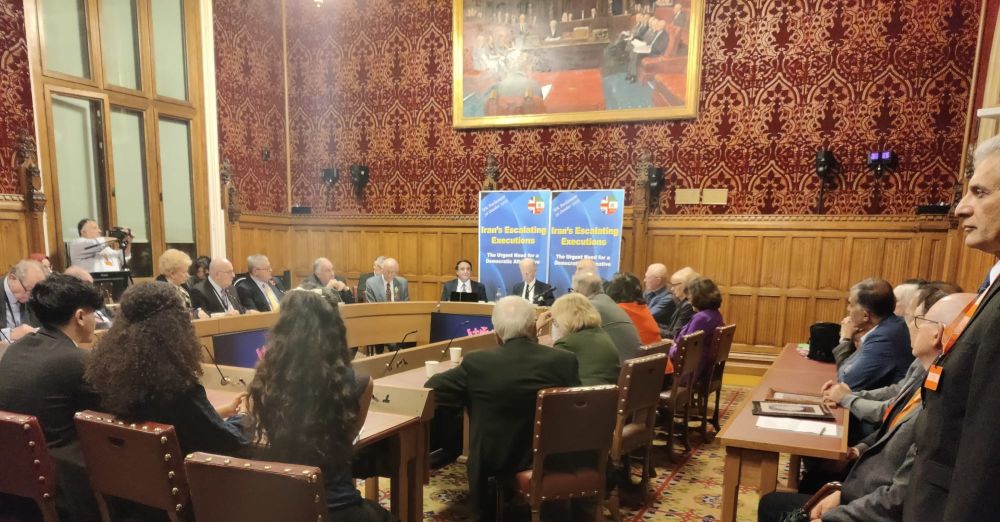
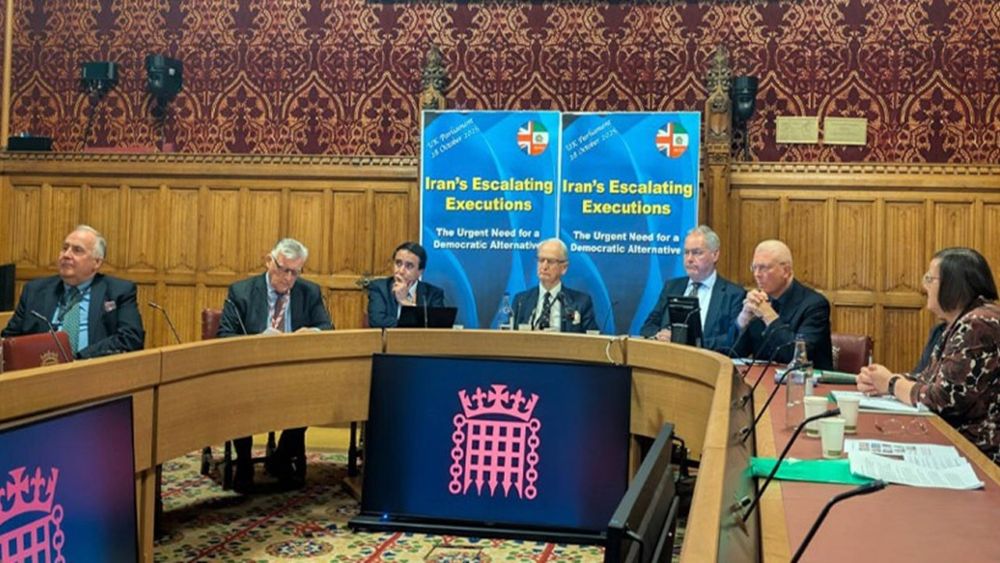
In a landmark cross-party conference held at the UK Parliament, members of both Houses joined Iranian Resistance President-elect Mrs. Maryam Rajavi, human rights advocates, and young Iranian activists to address Iran’s worsening human rights crisis. The event, described as one of the most united gatherings on Iran ever held in Westminster, focused on the regime’s escalating executions and called for a decisive international policy to hold Tehran accountable while backing the Iranian people’s democratic aspirations.
Maryam Rajavi’s Call: Empower the Iranian People, Not the Regime
Mrs. Maryam Rajavi, President-elect of the National Council of Resistance of Iran (NCRI), delivered a powerful keynote speech, warning that the world’s focus on Tehran’s nuclear ambitions has distracted from the immediate tragedy of mass state executions. She revealed that over 1,400 people have been executed in 2025, describing this as a campaign by Supreme Leader Ali Khamenei to prevent new uprisings.
Rajavi urged governments to end appeasement, proscribe the Islamic Revolutionary Guard Corps (IRGC), and make diplomatic relations conditional on halting executions. She praised the “No to Execution Tuesdays” campaign—now active in 54 prisons—as a symbol of the people’s resilience.
“The only real way to stop the regime’s nuclear and killing machine is to support the Iranian people’s resistance to overthrow it,” she said.
Conference at the UK Parliament; Escalating Executions in Iran
Today, at the international level, most concerns about Iran are focused on the regime’s nuclear and missile programs or its transnational repression including in the UK.
These concerns are certainly valid but a… pic.twitter.com/lfk7DMwiEQ— Maryam Rajavi (@Maryam_Rajavi) October 31, 2025
UK Lawmakers Demand Stronger Policy and Sanctions
Lord Bellingham opened the session by hailing the conference as a historic moment and emphasized that the regime’s brutality shows its weakness, not strength. He urged the West to isolate the regime, engage with the NCRI, and adopt Rajavi’s Ten-Point Plan for a democratic, non-nuclear Iran.
MP Bob Blackman echoed this, describing the regime’s 2,000 executions under President Masoud Pezeshkian as a desperate attempt to suppress dissent. He called for targeted sanctions on Khamenei, referral of human rights abuses to the UN Security Council, and proscription of the IRGC.
“Supporting the NCRI is not only a moral duty—it’s a strategic investment in global security,” he said.
Last night, I attended the NCRI Conference on the horrendous human rights abuses committed by the IRGC.
2,000 executions in Iran since Masoud Pezeshkian took office 14 months ago.@Maryam_Rajavi's 10 point plan is the only viable democratic alternative to the regime. pic.twitter.com/UnYRUa3OaZ
— Bob Blackman (@BobBlackman) October 29, 2025
Baroness Redfern emphasized women’s leadership in the Iranian resistance, describing executions as the regime’s “weapon to crush opposition.” She urged the UK government to recognize the NCRI as the democratic alternative.
Baroness O’Loan highlighted cases like Zahra Tabari, a 67-year-old woman sentenced to death after a ten-minute trial, calling Iran’s judiciary “an instrument of repression.” She pressed the UK to act urgently and refer the regime’s crimes against humanity to the UN.
MPs Condemn “Barbaric Executions” and Urge Global Accountability
MP Jim Shannon drew biblical parallels to the fall of corrupt empires, warning that “the day of reckoning is coming” for Tehran. He linked current executions to the 1988 massacre of 30,000 political prisoners, calling for UN prosecution of Iran’s judiciary and leaders.
Sir Roger Gale said the regime is in its “death throes,” while Lord Carlile, a King’s Counsel, condemned it as “a bunch of criminals” executing more people than the rest of the world combined.
“The women of Iran have become the backbone of resistance,” he noted.
Lord Cryer labeled the regime “clerical fascist,” blasting UK governments for failing to proscribe the IRGC, which he said operates criminally “on British streets.”
Peers and MPs Highlight Regime Weakness and Urge Recognition of Resistance
Lord McCabe and Mark Williams, both long-time advocates for Iranian freedom, warned of a repeat of the 1988 massacre and called on London to ban the IRGC, invite Maryam Rajavi to Parliament, and recognize the NCRI. Williams detailed the IRGC’s transnational terror network funding Hezbollah and the Houthis, stressing that “silence enables slaughter.”
William Powell and I at yesterday’s meeting in Parliament calling for an end to the death penalty in Iran and the dire state of human rights. Inspiring speech from NCRI President Elect Maryam Rajavi, Powerful calls for the proscription of the IRGC as a terrorist organisation. pic.twitter.com/JxKlEya0NT
— Mark Williams (@mark4ceredigion) October 29, 2025
MP Rachael Maskel said she was “blown away” by testimonies from Iranians, pledging to help amplify their voices and push for sanctions.
MP Andy McDonald called the executions an “anathema” and urged the International Criminal Court (ICC) to hold perpetrators accountable.
MP Mary Glindon paid tribute to Iran’s women and said global peace “is impossible without freedom in Iran.”
Lord Hamilton and William Powell expressed optimism that the regime’s collapse is near. Powell urged decisive action, saying the IRGC proscription is not an option but a necessity.
Iranian Youth: “Your Silence Is Complicity”
The conference concluded with deeply moving testimonies from young Iranian activists, whose families have suffered under the regime.
Amir Hossein described uncles executed and buried alive by the Revolutionary Guards.
Neda Zabeti, Rosa Zarei, and Elia Zarei spoke of generations lost to executions yet unbroken in spirit.
Mehrnoosh, a 16-year-old student, declared:
“We will speak for those silenced and will not stop until Iran is free.”
Their shared message resonated across the chamber:
“To the international community—your silence is complicity.”

A Defining Moment for Policy and Conscience
The conference ended with consensus across party lines: the time for appeasement is over. British parliamentarians agreed that Iran’s regime must be held accountable, the IRGC must be proscribed, and the Iranian Resistance recognized as the legitimate voice of a nation striving for liberty.
As Maryam Rajavi declared, “The solution to the regime’s terrorism and nuclear threats lies in supporting the Iranian people’s fight for freedom—not in negotiations with their oppressors.”