



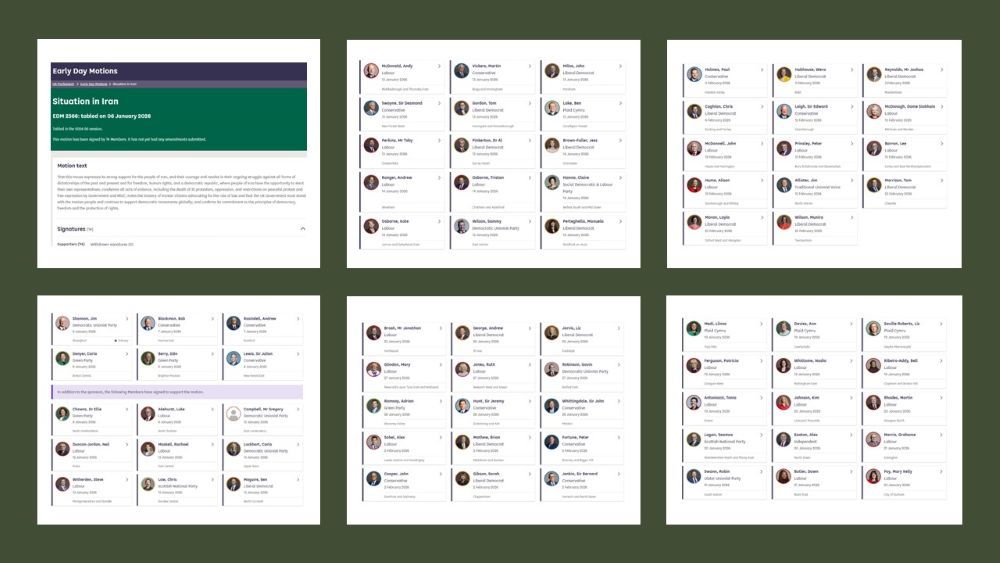
A diverse group of lawmakers in the United Kingdom has formally tabled a parliamentary motion expressing support for the people of Iran and their push for democratic change. The measure — known as Early Day Motion (EDM) 2566, titled “Situation in Iran” — was brought before the House of Commons on January 6, 2026, and has since been signed by 71 Members of Parliament from across the political spectrum.
The text of the motion conveys strong solidarity with Iranians protesting against repression and demanding basic freedoms. It states that the House “expresses its strong support for the people of Iran, and their courage and resolve in their ongoing struggle… for freedom, human rights, and a democratic republic,” where citizens can freely elect their representatives. It also condemns acts of violence and restrictions on peaceful protest and free expression attributed to both the Iranian government and the Islamic Revolutionary Guard Corps (IRGC).
I am proud to have signed EDM 2566, in support of the people of Iran, and their courage in their ongoing struggle against the IRGC.
They have clearly signalled their demand for a democratic republic and the UK Govt must stand with the Iranian people.https://t.co/EAfezJKjNs
— Bob Blackman (@BobBlackman) January 7, 2026
Sponsored by MPs including Jim Shannon, Bob Blackman, Sir Julian Lewis, and Green Party MPs Carla Denyer and Siân Berry, the motion has drawn signatures from members of several parties — including Labour, Liberal Democrats, the Scottish National Party, Plaid Cymru, unionist representatives, and independents.
The motion arrives amid renewed attention in Westminster on Iran’s internal unrest. In a January 13 statement to Parliament, the UK Foreign Secretary described “brutal and bloody repression” in Iran against the backdrop of protests that began after a sharp currency crisis. British sanctions targeting Iranian individuals and entities alleged to be involved in rights abuses were expanded on February 2.
Iran needs freedom and democracy. The 10 Point Plan has long provided an Iranian-made road map for a democratic, secular and pluralistic society. All opposition groups need to stand together in working for change – honouring the sacrifice and memory of so many who have paid the… pic.twitter.com/aeUNg2xYg5
— Lord (David) Alton (@DavidAltonHL) February 4, 2026
Lawmakers supporting the EDM say it sends a clear political signal of cross-party backing for democratic reforms in Iran and adds pressure on the UK government to stand more explicitly with pro-democracy movements and to consider further actions — including tougher sanctions and legal steps concerning the IRGC’s role.