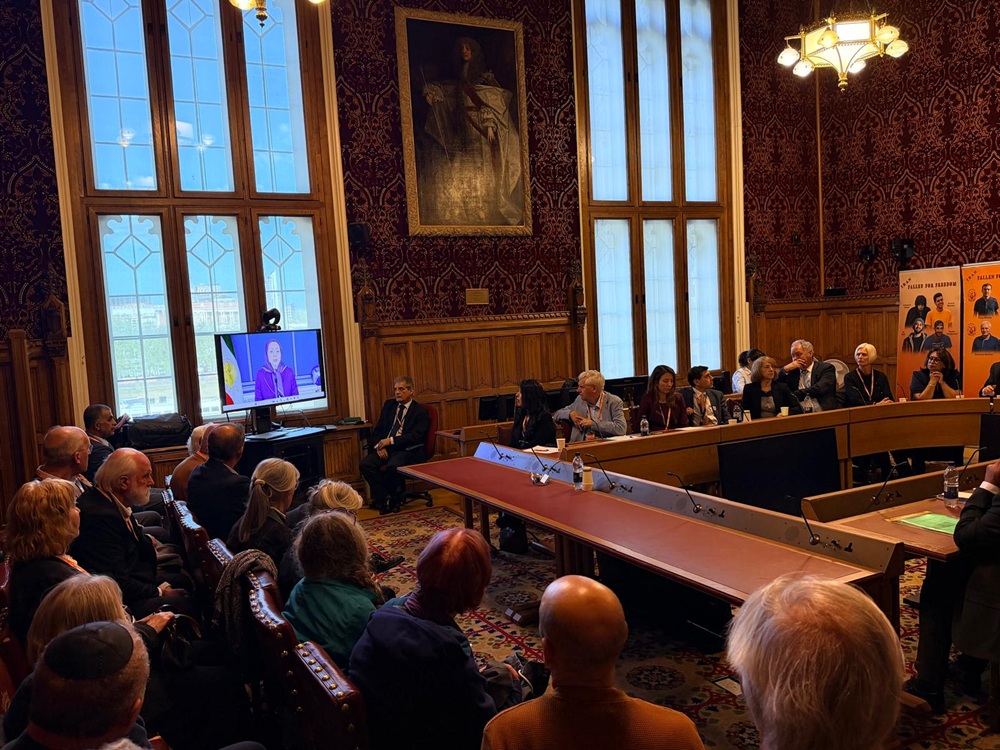
Lawmakers and experts at Westminster urge decisive action against Iran’s execution surge and endorse Maryam Rajavi’s Ten-Point Plan as the path to a democratic future
A High-Level Gathering at Westminster
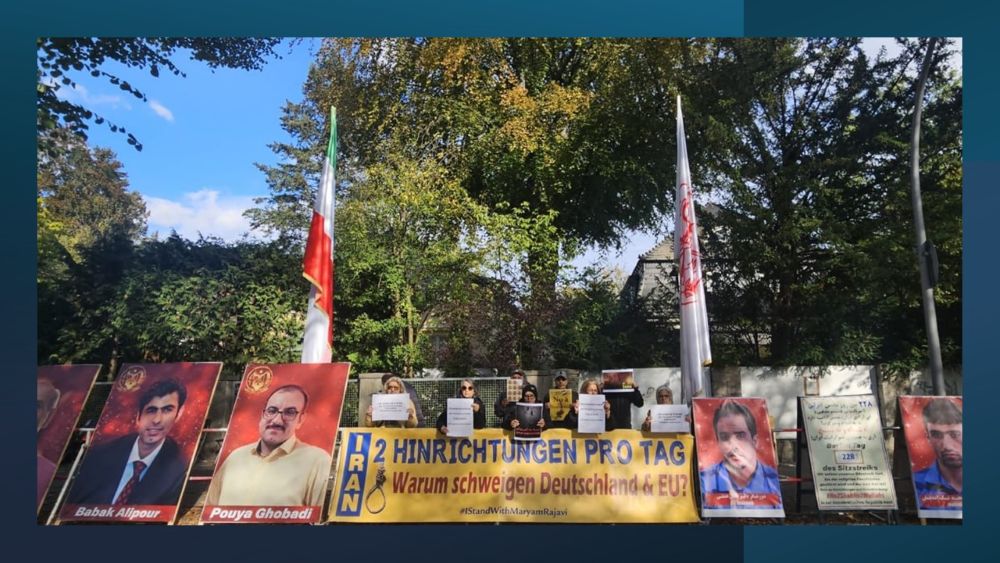
On April 28, 2026, the Palace of Westminster hosted a major conference titled “Iran: Towards Peace and Freedom.” The event brought together British parliamentarians, legal experts, and human rights advocates to confront the Iranian regime’s escalating use of executions and repression.
Participants warned that the judiciary’s recently adopted “wartime position” has triggered a sharp rise in political executions. The conference called on the international community to move beyond silence and actively support organized resistance inside Iran. Central to the discussion was the National Council of Resistance of Iran (NCRI) and its Ten-Point Plan, widely endorsed as a viable roadmap for a democratic, non-nuclear republic.
Speakers also firmly rejected any return to monarchy, describing the Pahlavi alternative as a “fake” solution lacking legitimacy among Iranians.
Maryam Rajavi Warns of Escalating Repression
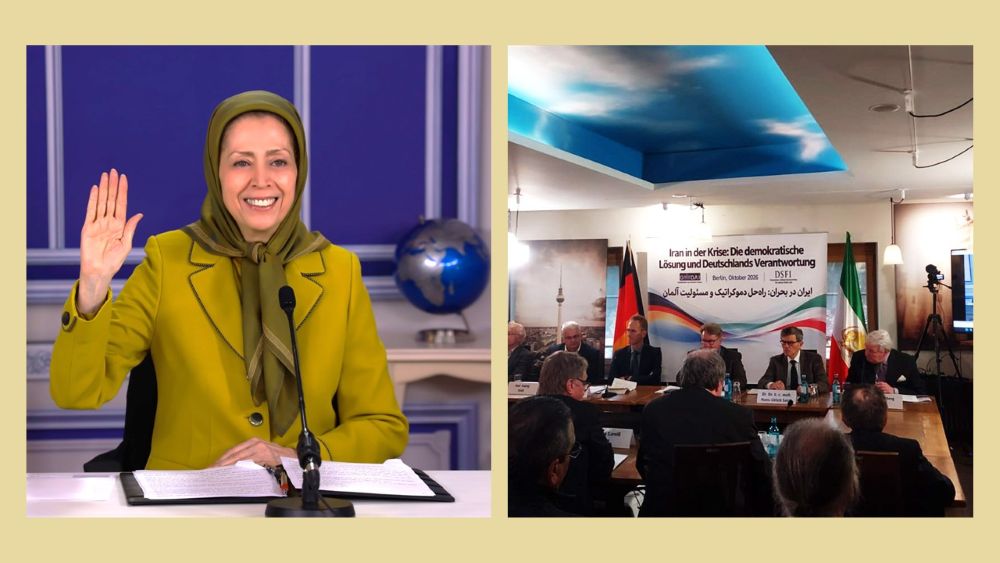
Mrs. Maryam Rajavi, President-elect of the NCRI, delivered the keynote address via video link, warning that the Iranian people are “paying the price of silence” in the face of intensifying repression.
She described a campaign of executions targeting political prisoners and members of the PMOI since March.
“The regime is obviously concerned about future uprisings,” Mrs. Rajavi stated. “Through these brutal executions, the regime seeks to terrorize young people and to prevent them from joining the Resistance Units that play a decisive role in organizing and expanding the uprising.”
She emphasized that regime change must come from within:
“will be carried out by the people and their organized resistance,”
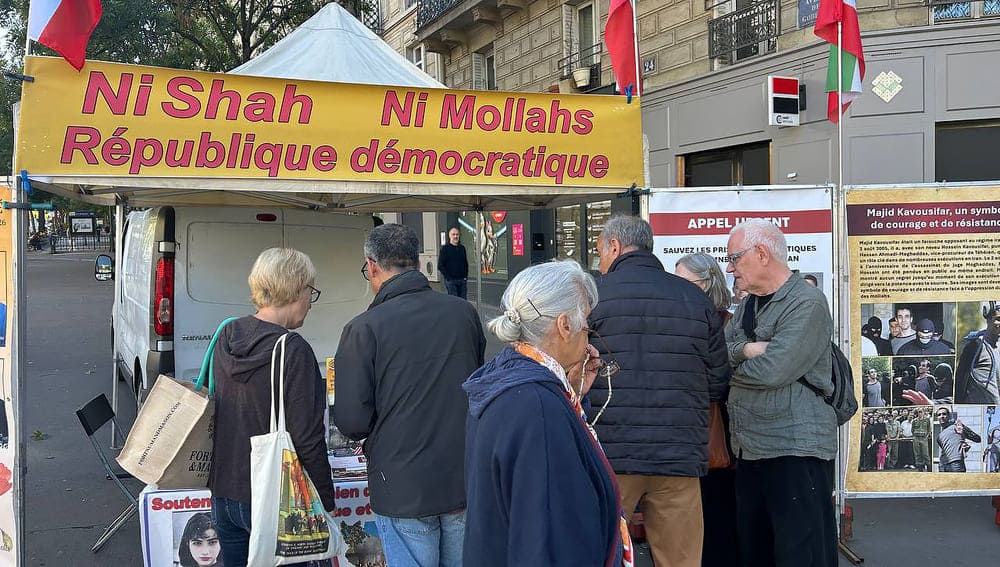
Rajavi urged the UK government to recognize the NCRI’s provisional government and proscribe the IRGC, concluding that “neither Shah nor the mullahs” reflects the Iranian people’s aspirations.
Conference at the UK Parliament: Urgent Action to #StopExecutionsInIran
Today, our people and our country are facing very difficult conditions.
On one hand, they are confronted with the many hardships of war, caused by the regime’s nuclear and terrorist projects.On the other… pic.twitter.com/Ei6zDMbqNC
— Maryam Rajavi (@Maryam_Rajavi) April 28, 2026
Legal Experts Highlight Human Rights Crisis
Azadeh Zabeti opened the conference by warning of an “escalating human rights crisis occurring inside of Iran,” condemning the “sharp and deliberate rise in executions.”
She criticized pro-monarchy figures emerging after years of silence:
“It is absolutely repugnant that individuals who have been asleep for the near five decades that the Iranian regime has carried out such savage attacks… are now trying to take credit for the work of this committee.”
Zabeti contrasted these figures with long-standing activists advocating for IRGC proscription.
Meanwhile, Christina Blacklaws described Iran’s judiciary as a “state repression apparatus,” arguing executions are used as a “political tool“ and stressing that:
“Iran does not provide for accountability, the rule of law, or justice for victims,”
She called for international accountability, including referral to the UN Security Council for “crimes against humanity and indeed in relation to genocide.”
MPs Call for Democratic Transition and IRGC Ban
Several Members of Parliament emphasized that change in Iran must come from its people, not foreign intervention.
Sammy Wilson highlighted the human cost of executions:
“A week ago this young man was alive; today he is dead because he stood up for what he believed in,”
He warned against replacing one dictatorship with another and endorsed the NCRI’s Ten-Point Plan as the only democratic roadmap.
Jim Shannon praised the plan as a “viable democratic alternative,” while criticizing monarchy-linked figures as a “wolf in sheep’s clothing.”
In an exclusive interview with Simay Azadi, MP @JimShannonMP welcomed the growing prospect of the UK proscribing Iran’s IRGC:
“At long last, with the efforts of MPs across Parliament, we’ve been able to persuade the government to take a step in the right direction.” pic.twitter.com/GN62WXfPrC
— SIMAY AZADI TV (@en_simayazadi) April 30, 2026
Bob Blackman reinforced that:
“To change the regime in Iran is not going to be done from the air… It’s got to be done by the Iranian people themselves,”
He dismissed reliance on Reza Pahlavi as “absolute nonsense” and called for immediate IRGC proscription and sanctions.
I have campaigned for this for 16 years. After 16 years of parliamentary questions, debates and cross-party pressure, the Government has finally signalled it will proscribe the IRGC. Now we must hold them to it. Legislation must follow without delay. #ProscribeIRGC https://t.co/LF8qcflXJn
— Bob Blackman (@BobBlackman) April 29, 2026
Lords Urge Stronger UK Policy
Members of the House of Lords echoed calls for decisive action.
Lord Empey described the regime’s actions as driven by fear:
“What they are doing is an expression of fear. They are afraid of young men like this,”
He urged the UK to expel Iranian diplomats and restrict embassy operations.
Lord Alton of Liverpool supported the “third option” of democratic change led by Iranians, insisting that any engagement with Tehran must require “verifiable improvements” in human rights.
Lord McCabe called the Ten-Point Plan a pathway to “meaningful change” and urged the UK to “speak out loudly against these executions.”
Lord Hamilton of Epsom described ongoing executions as “nothing short of murder,” noting the IRGC’s growing power.
Lord Carlile of Berriew stressed the need for sustained pressure, warning that proscription alone must be followed by broader efforts to support a “civil uprising.”
Civil Society Voices Reject Monarchy and Appeasement
Speakers from civil society reinforced the rejection of both the current regime and any return to monarchy.
Dr. Leyla Hannbeck dismissed claims that Iranians want the Shah’s return, noting the monarchy’s history of “massive inequalities, oppression, and one-party rule.”
She emphasized that the NCRI offers a structured democratic alternative:
“It is a democratic platform designed to avoid such outcomes,”
Dr. Jocelyn Scott criticized global inaction:
“Were ambassadors expelled? Were embassies shut down? Not a one,”
She urged recognition of the NCRI as the path to “full equality between women and men” and a “non-nuclear Iran.”
Robert Ward added that Western silence has been “far too long,” warning it is interpreted as approval by Tehran.
Iranian Voices Call for International Support
Naghmeh Rajabi described the NCRI’s Ten-Point Plan as the “blueprint for a free and democratic Iran” and stressed the importance of organized resistance:
“We don’t want to replace a dictator with another dictator and to centralize power in one person, one individual who’s just going to repeat this cycle.”
She called for an end to appeasement and stronger international backing.
Closing Remarks: A Call to Action
Baroness Verma concluded the conference by urging continued advocacy and policy change. She compared the current situation in Iran to the conditions preceding global conflict and described IRGC activities as “terrorism at a global scale.”
She reassured supporters:
“Be rest assured that we will keep fighting the fight for you,”
Her closing message reflected a unified call from the conference: to end executions in Iran, reject dictatorship in all forms, and support a democratic transition led by the Iranian people and the NCRI.