



Cross-Party Lawmakers, International Figures and Iranian Activists Endorse Maryam Rajavi’s Democratic Vision for Iran
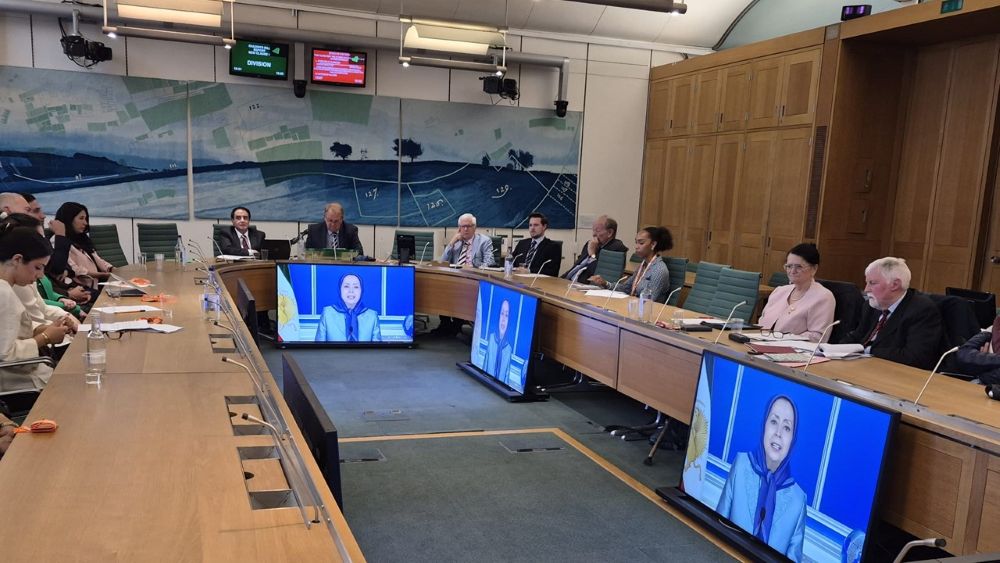
LONDON, June 10, 2026 — A major conference held at the UK Parliament under the theme “Peace and Freedom with a Democratic Republic” brought together British parliamentarians, former officials, legal experts, academics, and representatives of the Iranian diaspora to address Iran’s worsening human rights situation and discuss pathways toward democratic change.
Participants unanimously stressed the failure of decades of appeasement toward Tehran, calling for the immediate proscription of the Islamic Revolutionary Guard Corps (IRGC) as a terrorist organization and expressing support for the Iranian Resistance and its vision of a secular, democratic republic.
The conference featured a keynote message from Mrs. Maryam Rajavi, President-elect of the National Council of Resistance of Iran (NCRI), followed by speeches from lawmakers, former ministers, legal experts, researchers, and community leaders.
Maryam Rajavi: Iran Stands Between Fear and Hope
In her keynote address, Mrs. Maryam Rajavi described Iran as standing at a decisive moment between repression and the prospect of democratic change. She said the ruling clerical establishment has intensified arrests and executions in an effort to prevent its collapse, citing the detention of thousands of citizens, including supporters of the People’s Mojahedin Organization of Iran (PMOI/MEK), and the execution of dozens of political prisoners in recent months.
Despite escalating repression, Rajavi emphasized that Resistance Units and the Liberation Army continue their activities against the regime’s apparatus of suppression. She argued that these organized forces represent the “living hope” for change inside Iran.
Rajavi also warned against efforts to revive the former monarchy, stating that promotion of the Shah’s dictatorship only serves the interests of the current regime. Reiterating the slogan “No to the Shah, No to the Mullahs,” she said the Iranian people reject both religious dictatorship and monarchical rule.
She called on the international community to recognize the Iranian Resistance’s provisional government, designate the IRGC as a terrorist organization, expel regime agents, and close Tehran’s embassies abroad, describing these measures as essential for achieving a democratic and non-nuclear Iran.
Conference at the UK Parliament: Peace and freedom with a democratic republic
The prospect of change gives hope to the people of Iran#FreeIran10PointPlanhttps://t.co/lAkN9DnrDx pic.twitter.com/G3hzHVajHV— Maryam Rajavi (@Maryam_Rajavi) June 10, 2026
Bob Blackman MP: The Regime Fears the Next Uprising
Conference chair Bob Blackman MP warned that Tehran is exploiting regional tensions to intensify repression against democratic opposition forces. He said the PMOI and NCRI remain the regime’s primary targets because of their growing influence and the expansion of Resistance Units.
Blackman highlighted his long-standing efforts to secure IRGC proscription in Britain and pointed to evidence presented in UK courts regarding the organization’s activities. He welcomed plans by the government to introduce relevant legislation and urged formal engagement with the NCRI’s provisional government.
He also contrasted Maryam Rajavi’s Ten-Point Plan with monarchist movements, criticizing those who glorify the Shah’s former secret police and calling for future relations with Tehran to be conditioned on ending executions and repression.
Proud to take part in a parliamentary event on Iran at a historic crossroads. The regime is weaker than ever, and its only answer to dissent is the rope. I stand with the NCRI and Maryam Rajavi's Ten-Point Plan for a free, democratic and secular Iran. #FreeIran pic.twitter.com/rYM8HS6G8b
— Bob Blackman (@BobBlackman) June 12, 2026
Jim Shannon MP: Decades of Engagement Have Failed
Jim Shannon MP argued that Western governments have long misjudged the Iranian regime by believing it could reform itself. He said decades of engagement and hostage diplomacy have failed to improve conditions for the Iranian people.
Shannon condemned executions carried out under religiously motivated charges and described the IRGC as an organization waging war against humanity. He praised the growth of Resistance Units and endorsed the NCRI’s Ten-Point Plan as a democratic alternative.
He also expressed concern over intimidation campaigns by monarchist supporters and urged the UK government to move immediately toward proscribing the IRGC.
Toby Perkins MP: Regional Conflicts Must Not Distract from Iran’s Crisis
Toby Perkins MP cautioned that ongoing regional conflicts should not distract the international community from Iran’s internal legitimacy crisis. He said the rise in executions is intended to discourage citizens from joining the Resistance Units.
Perkins argued that Tehran relies on perpetual conflict to justify repression and political executions. He called for an end to appeasement policies, support for the NCRI’s democratic alternative, and firm conditions in any future dealings with the regime, including an end to executions and the release of political prisoners.
Struan Stevenson: Resistance Units Demonstrate the Regime’s Weakness
Former Scottish MEP Struan Stevenson described Iran’s ruling system as increasingly reliant on terror to survive. He praised PMOI Resistance Units as one of the most remarkable civil resistance movements operating today.
Stevenson rejected both military intervention and appeasement, while criticizing attempts to restore the monarchy under Reza Pahlavi. He argued that democratic change must come through Maryam Rajavi’s Ten-Point Plan, which guarantees free elections, gender equality, and democratic governance.
My speech in Portcullis House on 10 June at British Committee for Iran Freedom seminar. #Iran #FreeIran2026 pic.twitter.com/sGuuJ3aGZZ
— STRUAN STEVENSON (@STRUANSTEVENSON) June 12, 2026
Matthew Goodwin-Freeman: Change Must Come from the Iranian People
Harrow Councilor Matthew Goodwin-Freeman characterized the IRGC as the central instrument of Tehran’s regional and international terrorism. He emphasized that democratic change cannot be imposed from abroad but must be led by the Iranian people themselves.
He criticized monarchist efforts and urged international actors to move beyond rhetoric by supporting a peaceful democratic transition and proscribing the IRGC.
Malcolm Fowler: The Time for Appeasement Has Passed
Veteran British lawyer Malcolm Fowler stressed the importance of maintaining pressure on the UK government to fulfill commitments regarding IRGC proscription.
Drawing on decades of legal experience, Fowler criticized appeasement policies and argued that Western governments should make diplomatic and economic engagement conditional on compliance with international standards. He also called for recognition of the Iranian Resistance’s provisional government.
Robert Ward: The Monarchy Is Not the Answer
Croydon Councilor Robert Ward reflected on his experiences living in Iran before the 1979 revolution. He challenged narratives portraying the monarchy as a viable alternative and recalled the abuses carried out by the Shah’s SAVAK secret police.
Ward welcomed anticipated UK action against the IRGC and strongly endorsed Maryam Rajavi’s Ten-Point Plan, describing it as a credible roadmap toward democratic governance.
My speech to the event organised by the British Committee for Iran Freedom. pic.twitter.com/URYabHH8Va
— Robert Ward (@moguloilman) June 12, 2026
Lord Hamilton of Epsom: The Regime Is Increasingly Vulnerable
Former Minister of State Lord Hamilton of Epsom assessed the regime’s growing economic and political vulnerabilities. He noted severe domestic pressures and discussed the broader implications of sanctions and instability in global energy markets.
Hamilton rejected the notion that transferring power within the regime’s existing structures would constitute meaningful change and expressed support for the democratic aspirations of the Iranian people.
Professor Sarah Chandler KC: A Democratic Future Requires Rule of Law
Professor Sarah Chandler KC, former President of the Federation of European Bar Associations, condemned the regime’s judicial abuses, including the imprisonment of lawyers and the execution of political dissidents.
She pointed to the NCRI’s transitional governance proposals as a framework for preserving order after democratic change and establishing an independent judiciary, free elections, and the rule of law.
Chandler also praised the prominent role of women in Iran’s resistance movement and called on the UK government to support the Iranian people’s democratic aspirations.
Ladan Alizadeh: Organized Resistance Offers a Real Alternative
Researcher and pharmacologist Ladan Alizadeh argued that the regime’s survival depends on repression at home and instability abroad. She highlighted the activities of Resistance Units as evidence that Iranian society rejects the status quo.
Alizadeh rejected both monarchy and theocracy, endorsing Maryam Rajavi’s Ten-Point Plan as a practical blueprint for a democratic republic. She called for accountability for human rights abuses, IRGC proscription, and recognition of the democratic opposition.
Narges Rahmanfard: Executions Reflect the Regime’s Fear
Mental health researcher and human rights advocate Narges Rahmanfard said the regime’s escalating executions reveal weakness rather than strength. She pointed to the recent execution of Resistance Unit members and growing public dissatisfaction.
Rahmanfard criticized attacks by supporters of the former monarchy against democratic activists and argued that neither war nor appeasement offers a solution. She presented the NCRI’s Ten-Point Plan as a roadmap for peaceful democratic transition.
Naghme Rajabi: Iranians Reject Both War and Dictatorship
Naghme Rajabi, President of the Association of Iranian Professionals, shared personal accounts of family members executed or assassinated by the regime.
She argued that years of hoping for moderation in Tehran had been wasted and warned against reliance on what she called “fake opposition” movements. Rajabi promoted the Ten-Point Plan as the only serious democratic roadmap and urged support for the Resistance Units and a secular republic.
Neda Zabeti: Lasting Democracy Must Come from Organized Resistance
Representing the Anglo-Iranian Youth Association, Neda Zabeti spoke about the sacrifices made by her family under the current regime and argued that Tehran’s repression stems from fear of its own people.
She rejected both military intervention and appeasement, asserting that concessions only strengthen authoritarianism. Zabeti highlighted the NCRI’s commitment to gender equality, religious freedom, and democratic governance, emphasizing that lasting change can only be achieved through the Iranian people and their organized resistance.
Conference Calls for Decisive International Action
Throughout the conference, speakers repeatedly stressed three central themes: the urgent need to proscribe the IRGC as a terrorist organization, the failure of appeasement toward Tehran, and support for a democratic alternative based on Maryam Rajavi’s Ten-Point Plan.
Participants concluded that meaningful change in Iran must come through the Iranian people and their organized resistance, leading to the establishment of a secular, democratic republic founded on human rights, pluralism, gender equality, and free elections.