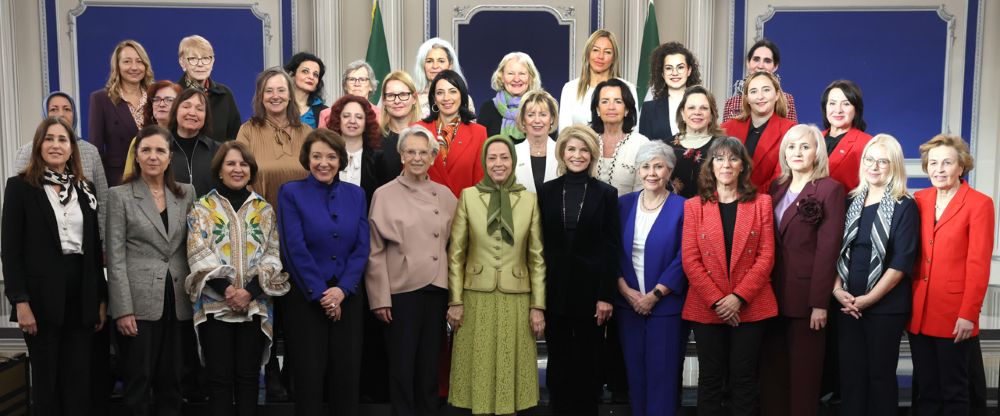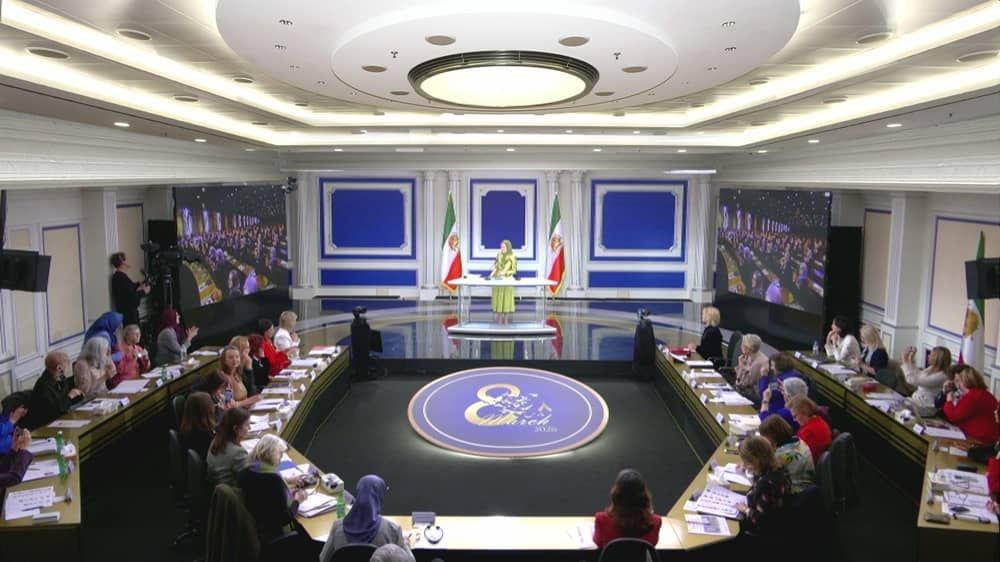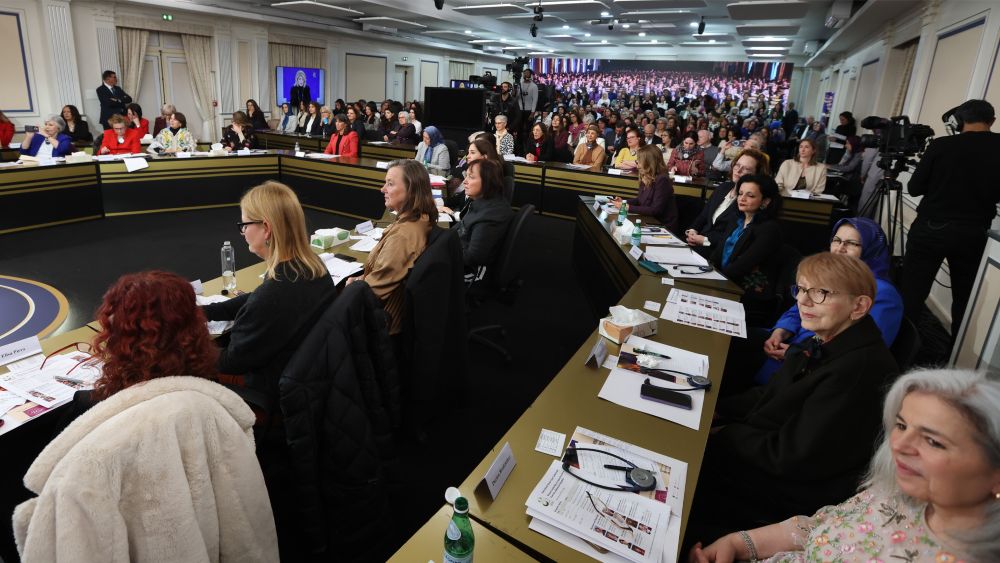


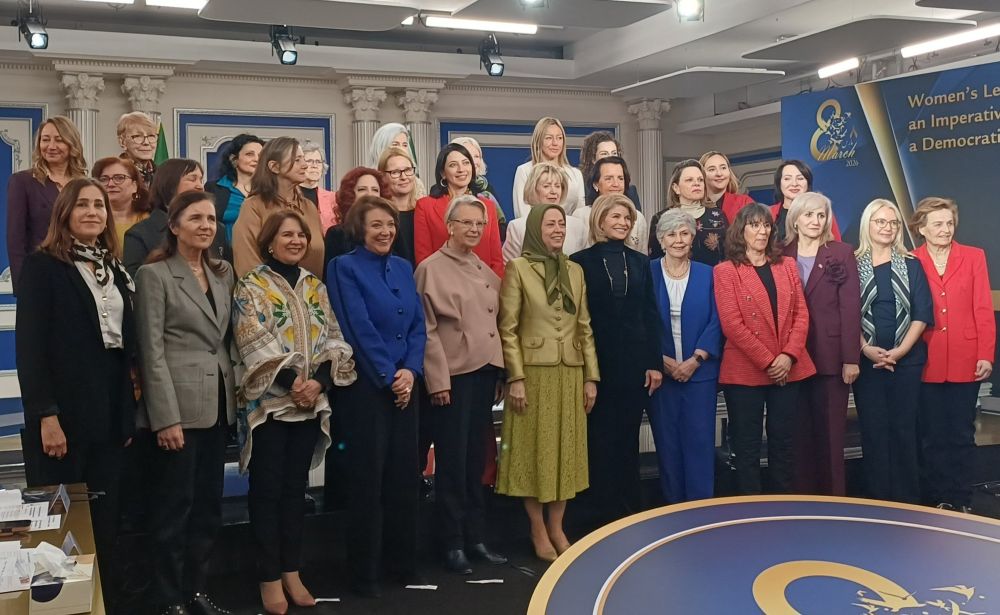
On February 21, 2026, just days before International Women’s Day, an international conference brought together Iranian opposition representatives and prominent political figures from Europe and the Americas. The central message was clear: women’s leadership is not symbolic, but essential to Iran’s democratic transition.
Throughout the event, speakers emphasized the organizational strength of the Iranian Resistance, endorsed the National Council of Resistance of Iran (NCRI)’s Ten-Point Plan as a concrete democratic roadmap, and highlighted the decisive role of Resistance Units and women-led networks inside Iran. A recurring theme was the rejection of both clerical dictatorship and any return to monarchy. The consensus: no credible democratic future for Iran is possible without women at the center of power.
Women’s Leadership, an Imperative for a free Iran, a Democratic Republic#IWD2026 #WomenForce4Change https://t.co/zBeRC8hpCa
— Iran Freedom (@4FreedominIran) February 21, 2026
Sarvnaz Chitsaz — Chair, NCRI Women’s Committee
Sarvnaz Chitsaz opened the conference by linking International Women’s Day to the victims of the January uprising and to decades of resistance. She reported that the NCRI had identified 2,411 victims, including women and children, accusing authorities of concealing the scale of repression through internet shutdowns.
She described the moment as both one of mourning and political clarity, citing the slogan: “Death to the oppressor, whether Shah or Supreme Leader.” Chitsaz firmly rejected monarchy as Iran’s future, stating that the path forward lies in “freedom, equality, and a republic based on the will of the people.” She presented Maryam Rajavi’s Ten-Point Plan as a practical democratic alternative.
Maryam Rajavi — President-elect of the National Council of Resistance of Iran
In her keynote address, Maryam Rajavi argued that women’s leadership is the operational foundation of democratic change in Iran. She emphasized that the NCRI’s vision is rooted in women’s political participation and equal rights — including freedom of dress, marriage, employment, and political engagement.
At the “Women’s Leadership, an Imperative for a Free Iran, a Democratic Republic” conference for #IWD2026, Mrs. Rajavi stressed that Democratic Change in Iran Depends on Women’s Leadership:
• Legitimacy of the alternative comes from resistance to both Shah and clerical… https://t.co/3lzzEuE6iY pic.twitter.com/9QPgM0XAwp
— SIMAY AZADI TV (@en_simayazadi) February 21, 2026
She reiterated the movement’s rejection of coercion: “No to compulsory hijab, no to compulsory religion, and no to compulsory governance.” Mrs. Rajavi stressed the movement’s organizational readiness, highlighting the NCRI’s women-majority structure and decades of female leadership experience. She rejected both monarchy and clerical rule, declaring that Iranians want “neither the crown nor the turban,” and described women’s leadership as the “litmus test” of genuine democracy.
This is the cry of over 40 million Iranian women who say: We do not want a patriarchal and oppressive system. We want neither the crown nor the turban. We want neither the Shah, nor the mullahs, nor their heirs.
Indeed, the era of regimes that impose oppression upon the women of… pic.twitter.com/w0XH2tHSkw— Maryam Rajavi (@Maryam_Rajavi) February 21, 2026
Michèle Alliot-Marie — Former French Minister of Foreign, Defense, Justice and Interior
Michèle Alliot-Marie framed the gathering as both a Women’s Day event and a political statement of solidarity. She described Iran’s regime as deeply sexist and asserted that democracy cannot exist without women’s full participation in decision-making bodies.
She praised Maryam Rajavi’s long-standing leadership and supported the freedoms outlined in the Ten-Point Plan. While not focusing extensively on monarchy, she stressed that any future system excluding women from power would fail the democratic standard. She concluded by emphasizing that a democratic Iran would contribute significantly to regional stability.
Carla Sands — Former U.S. Ambassador to Denmark
Carla Sands directly challenged narratives portraying the Shah’s era as a time of gender equality, stating that dictatorship inherently precludes equality. She argued that authoritarian systems — past or present — cannot deliver genuine women’s rights.
Sands praised Iranian women leaders for transforming resistance into organized political force and commended Maryam Rajavi’s leadership. She framed the Ten-Point Plan as a pathway to a secular democratic republic and rejected regime change “whether crowned or turbaned.”
Anneli Jäätteenmäki — Former Prime Minister and Justice Minister of Finland
Anneli Jäätteenmäki highlighted ongoing repression and called for sustained international backing for Iranian civil society. She warned of rising executions and supported stronger European action against the IRGC.
Quoting Nobel laureate Narges Mohammadi, she called for support of civil society, independent media, and women’s rights. She praised Iranian women’s courage and thanked Maryam Rajavi for years of dedicated leadership, pledging continued support for a free and secure Iran.
Ingrid Betancourt — Former Colombian Senator and Presidential Candidate
Ingrid Betancourt argued that women’s rights cannot be postponed until after political transition. She warned that equality without democracy is fragile and reversible.
Rejecting dynastic succession, she declared, “Lineage is not legitimacy.” She contrasted monarchy with the NCRI’s internal structure, praising its institutionalized equality and calling women’s leadership under Maryam Rajavi strategically indispensable.
Rosalía Arteaga Serrano — Former President of Ecuador
Rosalía Arteaga reinforced the conference’s rejection of dictatorship in both forms, repeating: “No to the Shah, no to the mullahs.”
She highlighted separation of religion and state and opposition to nuclear ambitions as key pillars of the Ten-Point Plan. Drawing from her own experience, she argued that governance must be secular to guarantee women’s rights and expressed solidarity with Ashraf 3.
Judy Sgro — Canadian Member of Parliament and Former Immigration Minister
Judy Sgro described the movement as approaching a decisive moment, saying, “The finish line is close.”
She credited decades of organizing for women’s leadership within the NCRI, MEK, and PMOI, and endorsed a democratic secular republic. She described the Ten-Point Plan as “a constitution ready to go” and emphasized the role of Resistance Units while urging tougher international action against the IRGC.
Naike Gruppioni — Member of the Italian Chamber of Deputies
Naike Gruppioni described misogyny in Iran as a governing tool rather than a social byproduct. She called women’s leadership a strategic necessity and said democratic change requires transforming the nature of power itself.
After visiting Ashraf 3, she described it as tangible proof of an organized, disciplined democratic alternative grounded in gender equality and rule of law.
Elisa Pirro — Italian Senator
Elisa Pirro characterized Iran’s system as institutionalized gender discrimination. She cited exclusion from high office, family law discrimination, and compulsory veiling as systemic tools of repression.
She argued that protests demand transformation, not reform, and praised the NCRI’s advancement of women in leadership. She described the Ten-Point Plan as a democratic, secular, and non-nuclear roadmap.
È un piacere partecipare per la seconda volta alla Conferenza per la giornata internazionale della donna organizzata dal Comitato Donne del CNRI (Consiglio Nazionale della Resistenza Iraniana)#WomenForce4Change https://t.co/GBbNQmyDXx
— Elisa Pirro (@pirroelisa) February 21, 2026
Linda Chavez — Former Director, White House Office of Public Liaison
Linda Chavez argued that the question is no longer whether change will occur, but when and how. She credited organized resistance networks inside Iran for mobilizing protests.
Rejecting both military shortcuts and dynastic succession, she contrasted personality-based politics with the NCRI’s organized movement. She described Maryam Rajavi as a leader with active followers and defended the Ten-Point Plan as a practical program.
Ana Helena Chacón Echeverría — Former Vice President of Costa Rica
Ana Helena Chacón framed the struggle as international in scope, linking domestic repression to the regime’s regional activities through the IRGC.
Calling “Woman, Resistance, Freedom” more than a slogan, she supported international action and praised the Ten-Point Plan. She saluted Resistance Units and pledged continued advocacy.

Dominique Attias — Former President, European Bars Federation
Dominique Attias described Iranian women as central political actors in a long historical struggle. She emphasized the organized nature of resistance and praised Maryam Rajavi as a legitimate leader.
She urged supporters to continue chanting both “Woman, Resistance, Freedom” and “No to the Shah, no to the Mullahs.”
Pilar Rojo — Chair, Spanish Senate Foreign Affairs Committee
Pilar Rojo detailed a Spanish Senate resolution condemning executions and repression in Iran. The resolution endorsed the Ten-Point Plan and called for sanctions and accountability.
She emphasized unanimous support across Spain’s political spectrum and assured Iranian women: “You are not alone.”
Donna Hughes — Professor Emerita, University of Rhode Island
Donna Hughes summarized earlier panels, highlighting consensus around women’s leadership and international accountability. She cited references to “gender apartheid” and praised women’s leadership in the PMOI and NCRI.
She relayed appeals for more women to join Resistance Units and warned against misinformation efforts linked to monarchist networks.
Rosa Romero — Chair, Spanish Senate Equality Committee
Rosa Romero described Iranian women as “active protagonists of change.” She endorsed the Ten-Point Plan’s call for legal equality, secular governance, and abolition of the death penalty.
She emphasized that equality is a global obligation and pledged full support.
Zinat Mirhashemi — Activist and 1979 Anti-Monarchy Veteran
Zinat Mirhashemi linked past anti-monarchy struggle with today’s movement. She argued that compulsory hijab has suffered a strategic defeat and that women have become the decisive force against clerical rule.
She rejected royal restoration and said women’s freedom is foundational to any free society.
Helena Carreiras — Former Portuguese Minister of National Defense
Helena Carreiras compared Iran’s uprising to Portugal’s democratic transition. She stressed that democracy “does not rhyme with dynasty.”
She praised the Ten-Point Plan and highlighted women-led Resistance Units as evidence of long-term preparation.
Fiona O’Loughlin — Member of the Irish Senate
Fiona O’Loughlin mixed personal reflection with political endorsement. She described Maryam Rajavi as “a beacon of hope” and reiterated support for the Ten-Point Plan.
She echoed the slogan: “We can and we must, no to the Shah, no to the Mullahs.”
Dr. Azadeh Akhbari — Historian and Consultant
Dr. Akhbari shared her personal history of imprisonment and family loss under both monarchy and clerical rule. She rejected restoration and called for stronger European action.
She described Ashraf 3 and Resistance Units as the movement’s engine and endorsed the Ten-Point Plan as a democratic blueprint.
✌️ Future generation of Free Iran 🇮🇷 Women 👏
Hand in hands chanting:
“We can, and we must” ✊ – @Maryam_Rajavi‘s iconic call to overthrow the regime through the people and organized resistance! 💪 https://t.co/OxLnKEakfU pic.twitter.com/TsPShFVbyD— Hanif 𝕏 FreeIran (@HanifFreeIran) February 21, 2026
Helen Goodman — Former U.K. Shadow Minister
Helen Goodman argued the regime survives through force, not legitimacy. She warned against narrowing Iran policy to nuclear issues and supported formal IRGC designation.
She called the Ten-Point Plan “the way forward.”
Elly van Wijk — Dutch Senator
Elly van Wijk focused on femicide and systemic violence. She praised women leading the uprising and emphasized that dictatorships appear strong until collapse.
She urged Western women to use their platforms to amplify Iranian voices.
Eve Borg Bonello — Maltese Member of Parliament
Eve Borg Bonello framed the struggle as generational and existential. She said the regime fears light and transparency.
She insisted Iranians need self-determination, not replacement dictatorship, and urged international recognition of legitimate representatives.
Dorien Rookmaker — Former Member of the European Parliament
Dorien Rookmaker described her initial skepticism about the NCRI and said her independent review changed her view. She characterized repression as a sign of regime weakness.
She praised women’s leadership for transforming the nature of power and urged Europe to support, not dictate, Iran’s democratic future.
Karen Smith — Former UN Assistant Secretary-General
Karen Smith framed the crackdown within international law, citing possible crimes against humanity. She called for sustained attention at the UN Human Rights Council and Security Council.
She argued that human rights must be central in all engagement with Iran.
Vida Niktalean — Representative, Women’s Association for Democracy in Iran
Vida Niktalean traced her activism from exile to international advocacy. She credited Maryam Rajavi with training a generation of women leaders.
She rejected both monarchy and clerical rule, stating women will build a free Iran.
Elisabetta Zamparutti — Former Italian Member of Parliament
Elisabetta Zamparutti warned against swapping one authoritarian system for another. She cautioned against pro-monarchy disinformation and praised the Ten-Point Plan as a coherent democratic strategy.
She expressed solidarity with political prisoners and urged governments to recognize Maryam Rajavi as a legitimate political interlocutor.