



At the Italian Parliament Conference on Iran, Scurria Calls for International Support for the Iranian People and Rejects Reliance on Regime Negotiations
A Call to Put the Iranian People at the Center of International Policy
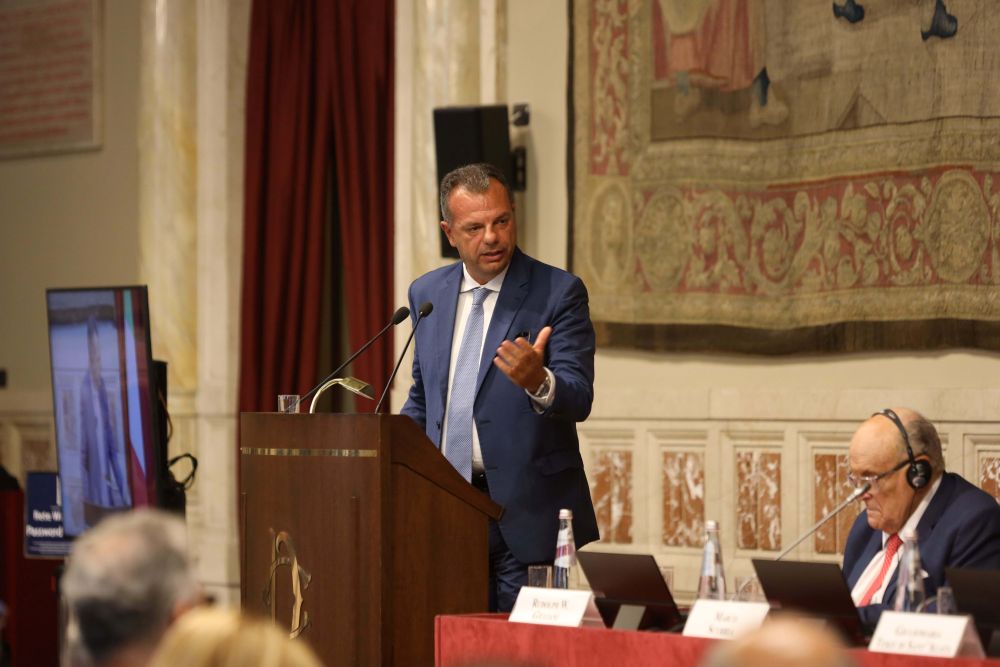
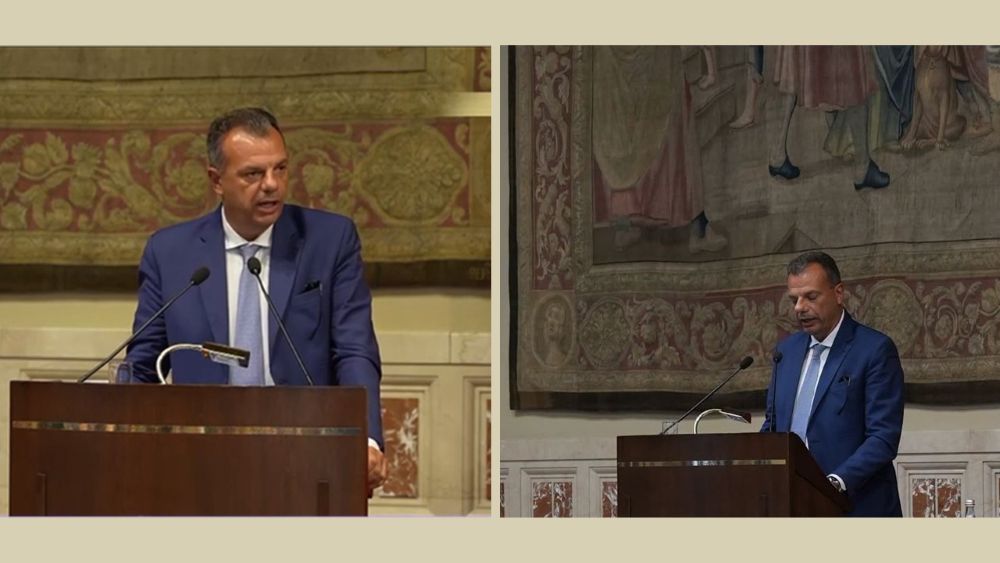
Speaking at the international conference “Iran’s Crisis: The Democratic Path Forward” held at Regina Hall in the Italian Parliament on July 16, Italian Senator Marco Scurria delivered a strong message urging the international community to shift its focus from negotiations with Iran’s ruling authorities toward supporting the aspirations of the Iranian people for freedom, democracy, and human rights.
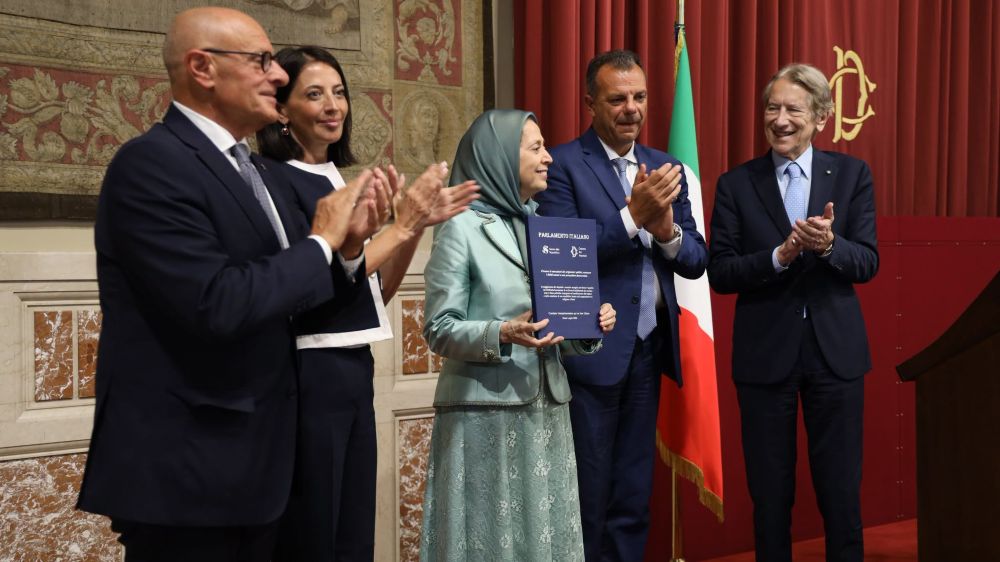
The conference brought together Mrs. Maryam Rajavi, lawmakers, international figures, and representatives of the Iranian diaspora. In his remarks, Senator Scurria emphasized that Iran’s future should not be defined solely through geopolitical calculations, regional conflicts, or diplomatic negotiations, but through the demands and hopes of millions of Iranians seeking a democratic future.
“The Iranian People Must Be at the Heart of the Discussion”
Opening his speech, Senator Scurria expressed his appreciation to Deputy Speaker of the Italian Chamber of Deputies Fabio Rampelli for hosting the conference and praised Italian Parliamentarian Naike Gruppioni for her continued efforts to ensure that Iran remains an important issue on the parliamentary agenda.
Scurria acknowledged that much of the international conversation surrounding Iran has recently focused on regional instability, tensions in the Middle East, the Strait of Hormuz, and the economic consequences of ongoing crises.
However, he argued that one crucial issue has been overlooked: the Iranian people themselves.
“Everyone is talking about Iran today—the Strait of Hormuz, regional tensions, and the impact on our economies. But far too little is being said about the Iranian people. They are the ones we should be talking about, because the real challenge today is helping them achieve a free and democratic future.”
According to Scurria, international policies toward Iran must prioritize the rights, dignity, and aspirations of ordinary citizens rather than political calculations involving the ruling establishment.
Skepticism Toward Negotiations with the Iranian Regime
Senator Scurria also expressed serious doubts about diplomatic approaches that rely on negotiations with Tehran’s authorities.
While stressing that he supports peace and stability, he argued that genuine peace cannot be achieved by placing trust in a government that, in his view, has repeatedly used negotiations as a means to delay international pressure while continuing its strategic objectives.
“I am not against peace. But I do not trust the Iranian regime. For years, it has deceived the international community regarding its nuclear program, using negotiations mainly to gain time while continuing to pursue its goals.”
The Italian senator further criticized the regime’s record on human rights and argued that its policies demonstrate a lack of willingness to respect fundamental freedoms.
He also accused Tehran of playing a destabilizing role internationally, stating that the regime’s actions have contributed to insecurity in the region and beyond.
A Message of Hope to the Iranian People
Turning his attention to members of the Iranian diaspora attending the conference, many of whom had been forced to leave their homeland, Senator Scurria delivered a message of encouragement to those still living under repression inside Iran.
He urged participants to remain connected with their families, friends, and communities in Iran and to convey that hope remains stronger than fear.
“Tell them not to lose hope. No prison can stop the wind of freedom. No special court can silence the cause of human rights. And no atmosphere of fear can permanently suppress millions of people who seek liberty.”
Scurria emphasized that the struggle for freedom is meaningful because it represents the possibility of a democratic future built by the Iranian people themselves.

Courage Against Repression: The Power of Resistance
The senator praised the courage of Iranian women, young people, and activists who have continued to challenge the authorities despite facing severe repression.
He said that years of resistance had already revealed the weaknesses of the ruling system, arguing that authoritarian governments often appear unshakable until they collapse under the pressure of people’s determination for freedom.
Drawing a historical parallel with the fall of the Berlin Wall, Scurria noted that systems based on repression can suddenly lose their power when societies demand fundamental change.
Support for Maryam Rajavi and the Iranian Democratic Movement
Reflecting on his first meeting with Maryam Rajavi years earlier during his time as a Member of the European Parliament, Scurria said his support for Iran’s democratic opposition has remained consistent.
He stressed that this support is not limited to one political group in Italy but is shared by parliamentarians across different political traditions.
Referencing Italy’s democratic heritage and figures such as Giuseppe Mazzini, Scurria highlighted what he described as a historic connection between Italy’s own struggle for liberty and the aspirations of people fighting for freedom around the world.
“True patriots are those who recognize the homeland of others and help build freedom and democracy for other nations.”
He thanked Maryam Rajavi and the Iranian Resistance for demonstrating resilience and courage despite decades of persecution, imprisonment, and personal sacrifice.
“You have taught us the meaning of courage. Despite imprisonment, executions, and immense personal loss, you have refused to bow your heads. Your determination to keep alive the call for freedom gives hope that one day liberty will embrace the Iranian people.”

A Final Appeal: Keeping the Hope for Change Alive
Concluding his remarks, Senator Marco Scurria called on Iranians inside and outside the country to continue believing in the possibility of democratic transformation.
His message reflected one of the main themes of the conference: that Iran’s future must ultimately be determined by the will of its people, supported by an international community committed to human rights, democracy, and freedom rather than accommodation with an authoritarian system.
For Scurria, the path forward is clear: the world must stand with the Iranian people and their aspiration for a future where liberty and democracy replace repression and fear.