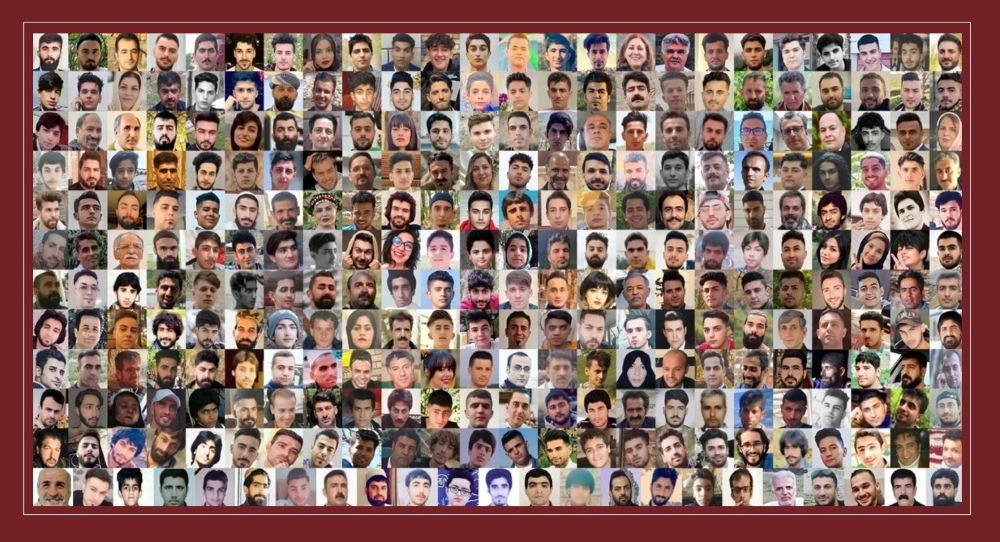
Amnesty International has concluded that Iranian authorities committed crimes against humanity during the suppression of the 2022 nationwide uprising, mapping the state machinery behind the repression and identifying 87 officials who should face criminal investigation.
A Coordinated State Apparatus
The organization’s more than 1,000-page report, Architects of Atrocities: State Machinery Orchestrating Crimes Against Humanity in Iran’s 2022 Woman Life Freedom Uprising, finds that the crackdown was not the result of isolated actions but a coordinated system involving national, provincial and local security bodies.
Amnesty identifies the Islamic Revolutionary Guard Corps (IRGC) and Iran’s Police Command (FARAJA) as the two principal forces that carried out lethal protest dispersals under a broader structure that included the Supreme National Security Council and provincial and county security councils.amnesty+2
The investigation documents the use of military-grade firearms and shotguns loaded with metal pellets against protesters and bystanders, resulting in hundreds of unlawful killings, including of children, alongside arbitrary detention, enforced disappearance, torture and other ill-treatment.amnesty+2
Amnesty categorizes the abuses as seven crimes against humanity: murder, torture, rape, sexual violence, enforced disappearance, imprisonment, and persecution on political, gender, ethnic and religious grounds.
377 Documented Deaths
Alongside the main report, Amnesty published a separate document, Lives Cut Brutally Short, recording the deaths of 377 protesters and bystanders during the 2022 uprising, including 56 children.
The organization stresses that the real death toll cannot be established with certainty, but its documented cases reveal clear patterns in the use of lethal force, with 326 of the 377 victims killed by security forces using firearms or other lethal methods, mostly during attempts to disperse protests.amnesty+1
The report also details the persecution of victims’ families, who faced intimidation and other forms of pressure as part of a systematic campaign to prevent accountability.
87 Officials Named for Investigation
A central finding is the identification of 87 officials whom Amnesty says merit criminal investigation for crimes against humanity.amnesty+2
The list includes 10 national-level officials and 77 at regional, provincial and county levels, selected based on their positions in the security hierarchy, authority over subordinates, evidence of coordination of operations, public statements supporting security-force actions, leaked orders and other links to documented crimes.
Amnesty applies a “reasonable grounds to believe” standard, meaning the evidence warrants criminal investigation but does not amount to a judicial finding of guilt.
Calls for International Justice
Amnesty links the lack of accountability for the 2022 crackdown to subsequent waves of repression, including mass killings during the January 8–9, 2026 protests, which it says followed the same patterns on an even greater scale.amnesty+2
The organization calls on the UN General Assembly to establish an international criminal justice mechanism focused on crimes against humanity in Iran and urges UN Security Council members to refer the situation to the International Criminal Court.amnesty+2
It also urges national prosecution authorities to investigate Iranian officials under universal or other forms of extraterritorial jurisdiction where legal requirements and sufficient evidence exist.