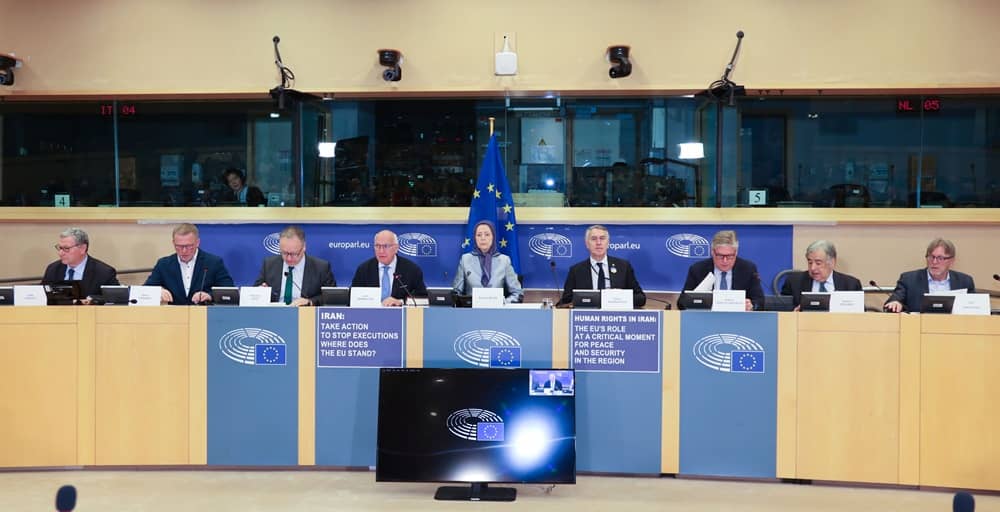
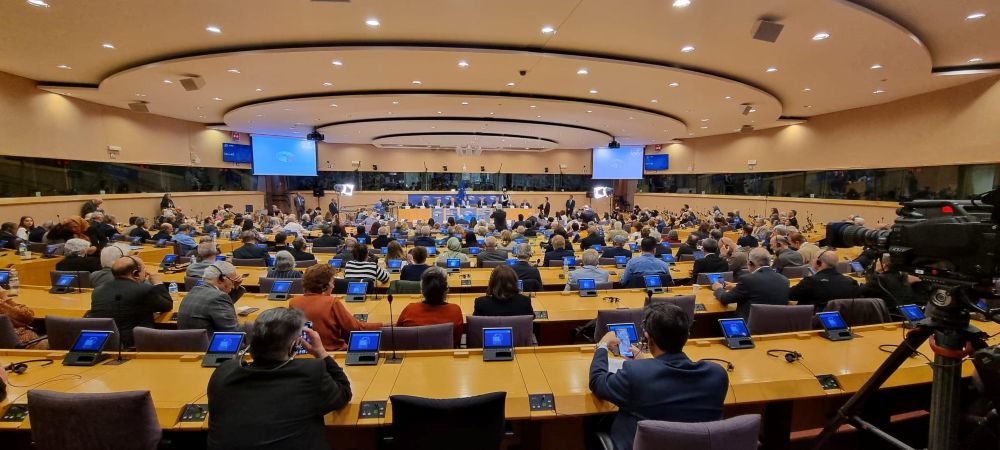
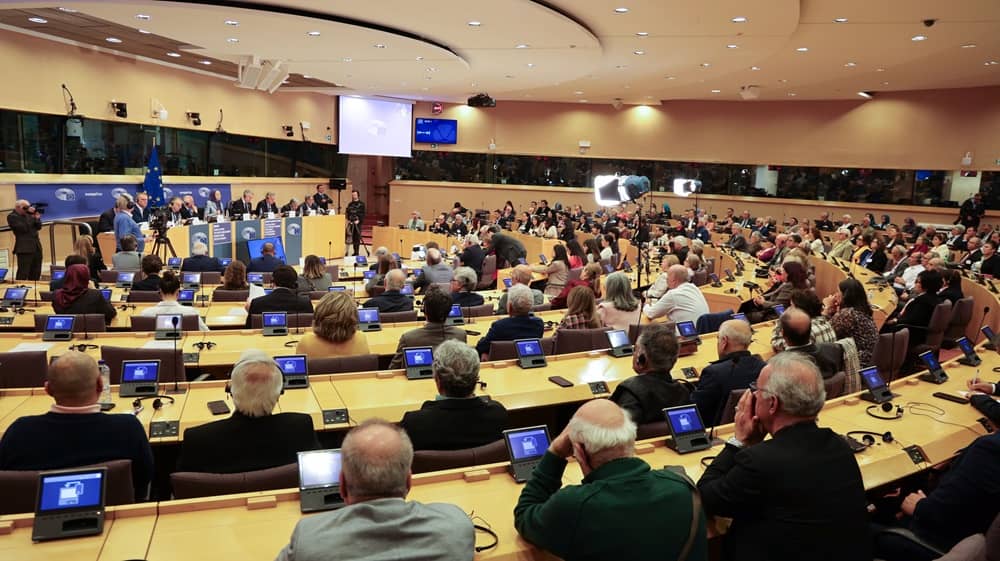
A conference titled “Iran: Take Action to Stop Executions — Where Does the EU Stand?” was held at the European Parliament in Brussels on April 22, 2026, bringing together lawmakers and international figures to address executions in Iran and discuss policy toward Tehran.
Human Rights in Iran: The EU’s Role at a Critical Moment For Peace and Security in the region
Iran: Take Action to Stop Executions Where Does the EU Stand?#StopExecutionsInIran #NCRIAlternative https://t.co/ePYvkW6E9P— Iran Freedom (@4FreedominIran) April 22, 2026
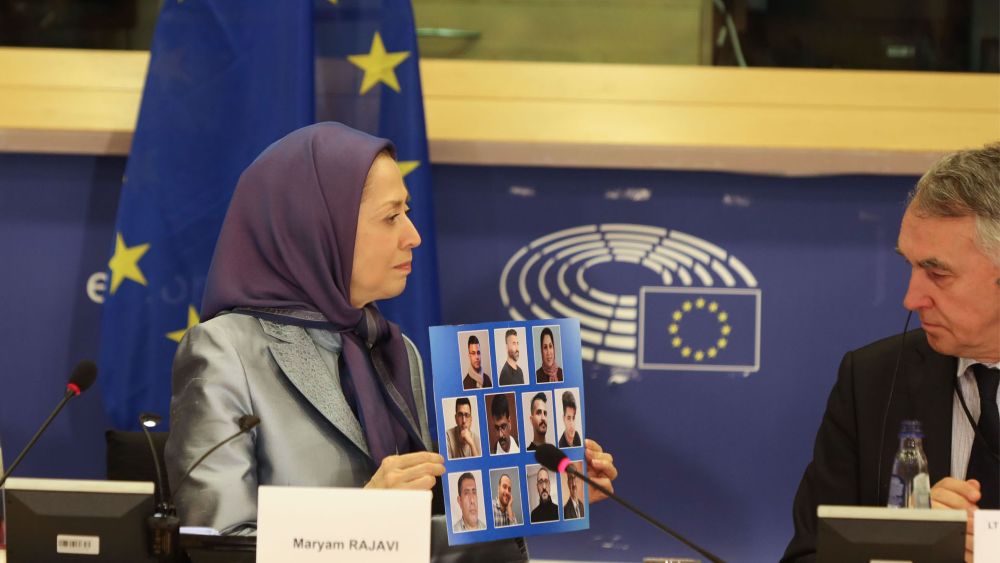
Mrs. Maryam Rajavi
Mrs. Maryam Rajavi, President-elect of the National Council of Resistance of Iran (NCRI), stated that the decisive conflict in the Middle East is between the people of Iran and the ruling religious dictatorship. Mrs. Rajavi said the system of Velayat-e Faqih has no capacity for reform and depends on repression for survival.
“The regime does not view external war as the primary threat to its existence, but rather deep-seated popular outrage and organized resistance,” Mrs. Rajavi said. She referred to resistance activities inside Iran, including an attack on February 23, 2026, by 250 PMOI fighters on key state centers.
Mrs. Rajavi also condemned recent executions, including those of PMOI members Hamed Validi and Mohammad Massoum Shahi, and called for recognition of the provisional government announced on February 28, 2026, as well as the closure of Iranian embassies. She warned against what she described as a “fabricated alternative” linked to the former monarchy.
Flanked by members of the European Parliament for the Conference on Human Rights in Iran
Role of the European Union in a Crucial Juncture for Peace and Security in the Middle East#FreeIran10PointPlan pic.twitter.com/SddFFhIBFT— Maryam Rajavi (@Maryam_Rajavi) April 22, 2026
Javier Zarzalejos
Spanish MEP Javier Zarzalejos stated that support for a democratic Iran is based on principle. “Our commitment is not circumstantial, it is principled,” he said. “The future of Iran belongs to the Iranian people.”
He described recent executions as a “pattern of repression” escalating into a “despicable act of revenge” and said the European Union “cannot remain indifferent.” He referred to the NCRI’s Ten-Point Plan as advocating a democratic republic, gender equality, and a non-nuclear Iran.
Petras Auštrevičius
Lithuanian MEP Petras Auštrevičius stated that the situation in Iran affects European security, saying that “the missiles of Tehran’s rulers can soon reach many European capitals.” He described the regime as one that “honors no treaty nor any pledge.”
He cited executions of political prisoners and said the issue would not be resolved through war or appeasement, but by recognizing forces of change within Iran. He also criticized engagement with supporters of the former Shah.
Francisco Assis
Portuguese MEP Francisco Assis referred to a “culture of death” in Tehran and expressed “sadness” over executions of young people. He said the regime uses external conflict to portray itself as a victim while increasing repression.
He called for the European Union to condition agreements with Tehran on improvements in human rights and to close embassies and expel ambassadors, describing them as “instruments of transnational repression.” He referred to the NCRI’s Ten-Point Plan as a path to democracy.
Antonio López-Istúriz White
Spanish MEP Antonio López-Istúriz White criticized past European policies of engagement with Iranian authorities, stating that governments had negotiated with “bloody murderers” under the label of reformists.
He said the Iranian people seek to “live like us” in peace and democracy and noted that the regime uses external conflict to act against opponents. He called for a change in European policy and expressed support for the Iranian Resistance.
Leoluca Orlando
MEP Leoluca Orlando described the Iranian Resistance as an “example of freedom from fear.” He said the combination of religion and state is “an injury against state and against religion.”
He expressed support for gender equality and women’s participation in leadership, warning that ceasefires could be used to maintain power. He stated that the future of Iran belongs to its people.
Carlo Ciccioli
Italian MEP Carlo Ciccioli said the Iranian regime no longer has popular support and survives through security forces. He referred to reports of large numbers of casualties among protesters.
“No regime on the planet has killed such a large number of unarmed, peaceful protesters,” he said. He called for unity among Iranians and for a transition through democratic elections.
Nicolas Pascual de la Parte
Spanish MEP Nicolas Pascual de la Parte described the Iranian regime as the “most criminal and bloody regime on earth,” stating that expressions of support are no longer sufficient.
“We have to support you with deeds,” he said, referring to the NCRI’s Ten-Point Plan as a program aligned with European values. He also stated that Iran must not obtain nuclear weapons.
Chris van Dijk
Dutch representative Chris van Dijk said the situation in Iran is a “material and moral war” affecting all humanity. He questioned the presence of Iran in international bodies related to human rights.
He expressed support for the NCRI’s Ten-Point Plan and called for standing with protesters, saying he hopes Iranians continue their efforts for liberty.
Anna Strolenberg
Dutch representative Anna Strolenberg addressed Iranian women, describing them as “brave.” She referred to meetings with women who had lost family members but continued their efforts.
“I want to address mainly the women of Iran because you are brave,” she said, expressing support for a future in which Iranian women can participate freely in politics.
Herta Däubler-Gmelin
Herta Däubler-Gmelin, former German Minister of Justice, referred to past experiences during the Shah’s era, describing repression by security forces.
She criticized proposals linked to the former monarchy and expressed support for the NCRI’s Ten-Point Plan, highlighting its focus on rule of law and pluralism.
Guy Verhofstadt
Guy Verhofstadt, former Prime Minister of Belgium, criticized European policy toward Iran, stating it has led to continued conflict and repression.
“I find it nearly criminal that we say nothing about the executions,” he said, calling for making an end to executions a condition for relations with Iran. He also called for listing the IRGC as a terrorist organization and recognizing the organized Resistance.