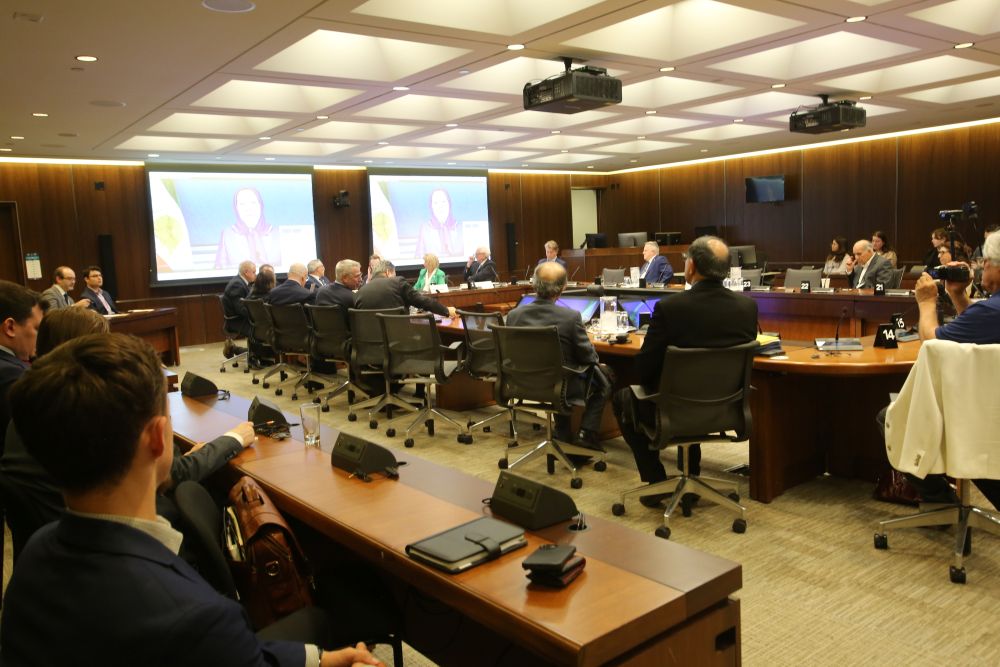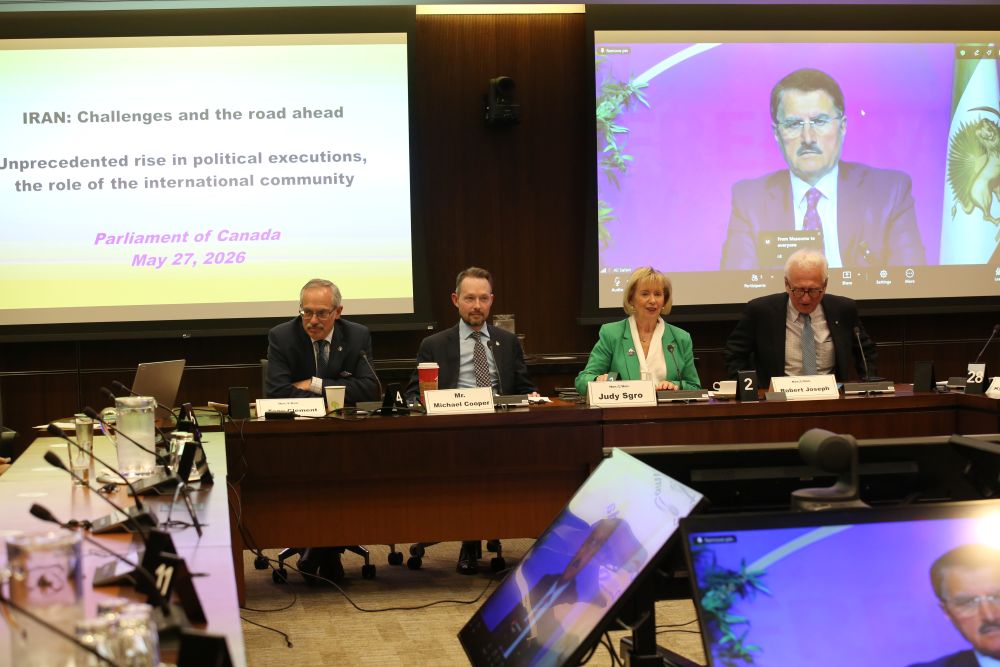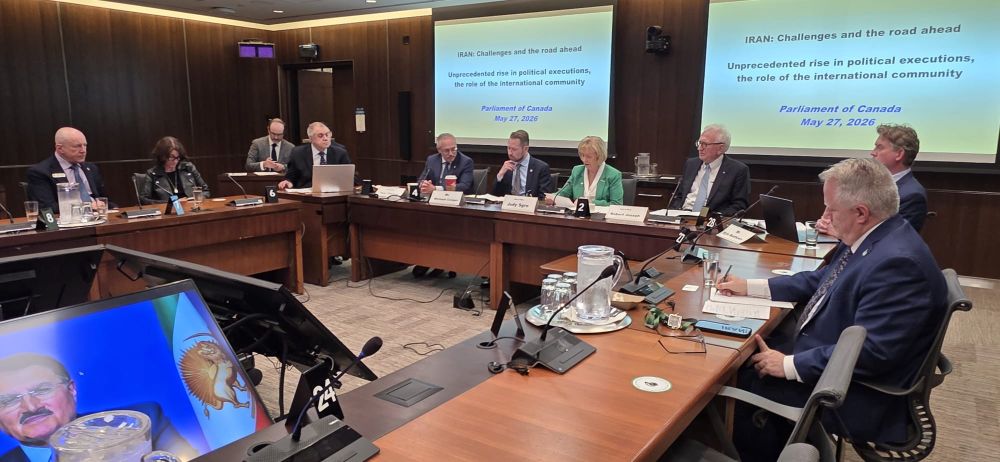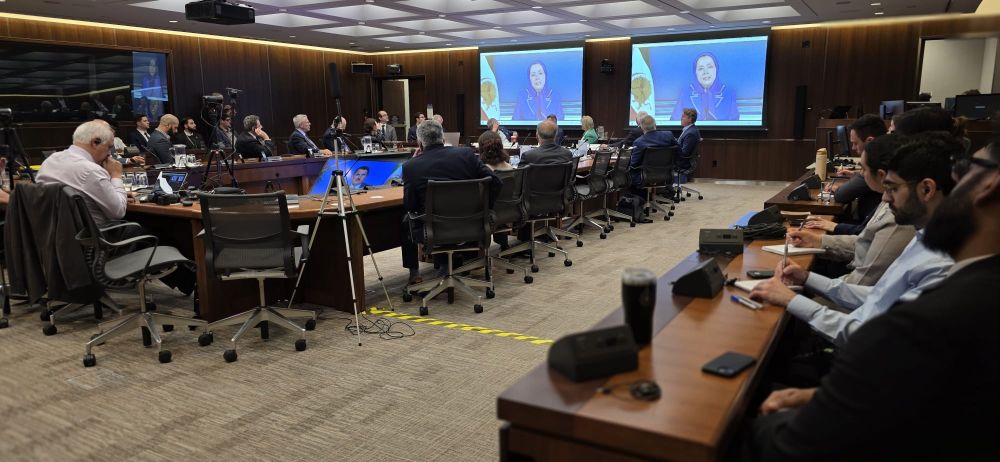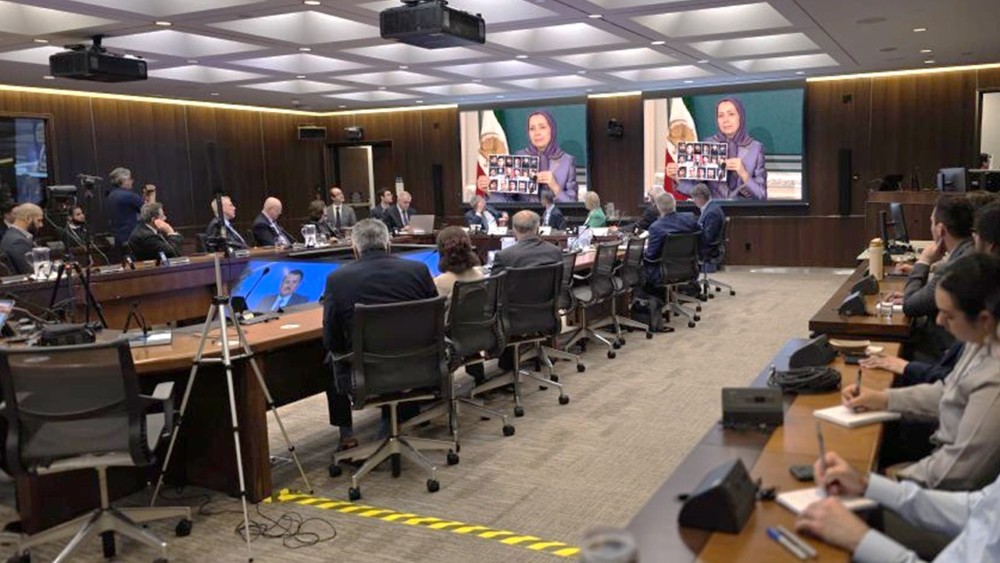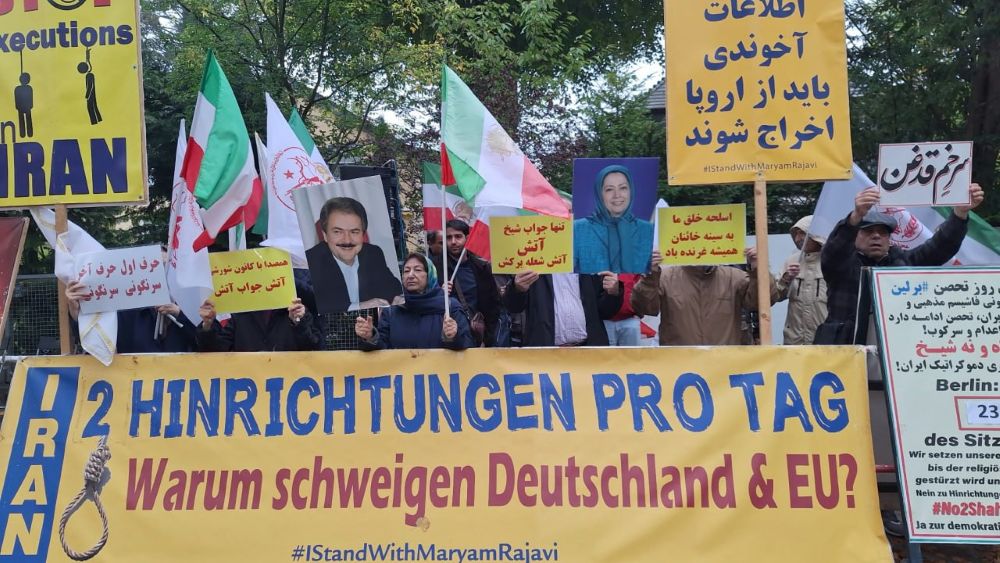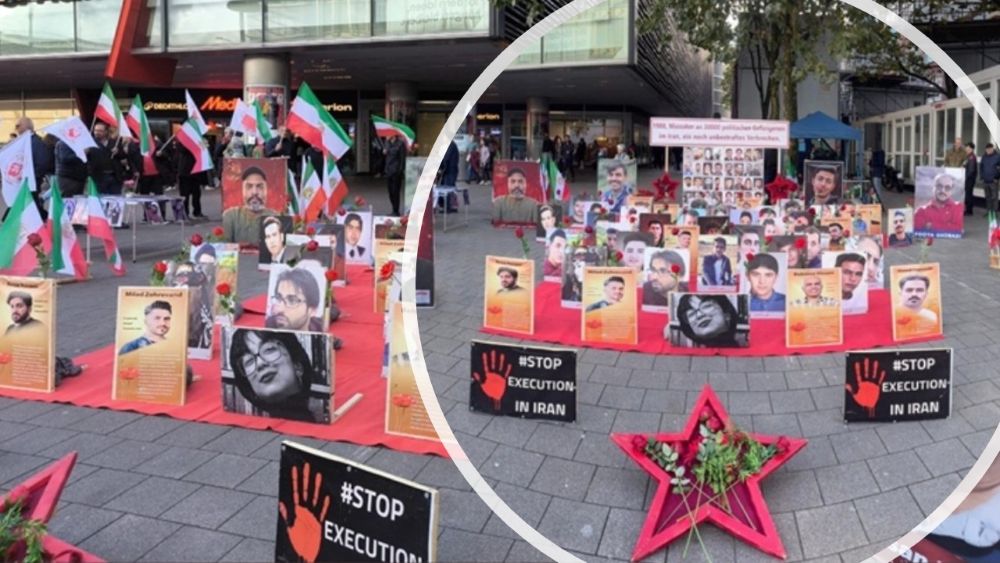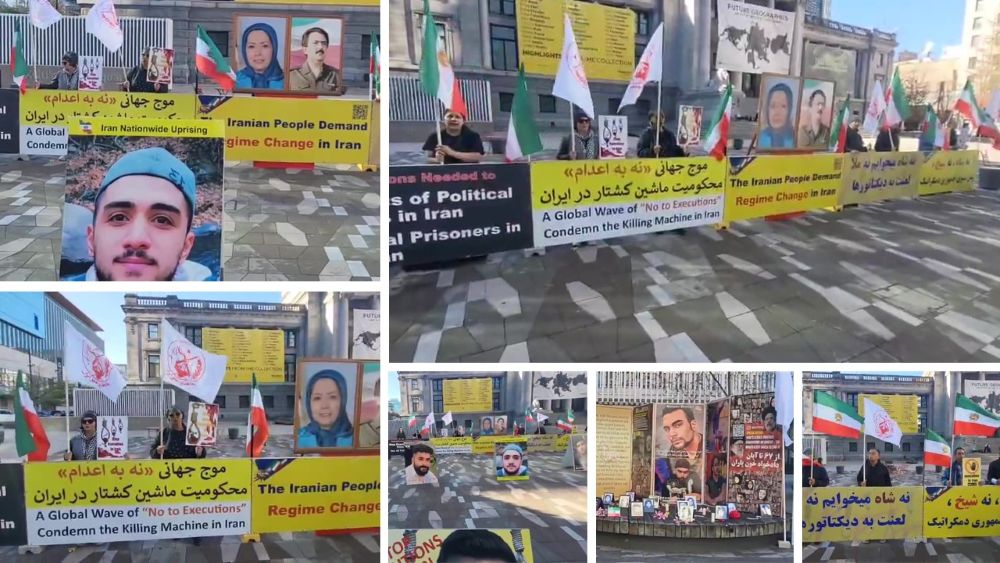
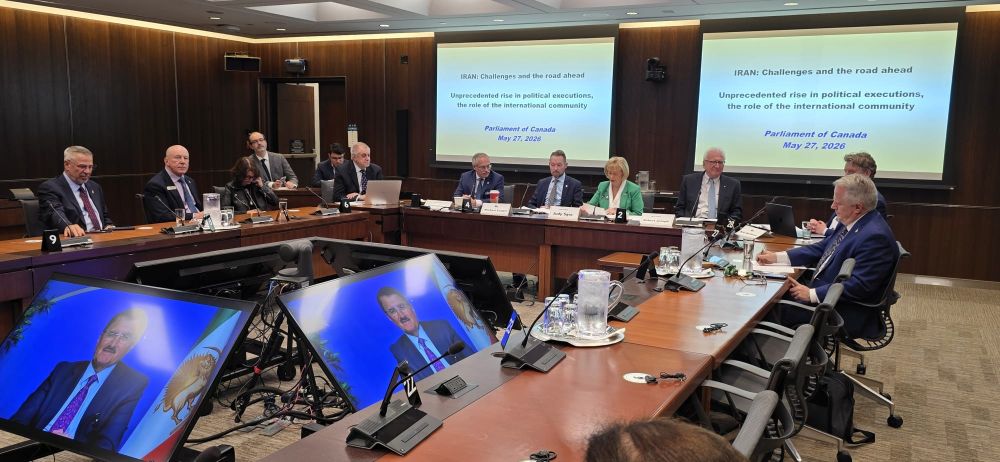
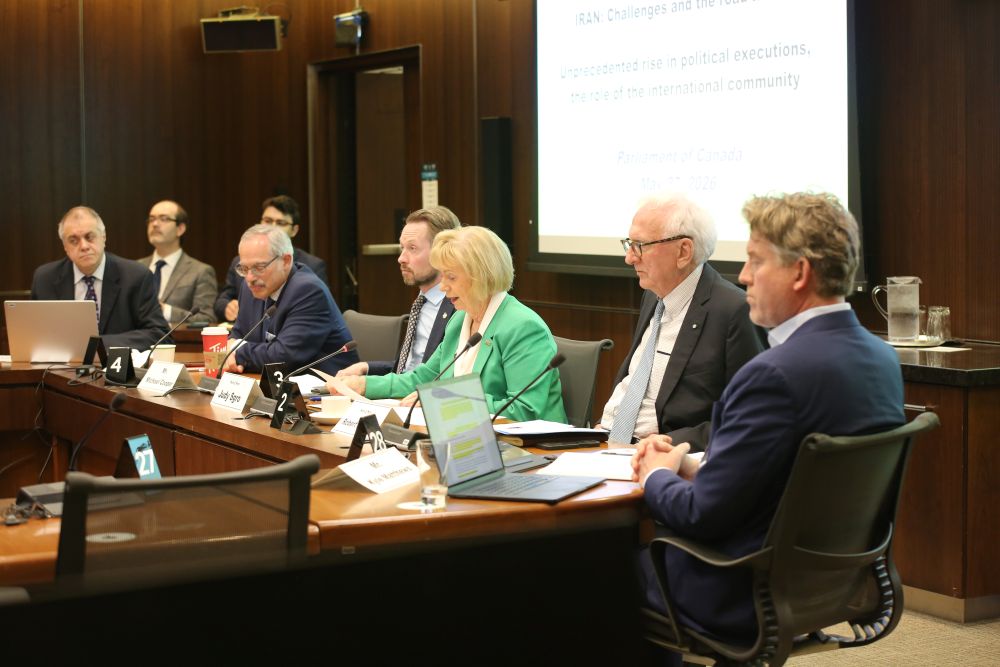
A parliamentary conference titled “Iran at Crossroads” was held on Parliament Hill on May 27, 2026, bringing together Canadian and American officials, policy experts, and human rights advocates to examine Iran’s escalating crisis. Co-chaired by the Hon. Judy Sgro and Member of Parliament Michael Cooper, the conference focused on the failure of Western appeasement policies, the regime’s intensifying political executions, and the growing role of domestic Resistance Units. Speakers emphasized the National Council of Resistance of Iran (NCRI) and its Ten-Point Plan as a practical roadmap for establishing a free, secular, and democratic republic in Iran.
Maryam Rajavi
In a video message, Mrs. Maryam Rajavi, President-elect of the NCRI, stated that “the freedom of the Iranian people is deeply connected to global peace,” describing the ruling religious dictatorship as a central source of regional conflict and international terrorism. She argued that the regime is incapable of reform and said nationwide uprisings have pushed the clerical establishment into an irreversible deadlock.
Mrs. Rajavi strongly criticized the longstanding policy of appeasement, saying it had “deprived the world of the main force for change in Iran.” She stressed that the real solution lies in supporting the organized resistance and Resistance Units confronting the Revolutionary Guards inside Iran.
She also rejected any return to monarchy, warning that supporters of the former Shah seek to revive the SAVAK secret police in order to weaken today’s anti-dictatorial movement. Mrs. Rajavi called on Canada to expel agents of the Iranian regime and recognize the Iranian people’s struggle for a democratic republic based on the NCRI’s Ten-Point Plan.
Conference at the Parliament of Canada: Unprecedented rise in political executions in Iran, the role of the international community
The freedom of the Iranian people Is deeply connected to global peace#StopExecutionsInIranhttps://t.co/eiQKe5T3sK pic.twitter.com/z1HLielpxd— Maryam Rajavi (@Maryam_Rajavi) May 28, 2026
Judy Sgro
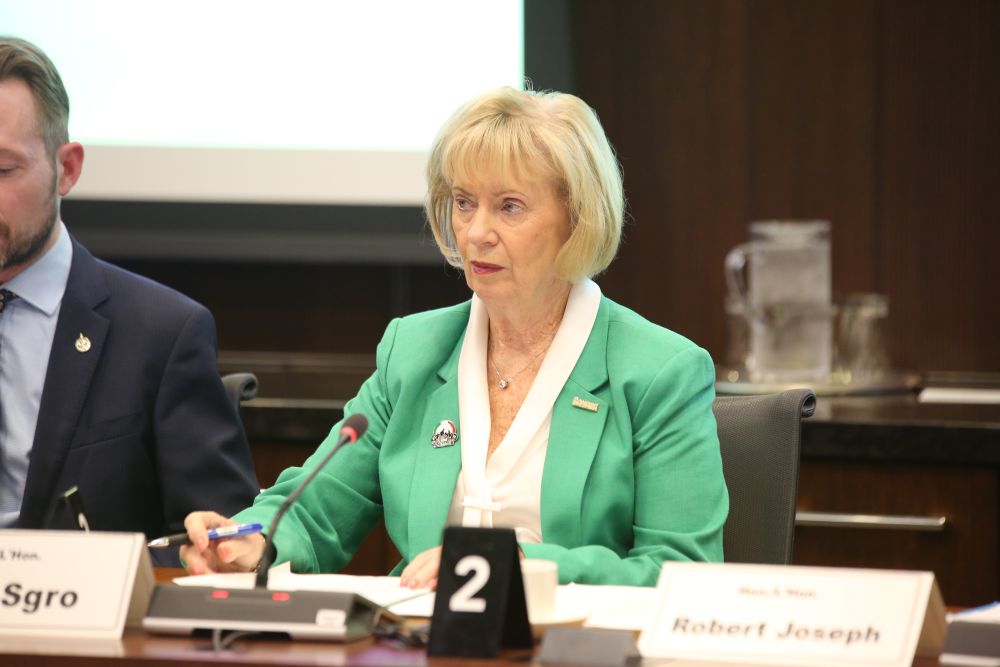
Opening the conference, the Hon. Judy Sgro praised the courage of the Iranian people and said that “across the country, and especially amongst its young people and women, there is a powerful and unwavering call for dignity, freedom, and democracy.”
Sgro expressed concern over the regime’s growing repression at home and aggression abroad, emphasizing that meaningful political change must come from within Iran and reflect the will of a democratic movement rooted in the country itself.
She also commended the Iranian Resistance for organizing the event and stressed that Canada has a responsibility to stand firmly with the democratic alternative, encourage principled international dialogue, and support policies aligned with the aspirations of the Iranian people.
Michael Cooper
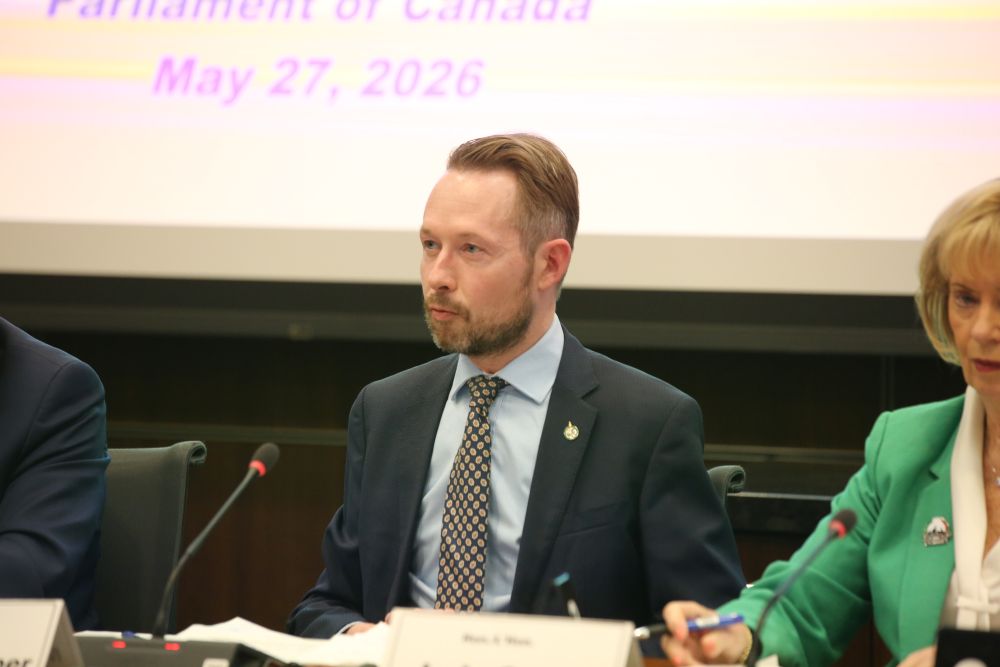
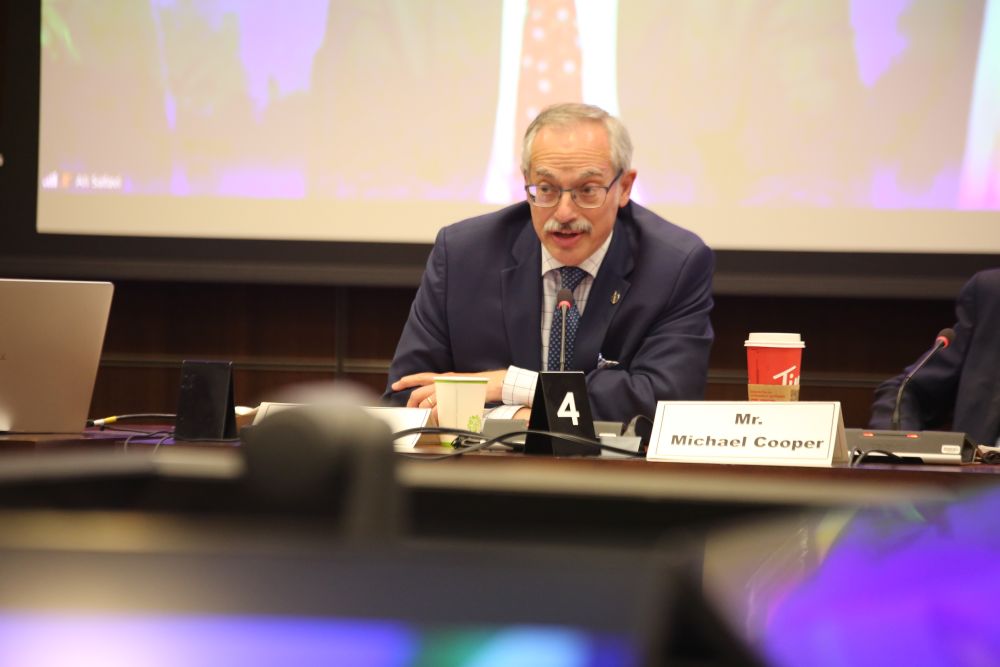
Co-chair Michael Cooper focused on the multiple crises confronting the clerical regime, pointing to economic collapse caused by corruption and mismanagement. He noted that ordinary Iranians are facing soaring inflation, water shortages, and widespread power outages while the regime intensifies repression.
“Indeed, executions are a core part of a systemic state policy aimed at crushing dissent,” Cooper said, referring to political executions, internet blackouts, the targeting of women and minorities, and judicial processes based on torture.
Calling the regime the “epitome of evil,” Cooper praised the courage of Iranians fighting for freedom and urged the international community to abandon failed policies and confront what he described as the leading sponsor of terrorism and regional instability.
Ambassador Robert Joseph
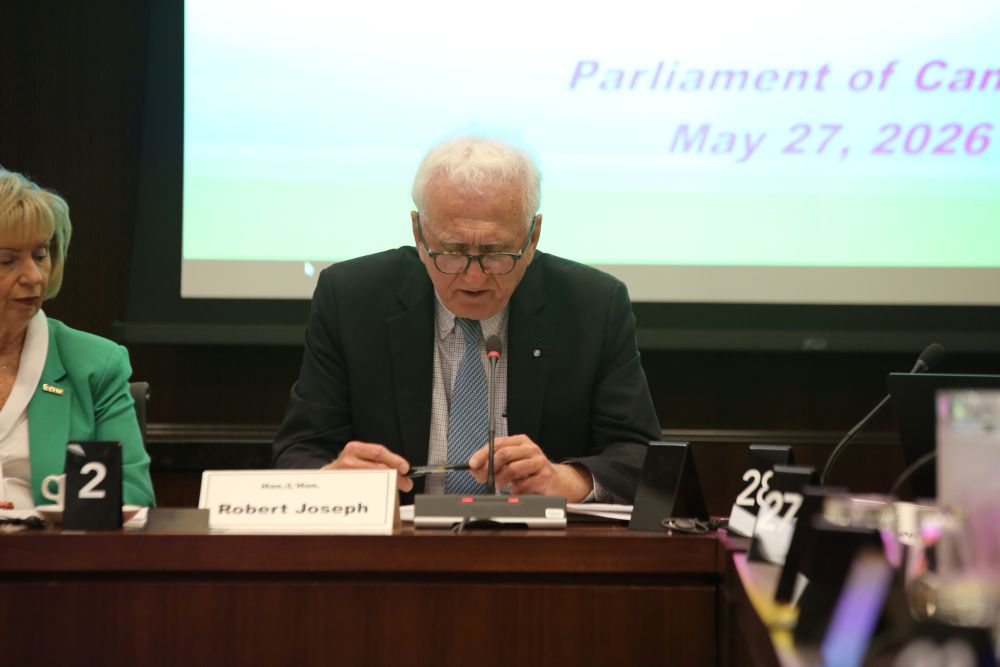
Ambassador Robert Joseph, former U.S. Under Secretary of State for Arms Control and International Security, argued that more than twenty-five years of diplomacy, sanctions, and negotiations have failed because they were based on the assumption that the regime could be moderated.
Referring to a recently co-authored policy paper, Joseph said the regime remains committed to obtaining nuclear weapons and uses negotiations as a “cat-and-mouse” strategy to gain time and concessions.
He criticized ongoing appeasement policies, warning that sanctions relief provides financial support to a regime that funds terrorism abroad and repression at home. Joseph argued that maximum pressure must be applied while also giving political and moral recognition to the organized democratic opposition. “It is left to the Iranian people to end the regime,” he stated.
Ali Safavi
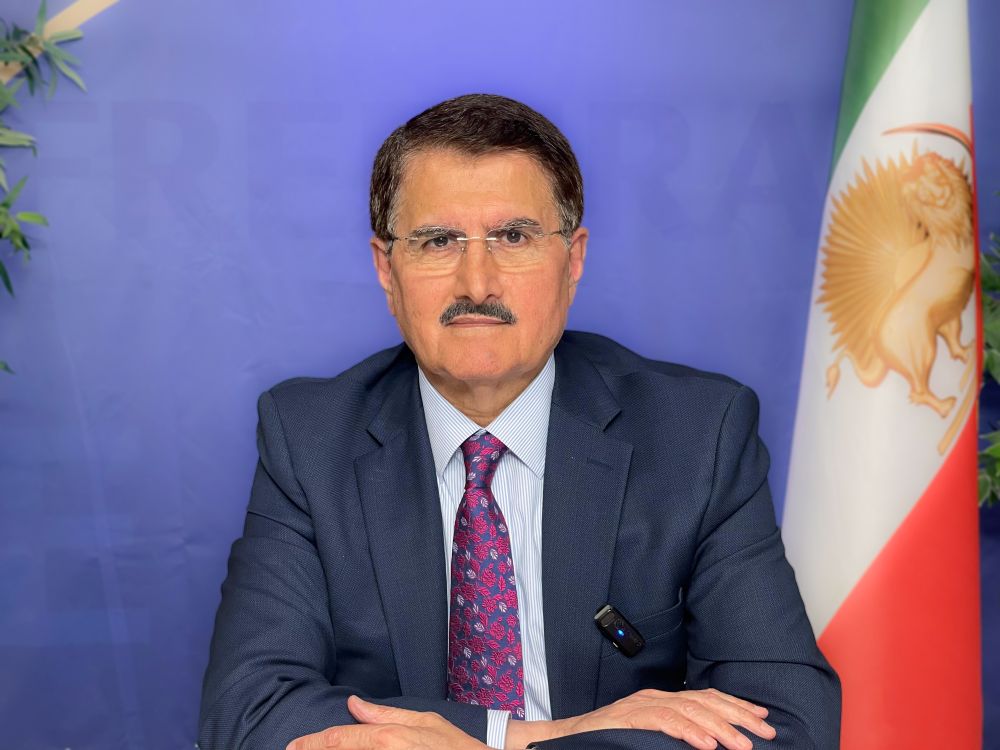
Joining remotely via Zoom, Ali Safavi of the NCRI Foreign Affairs Committee rejected claims that the Iranian regime has emerged stronger from recent regional conflicts. He argued instead that the regime is at its weakest point historically due to worsening social and economic crises and repeated nationwide uprisings.
Safavi said the regime cannot be overthrown through foreign military intervention and insisted that change must come through the Iranian people and their organized resistance, led by the PMOI and internal Resistance Units.
Discussing political transition, he presented Maryam Rajavi’s Ten-Point Plan as a framework for transferring sovereignty to the Iranian people through free elections within six months.
Safavi also warned against what he described as false alternatives promoted by the Shah’s son, saying attempts to revive SAVAK symbolism and normalize intimidation reflect a return to dictatorship and political repression. He said Iranians reject “both the turban and the crown.”
Tony Clement
The Hon. Tony Clement, former Canadian Minister of Health and Industry, expressed confidence in the eventual victory of the Iranian people, stressing that “it’s not the Iranian people who are our enemies” but the ruling clerical establishment.
Clement endorsed the NCRI’s Ten-Point Plan and praised its commitment to a free, secular, and democratic republic that rejects nuclear ambitions and seeks peaceful relations with neighboring countries.
He said the international community must continue exerting pressure on the regime and recognize the sacrifices of thousands of dissidents executed in recent months. Clement concluded that the clerical rulers will never willingly abandon power or their nuclear ambitions, making regime change by the Iranian people the only lasting solution.
Kyle Matthews
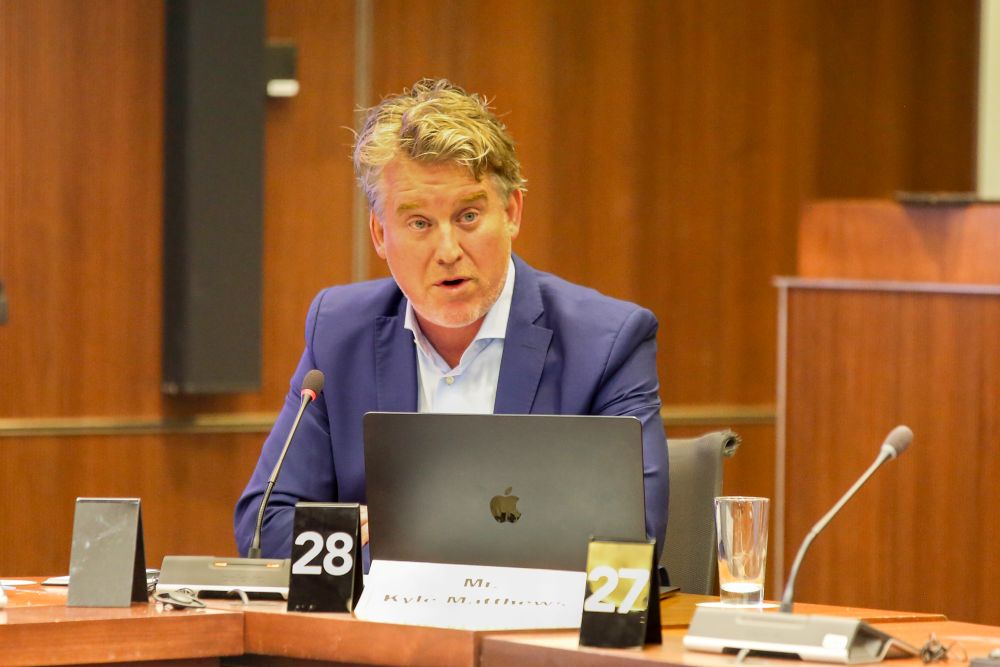
Kyle Matthews, Executive Director of the Montreal Institute for Global Security, called on Canada to hold the Iranian regime accountable for past and ongoing crimes, specifically referencing the 1988 massacre of 30,000 political prisoners.
Matthews said the regime’s domestic repression is directly connected to international instability, pointing to its involvement in the Syrian civil war, support for extremist proxy groups across the Middle East, and military cooperation with Russia.
He argued that future negotiations with Tehran must include demands for the immediate release of political prisoners and legal accountability for what the United Nations has described as crimes against humanity.
Matthews also urged Western governments to provide advanced communication technologies capable of bypassing internet restrictions in order to support activists and organized resistance networks inside Iran.
Ali Ziaei
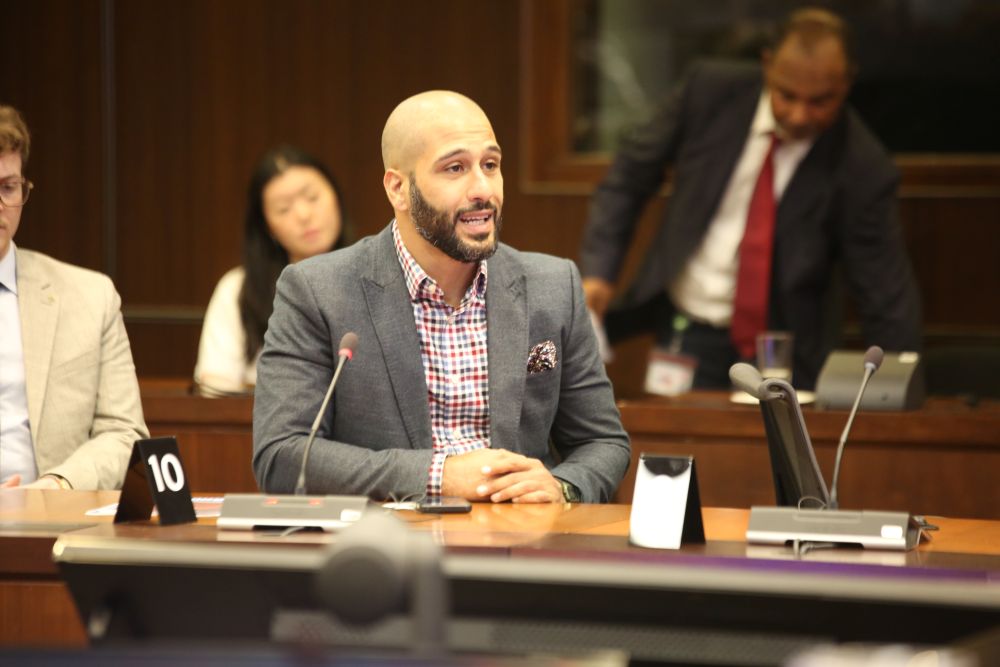
Representing the younger generation of the Iranian diaspora, Ali Ziaei, former Canadian national wushu champion and representative of the Iranian Youth Association of Canada, concluded the conference by honoring members of the resistance movement.
Quoting the final words of executed PMOI member Vahid Bani-Amerian, Zaei said thousands of young Iranians remain committed to continuing the uprising until the regime is overthrown.
He argued that the regime’s increased use of torture and public executions reflects fear of the PMOI and Resistance Units rather than strength. Describing the organized resistance as the only movement with the experience, networks, and political framework capable of delivering a lasting solution, Ziaei called on the international community to support Maryam Rajavi’s Ten-Point Plan to end state-sponsored terrorism and secure a democratic future for Iran.